Crashes and runtime errors
Startup failures, null and type errors, async exceptions, platform-channel failures, lifecycle issues, and crash-log investigation.
FLUTTER • DIAGNOSIS • BUG FIXING
I troubleshoot existing Flutter applications across Dart code, UI and state, APIs, Firebase, dependencies, Gradle, CocoaPods, Android, iOS, and release builds—then make a focused, testable correction.
Flutter • Android • iOS • Firebase • App Publishing
THE RIGHT STARTING POINT
When API data does not appear, the server may have returned a different shape, authentication may have expired, parsing may have failed, state may not notify the screen, or the widget may be reading the wrong branch. When Android works and iOS does not, the shared Flutter flow can still depend on a missing entitlement, pod, permission description, URL scheme, or platform SDK. A crash after an upgrade may be a package conflict, a changed API, native build tooling, or code that relied on old behavior.
I do not begin by promising a rewrite. I reproduce the failure, capture the useful logs, trace the data and state around the symptom, and identify the smallest maintainable change that addresses the root cause. If investigation reveals a broader architectural problem, you receive that explanation before the scope expands.
RECOGNIZE THE SYMPTOM
Send the closest symptom even if you do not know the technical name for it.
A Flutter, Dart, plugin, Android SDK, Xcode, or dependency change introduced a runtime or startup failure.
A native configuration, permission, entitlement, pod, service file, or platform-specific code path is inconsistent.
Requests, authentication, JSON parsing, models, caching, state updates, pagination, or error handling breaks the user flow.
A screen does not update, navigation loses data, loading never ends, forms reset, or an async race produces intermittent behavior.
Toolchain versions, native dependencies, SDK targets, scripts, flavors, signing, or package requirements no longer agree.
Production environment values, minification, signing, permissions, service configuration, or optimized timing changes the behavior.
Excess rebuilds, expensive work on the UI thread, oversized data, image handling, memory pressure, or repeated network work needs investigation.
FOCUSED FLUTTER SUPPORT
The categories below overlap. That is normal—the diagnosis establishes which layer actually owns the failure.
Startup failures, null and type errors, async exceptions, platform-channel failures, lifecycle issues, and crash-log investigation.
Incorrect rebuilds, stale or lost state, navigation problems, forms, layout overflow, race conditions, and inconsistent loading/error states.
Requests, tokens, interceptors, JSON parsing, models, pagination, caching, timeouts, retries, and error presentation.
Authentication, Firestore, FCM, initialization, rules-related errors, and Android/iOS configuration differences.
Package conflicts, breaking API changes, Flutter/Dart upgrades, native SDK requirements, discontinued plugins, and migration work.
Gradle, Android SDK, manifest, CocoaPods, Xcode, signing, entitlements, flavors, environments, and release-only failures.
Slow screens, jank, repeated rebuilds, heavy parsing, unnecessary requests, image pressure, and obvious resource bottlenecks.
Problems that appear during AAB, archive, upload, TestFlight, Google Play, or App Store review preparation.
A PRACTICAL PROCESS
The first milestone is a reproducible failure and a defensible root-cause hypothesis. That keeps the fix measurable and reduces regression risk.
I review the error, reproduction steps, relevant logs, current Flutter and dependency versions, and the platform configuration around the failing flow.
I separate symptoms from the underlying problem and determine whether it comes from Dart code, native configuration, Firebase, an API, dependencies, signing, or store setup.
I implement the smallest maintainable fix, then test the affected flow and the nearby paths most likely to regress on Android, iOS, or both.
I explain what changed, call out any remaining product or store decisions, and prepare the code, build, or submission for its next step.
RELEVANT TECHNOLOGIES
The exact stack depends on the codebase and the problem. These are the technologies most relevant to this service.
WORKING TOGETHER
Credibility should come from how the work is handled—not inflated promises.
A precise diagnosis prevents unrelated rewrites and keeps the scope focused on the actual blocker.
I am comfortable entering an established codebase, tracing unfamiliar flows, and improving it without treating every issue as a rebuild.
Flutter shares application code, but release builds, permissions, signing, entitlements, and store requirements still need platform-specific attention.
You receive a practical explanation of the cause, the work completed, what was tested, and what you should do next.
I can trace problems across Flutter UI, state, Firebase, REST APIs, authentication, push notifications, and native configuration.
The affected path is checked after the fix, with attention to release-mode and cross-platform differences when they are relevant.
REAL WORK FROM THIS PORTFOLIO
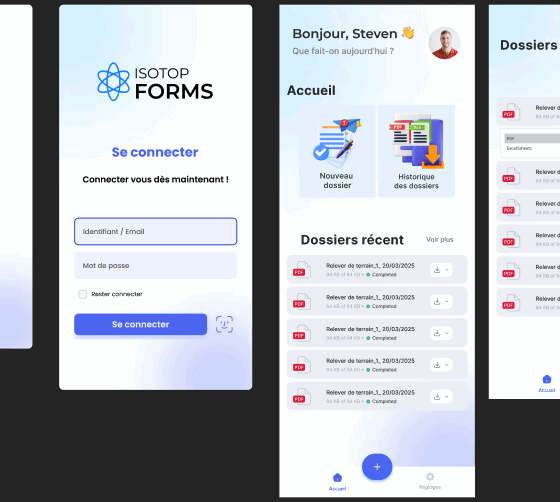
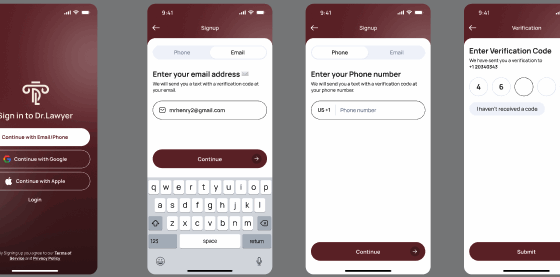
These are existing projects already published on this website. Each card focuses on the problem and the application solution without inventing client metrics.


A CLEAR WAY TO START
Hire me securely through my Upwork profile or start with my fixed-price Flutter development service. The links open the official Upwork destinations in a new tab.
Fixed-price service on Upwork
FLUTTER DEVELOPMENT SERVICE
Development, bug fixing, Firebase and API integrations, publishing, and focused improvements for existing applications.
REDUCE THE BACK-AND-FORTH
You do not need to diagnose the code yourself. A precise symptom and context are enough to begin.
Send the Issue on UpworkWhat you expected to happen
What currently happens, including the complete error or a short recording
Flutter version, affected platform, build mode, and the last known change
COMMON QUESTIONS
Practical answers before you share access or start a contract.
See what to send firstYes. I begin by locating the relevant flow, reproducing the issue, and understanding the project structure and dependency state. Existing code quality affects the investigation time, but it does not automatically require a rebuild.
The expected behavior, actual behavior, complete error or log, reproduction steps, affected platform and build mode, Flutter version, and the last change before the issue appeared are the most useful starting points.
Yes. I can investigate Flutter build issues and the surrounding Gradle, Android SDK, manifest, CocoaPods, Xcode, signing, entitlement, and native dependency configuration.
Yes. Release-only failures often involve environment configuration, service credentials, app identity, signing, optimization, permissions, native setup, or timing. A release log and reproducible build are important.
Not by default. I aim for the smallest maintainable correction that addresses the root cause. If the issue exposes a wider architectural risk, I explain the evidence and tradeoff before recommending broader work.
Yes, after the immediate issue and codebase are understood. Maintenance can include dependency updates, platform requirement changes, regression fixes, release preparation, and incremental improvements.
NEXT STEP
Send the symptom, error, and affected platform through Upwork. I will review what needs to be diagnosed and fixed.