Mobile Developer
Software Engineer
Project Manager
Mobile Developer
Software Engineer
Project Manager
AI Products & Platforms
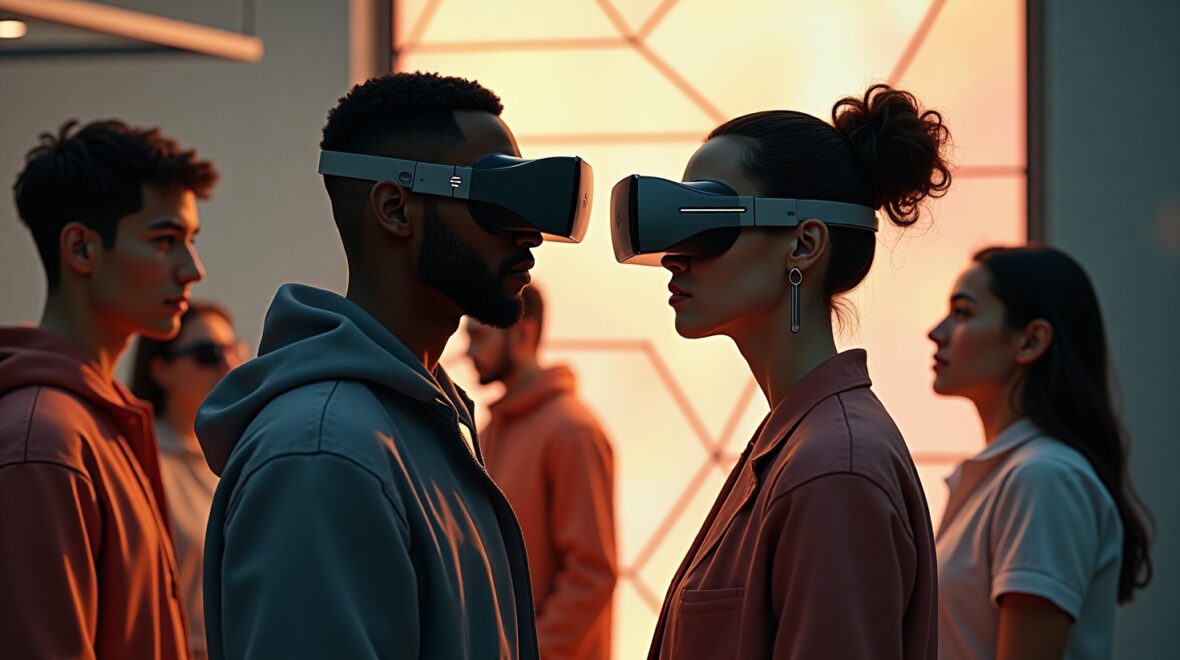
The Metaverse Decline: Understanding AI’s Impact on Social Technology
Introduction
The concept of the metaverse, once heralded as the next frontier in social interaction, digital economy, and virtual existence, has rapidly faded from the limelight. What began as a visionary promise—an immersive, interconnected digital universe—has spiraled into what many now deem the metaverse decline AI impact. As artificial intelligence (AI) continues to gain traction, promising efficiencies and personalized experiences, the metaverse appears to be struggling to capture the same enthusiasm. The current debate regarding VR vs AI technology highlights this paradigm shift, raising critical questions about what the future holds for social tech.
As we examine the intersection of these technologies, it’s clear that new consumer preferences are emerging, notably in the trends around AI companionship. The initial allure of a fully immersive virtual world is now juxtaposed against AI’s potential to reshape online interactions.
Background
Meta, the parent company of Facebook, invested aggressively in the hope of establishing the metaverse as a cornerstone of its future. The company funneled a staggering $73 billion into its Reality Labs division, a hub intended to innovate and advance virtual reality (VR) technologies. However, the results have been far from anticipated. According to a report, Meta recently laid off roughly 1,500 employees, about 10% of Reality Labs staff, and shut down several VR game studios, a concrete sign of the difficulties faced in this realm (TechCrunch).
Challenges plagued Meta’s VR ambitions from the beginning, including lukewarm product reception and an overwhelming sense of safety concerns—critical issues that tarnished consumer interest. The Meta Horizon app, despite being downloaded 60.4 million times, fell short of engaging users meaningfully. Furthermore, high transaction fees—with Meta taking 47.5% cuts on digital sales—disheartened developers and disrupted the potential for a robust VR economy.
In essence, while Meta invested heavily in what was purported to be the future of social tech, the reality proved a stark contrast to its grand vision.
Trend
As we delve deeper into the decline of VR and the simultaneous rise of AI and augmented reality (AR) technologies, it becomes increasingly evident that the dynamics of consumer technology are shifting. Global shipments of VR headsets reportedly fell 12% year-over-year in 2024, signaling dwindling interest in VR experiences. Conversely, emerging AI technologies and mixed reality devices are exhibiting robust growth and consumer demand.
Studies indicate that while Meta accounted for 77% of VR headset shipments in 2024, interest in VR is waning, shifting user attention toward AI-driven systems that provide companionship and services. As tech-savvy consumers begin to prioritize experiences that merge physical and digital realms—reflective of the success of products like Ray-Ban Meta Glasses—it becomes clear that the future of social tech lies beyond immersive VR experiences.
This shift is not merely anecdotal; statistics underline consumers’ preference for easily accessible AI services that enhance daily life, contrasting sharply with the ongoing hurdles faced by VR platforms.
Insight
The roadblocks that Meta encountered in maintaining its VR and metaverse vision raise significant concerns about the sustainability of such a concept. Users frequently reported feelings of harassment and safety risks within VR environments, tarnishing what was supposed to be a revolutionary social experience. The feedback indicates a disenchantment with the metaverse and a call for safer, more user-friendly alternatives.
Furthermore, the financial structures that Meta employed put significant barriers up for prospective developers. By imposing high fees on digital sales, Meta stifled innovation among creators who might otherwise facilitate the kind of engaging content that could rejuvenate user interest. The precarious balance between revenue generation and developer satisfaction is a lesson for the future of any tech initiative, particularly one as ambitious as the metaverse.
Forecast
As we stand on the cusp of anticipated technological evolution, it’s crucial to forecast what the landscape of social technology may become. With VR struggling to steal back attention from the AI revolution, we might witness a significant pivot from Meta and competitors like Apple and Google. In this climate, the once-cherished notion of the metaverse could evolve, fragmented into more manageable and appealing scenarios where AR and AI complement one another rather than trying to dominate the social sphere alone.
In such a landscape, AI technologies will likely lead the charge, offering users a blend of virtual interactions powered by intelligent algorithms that cater to individual preferences and experiences, while VR, if it opts to survive, must innovate around user safety and content accessibility.
Call to Action
The rapid evolution of technology invites us all to reflect on our own encounters with VR and AI. Have you found AI technologies like chatbots or voice assistants more useful and engaging compared to VR experiences? This is the time to explore the boundaries of these rapidly evolving formats.
We encourage you to visit Meta’s VR platforms and AI products and engage in the dialogue that shapes the future of social technology. What are your thoughts on how AI will shape your online interactions? Share your insights as we navigate this transformative era together.
For more in-depth information, check out the full article on TechCrunch.

PersonaPlex-7B-v1: The Future of Real-Time Speech AI
Introduction
In the age of advanced AI, the launch of the PersonaPlex-7B-v1 model by NVIDIA marks a significant leap in full-duplex speech technology, aiming for seamless natural voice interactions. As the demand for more intuitive conversational AI grows, this model rises to the forefront, enabling real-time speech AI applications that surpass traditional limitations. In this post, we will delve into its capabilities, training methods, and the implications for applications requiring natural voice interactions.
Background
The PersonaPlex-7B-v1 is a revolutionary speech-to-speech AI model that redefines our engagement with conversational interfaces. Unlike traditional paradigms, which typically rely on a cascade of systems such as Automatic Speech Recognition (ASR), Language Models (LLM), and Text-to-Speech (TTS), this groundbreaking model utilizes a single Transformer architecture.
At its core lies the Moshi architecture and the Helium language model, which enhance its ability to grasp and generate speech in real-time. To illustrate, think of it as a multi-talented performer rather than a series of skilled individuals waiting for their turn. This model can understand and articulate responses simultaneously, facilitating full-duplex conversations with optimal efficiency.
The training protocol involved a blend of real conversations sourced from the Fisher English corpus and an extensive dataset of synthetic dialogues tailored for customer service and assistant roles. By employing large language models like Qwen3-32B and GPT-OSS-120B to generate prompts, and integrating Chatterbox TTS for speech rendering, PersonaPlex was meticulously developed to ensure high fidelity in simulated dialogues.
Current Trends in Speech AI
As real-time speech AI gains traction, the importance of systems capable of natural voice interactions has surged, particularly in high-stakes sectors like customer service, telecommunication, and virtual assistance. Here are some key trends shaping this landscape:
– Hybrid Prompting: This technique blends audio with text prompts to regulate voice characteristics and conversation roles, enhancing personalization and responsiveness.
– Training Diversity: Models are increasingly benefiting from a mix of real and synthetic dialogue training data, improving their adaptability and performance in various conversational scenarios.
– Fluid Conversational Dynamics: There is a growing emphasis on developing systems that can deliver more fluid conversational experiences, characterized by rapid turn-taking, natural overlaps, and effective backchanneling.
As these trends converge, we are witnessing a transformation towards more intelligent systems that prioritize the user experience, mirroring human interactions more closely than ever before.
Insights from Benchmark Evaluations
Evaluation metrics such as those from the FullDuplexBench and ServiceDuplexBench reveal how the PersonaPlex-7B-v1 excels in achieving smooth turn-taking and low latency.
The metrics speak volumes; with a Takeover Rate of 0.908 for smooth turn-taking and an impressive user interruption Takeover Rate of 0.950, it signifies an industry-leading performance that is hard to ignore.
This data shows that the PersonaPlex model not only maintains conversational flow but does so with minimal delay, boasting a typical latency of only 0.170 seconds to respond during turn-taking. Such performance ensures that conversations feel more natural and less robotic—a perception that arises from typical responses in traditional systems, which often struggle with timing and coherence.
These benchmarks highlight PersonaPlex’s edge over existing solutions, asserting its potential to revolutionize conversational AI interactions across diverse sectors.
Future Forecasts for Speech AI Technology
Looking ahead, the capabilities of the PersonaPlex-7B-v1 are likely to inspire further advancements in the AI landscape. As businesses increasingly prioritize efficiency and user engagement, we can expect an acceleration in the adoption of models designed for full-duplex communication.
Predictions suggest a future where:
– Enhanced Features: Models could integrate more context-awareness capabilities, understanding emotional cues and user intent better, which would further improve conversational quality.
– New Application Domains: Beyond customer service and virtual assistants, we could see applications in fields such as healthcare, where nuanced conversations can facilitate better patient interactions and outcomes.
The rise of such sophisticated speech-to-speech AI technologies poses pertinent questions about privacy, ethical use, and the evolving role of humans in conversational AI development.
Conclusion and Call to Action
In conclusion, the PersonaPlex-7B-v1 represents a transformative shift towards more sophisticated real-time speech AI solutions. For organizations interested in leveraging cutting-edge conversational models, exploring the capabilities of this system is not just advantageous, it’s imperative.
To dive deeper into the details of this innovative model, feel free to read more about it here and discover how it can elevate your applications in today’s rapidly evolving landscape of natural voice interactions.
Stay informed and be part of the AI revolution!

The Future of ChatGPT Ads: Navigating Advertising in AI
Introduction
The integration of ads into OpenAI ChatGPT marks a pivotal shift in the platform’s approach to revenue generation, moving towards advertising in AI. This transition is designed to not only monetize the vast user base but also to enhance financial stability while maintaining user trust. As OpenAI navigates this new terrain, understanding how ads will affect both free and paid users, and how this aligns with user data privacy concerns, becomes essential for the future of AI-driven conversation.
Background
The advertising landscape in the AI sector is evolving rapidly. Historically, OpenAI began as a non-profit organization focused on the ethical development of AI technologies. However, financial strains, exemplified by a staggering loss of around $8 billion in the first half of 2025, prompted a strategic shift towards commercialization and the exploration of sustainable revenue streams beyond just subscription models. Currently, approximately 5% of the 800 million users of ChatGPT are paid subscribers, illustrating the challenges OpenAI faces in converting free users into paying ones.
As various AI firms venture into advertising, they grapple with the dichotomy of profit versus user trust. For instance, while technology companies like Google have effectively monetized their platforms with ads, newcomers, including competitors like Perplexity, show hesitance stemming from past sentiments expressed by AI leaders, such as Sam Altman, regarding the appropriateness of advertising in AI. However, as the industry continues to grapple with its own potential investment bubble, the need for diversified revenue streams like targeted ads becomes more paramount.
Trend
OpenAI is beginning to embrace targeted ads within ChatGPT itself, primarily aimed at free and Go-tier users with a monthly charge of $8. These ads will be distinctly presented, appearing in clearly labeled boxes separate from the conversational responses, thus ensuring that the chatbot’s integrity remains intact. Crucially, OpenAI pledges that ads will neither compromise the platform’s response quality nor violate user data privacy, assuring that user conversations will not be sold to advertisers.
User data is handled with care, following strict principles that avoid presenting ads on sensitive topics and exclude users under 18 from ad exposure. This strategic approach demonstrates OpenAI’s commitment to user trust, employing some level of personalization to ensure relevance without infringing on privacy rights. This balance is essential as it relates to broader user data privacy trends within the tech sector, where consumers increasingly demand greater control over their data.
– Key Features of ChatGPT Ads:
– Ads displayed only to free and Go-tier users.
– Clear delineation between ads and chatbot responses.
– No selling of user data or usage of conversation details in advertising.
– Personalized ads based on conversational context, with user opt-out options.
– Strict guidelines against ads in sensitive subject areas.
Insight
OpenAI’s decision to limit ads for paid subscription tiers like ChatGPT Plus and Pro reflects a nuanced understanding of user experience. By prioritizing a clean and ad-free environment for paying customers, OpenAI effectively enhances the perceived value of their subscription services, hoping not to alienate users who may already be concerned about intrusive marketing tactics.
This cautious and strategic advertising rollout could be compared to a cautious chef introducing bold flavors in a popular dish. While the innovation introduces excitement (or revenue), it risks alienating loyal patrons who prefer the original recipe (or user experience). OpenAI’s purpose is to preserve the essence of ChatGPT—a tool trusted for sensitive interactions—while still offering necessary advertisements to sustain operational costs and investments.
Forecast
Looking ahead, the future of ChatGPT ads will likely shape advertising in the AI space significantly. As more companies consider integrating ads as a revenue source, OpenAI’s approach could serve as a model for balancing monetization with user satisfaction. The rising trend of subscription models within AI platforms suggests that users might become more accustomed to blended experiences, wherein ads become partially integrated yet remain non-intrusive.
As OpenAI evolves, considerations surrounding user data privacy will be paramount. Future strategies might include advanced AI subscription models that provide options for an ad-free experience at a higher tier, alongside potential innovations in targeted advertising that leverage ethical customization without compromising user privacy.
In this evolving landscape, it will be essential for companies, including OpenAI, to remain vigilant in maintaining user trust while exploring revenue-generating avenues.
Call to Action
We invite you to share your thoughts on the integration of ads within ChatGPT. How do you feel about the balance between revenue generation and user experience? Subscribe to our updates for continued insights into how AI advertising landscapes are evolving, and what this means for users and developers alike.
Further Reading:
To learn more about OpenAI’s approach to ads within ChatGPT, check out the detailed analyses from Wired and BBC News.

Harnessing the Power of Machine Translation AI with TranslateGemma
Introduction
In our increasingly globalized world, effective communication across languages is more essential than ever. Enter Machine Translation AI, a technology that promises to break down language barriers and facilitate seamless communication. Among the frontrunners in this innovative domain is Google AI’s TranslateGemma. This family of open translation models showcases revolutionary capabilities, leveraging advanced architectures and cutting-edge training techniques to enhance translation quality significantly.
Background
To grasp the significance of Machine Translation AI, it’s essential to understand its foundations. Traditionally, machine translation relied on straightforward algorithms that struggled with context and nuance. However, advancements have led to frameworks such as the Gemma 3 architecture, which serves as the backbone of the TranslateGemma models. This architecture is designed for multilingual translation AI, allowing the translation of content across 55 supported languages, including English, German, Spanish, Hebrew, and Swahili.
The innovation behind the Gemma architecture enables it to grasp the subtleties of various languages, much like a skilled linguist understanding idioms and cultural references. As the demand for effective multilingual communication skyrockets, the development and refinement of translation models like TranslateGemma become paramount. With significant improvements in translation metrics demonstrated on benchmarks such as WMT24++, it’s clear that this technology is set to transform how we approach language translation.
The Trend of Reinforcement Learning in NLP
One of the key trends enhancing Machine Translation AI is the incorporation of reinforcement learning in NLP. This method, akin to training a pet to perform tricks by rewarding desired behaviors, allows machine learning models to improve their performance based on feedback from prior translations.
In the case of TranslateGemma, reinforcement learning is integrated to specifically target translation quality. Following a two-stage training process, which includes supervised fine-tuning on high-quality synthetic and human parallel data, the model receives constant feedback to refine its output. The use of a multi-signal reward ensemble ensures that the models become more adept at providing accurate translations over time.
This innovative approach not only enhances the fluency and fidelity of translations but also enables models to better tackle complex language pairs, including low-resource languages. It positions TranslateGemma as a superior choice for organizations requiring high-quality translations in a diverse linguistic landscape.
Insight into TranslateGemma Models
The TranslateGemma models stand out for their sophisticated training mechanisms and extensive capabilities. Employing a two-stage training pipeline, these models first undergo supervised fine-tuning, optimizing their parameters with a learning rate of 0.0001 and a batch size of 64 over 200,000 steps. This stage leverages both high-quality synthetic and human-generated data, ensuring the model understands context and nuance.
Following this, the models enter a reinforcement learning phase, utilizing various reward models specifically designed to enhance translation outcomes. Notably, even the smaller TranslateGemma models have demonstrated impressive performance metrics, with the 12B model, for instance, surpassing the 27B Gemma 3 baseline in quality rankings. This challenge to conventional expectations — smaller models sometimes outperforming their larger counterparts — is reminiscent of how smaller tech startups can disrupt established giants by leveraging innovative technology.
What’s more, the open release of TranslateGemma’s model weights allows for broader deployment across cloud or local hardware, granting developers access to powerful translation models equipped for dynamic application scenarios, including multimodal translation that recognizes and translates text in images.
Forecast for Machine Translation AI
Looking ahead, the future of Machine Translation AI appears promising and transformative. As advancements continue, we can expect increasingly sophisticated models — not just in terms of accuracy, but also in handling abstract concepts, emotions, and cultural nuances. Open translation models like TranslateGemma will play a pivotal role in setting new industry standards while enhancing inclusivity for low-resource languages.
As we foresee a shifting landscape where language translation becomes more accessible and efficient, the implications for businesses and individuals are substantial. Improved translation quality will foster better collaboration across borders, facilitate effective knowledge sharing, and support global e-commerce endeavors.
Continued investment in reinforcement learning and similar technologies will likely yield significant benefits, propelling us into an era where linguistically diverse communication is the norm. The goal remains: making the world a connected space, where everyone can partake in the global dialogue.
Call to Action
Curious about how Machine Translation AI can enhance your communication? Explore the capabilities of TranslateGemma and engage with the latest innovations in this space. By following trends and developments in multilingual translation technologies, you can stay ahead of the curve and harness the power of effective language translation for your needs.
For more information on Google AI’s launch of the TranslateGemma models and their potential impact, visit the full details here.
Embrace the future of translation today!