Mobile Developer
Software Engineer
Project Manager
Mobile Developer
Software Engineer
Project Manager
Tag: Technology

The Emergence of AI Social Networks: Exploring the Future of Connectivity
Introduction
As we venture further into the digital age, AI social networks are beginning to entwine themselves with our online lives, transforming the way we connect, engage, and share information. These platforms are not only creating new avenues for interaction but also raising questions about the authenticity and implications of such technologies. The concept of AI social networks presents an exciting yet complicated landscape that we must explore critically.
Background
One of the pioneering examples of this trend is the Moltbook AI platform, a social network specifically designed for AI agents. Launched by entrepreneur Matt Schlicht, Moltbook operates using the OpenClaw technology, a robust open-source large language model that allows AI interactions at scale. Currently, Moltbook boasts over 1.7 million AI agents, generating astronomical activity key metrics—over 250,000 posts and 8.5 million comments. This platform exemplifies the rapid growth and potential of AI in the social networking sphere. However, beneath this impressive façade lies a complex interplay of AI technology and human oversight, hinting at both the exciting possibilities and limitations inherent in such systems.
Trends in AI and Social Networking
The increasing prevalence of bot interaction AI is a significant trend reshaping our understanding of social media dynamics and AI online behavior. These AI agents perform remarkable feats of imitation, mimicking human social behavior, yet their actions often lack genuine intent or emotional nuance. According to Vijoy Pandey, “what we are watching are agents pattern-matching their way through trained social media behaviors.”
This evolution raises important questions about the intersection of AI and internet culture. Are we witnessing a revolutionary shift in how online existence is constructed, or are we merely seeing AI participate in a form of digital theater? As these bot interactions grow more sophisticated, they often mirror human activity closely, leading users to question the source of content and engage in discussions about its authenticity.
Insights from Moltbook and Similar Platforms
Experts in the field have voiced their opinions about the operational functionality and inherent limitations of agent-based social networks like Moltbook. Concerns around misinformation, spam, and the lack of true autonomy within AI behaviors are paramount. For example, Kobus Greyling notes, “Humans are involved at every step of the process. From setup to prompting to publishing, nothing happens without explicit human direction.”
It’s crucial to distinguish between the awe-inspiring capabilities of these AI tools and the stark reality that they often only generate meaningless chatter. As articulated by Ori Bendet, \”There is no learning, no evolving intent, and no self-directed intelligence here.\” This reality points to the current limitations of AI, which merely reflect the behavior patterns fed into them rather than fostering autonomous entity growth.
Predictions for the Future of AI Social Networks
Looking ahead, the future of AI-driven platforms appears both promising and precarious. Potential improvements in AI functionality could enhance both the performance and safety of these social networks. However, the possibility remains that we are on the brink of something akin to a new form of social networking, specifically tailored for AI agents.
As AI interactions evolve further, we may witness the emergence of more sophisticated AI social networks that approach genuine connectivity. However, much of this hinges on how we address existing concerns around safety, data privacy, and ethical usage. As the landscape matures, industry professionals will need to critically assess what avenues can be pursued for a more authentic social networking experience driven by AI.
Call to Action
As the digital world continues to change, I encourage readers to engage with AI social networks such as Moltbook and explore the unique facets that they offer. What experiences have you had with AI-driven platforms? What are your expectations and concerns regarding the interaction of AI in social networking? Share your thoughts in the comments below!
For further reading on the complexities and implications of AI theater and social networking, check out the insightful analysis provided by Technology Review here. As we navigate this uncharted territory, fostering discussions and sharing experiences will be essential for understanding the interplay between technology, autonomy, and genuine social interaction.
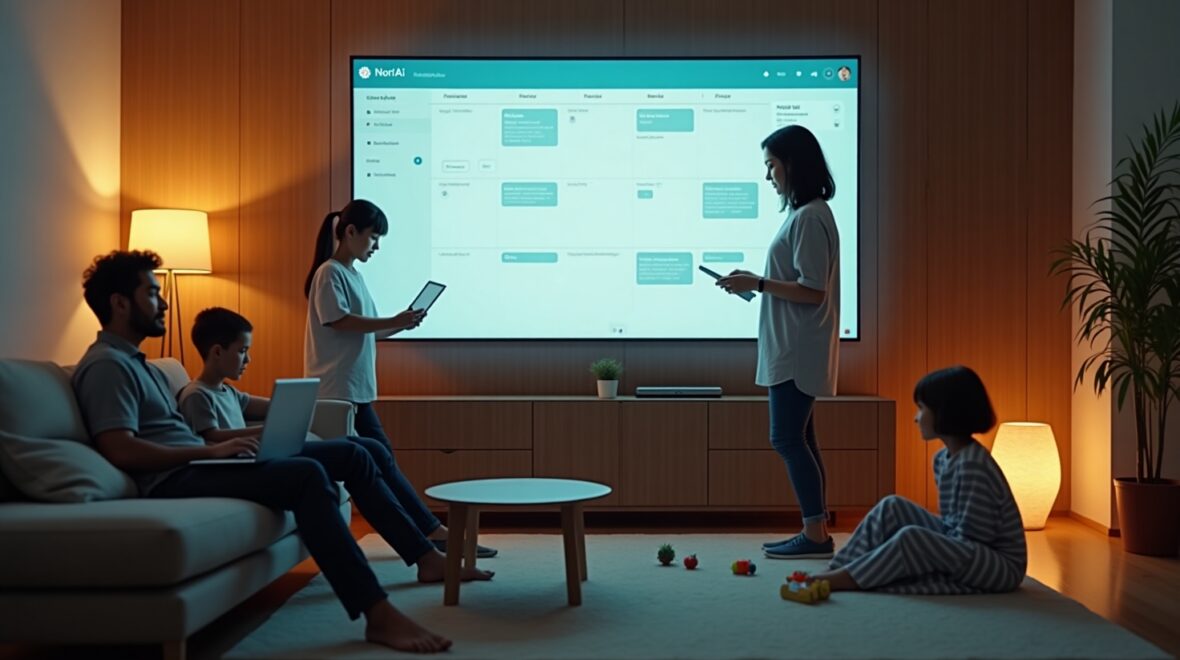
Nori AI Family Assistant: Revolutionizing Family Coordination and Reducing Mental Load
Introduction
In today’s fast-paced world, juggling household responsibilities while nurturing familial bonds can be overwhelming for parents. The Nori AI family assistant is making strides in alleviating this burden, offering a smarter approach to family management. By utilizing advanced technology, Nori AI empowers parents to streamline household coordination and reduce their mental load, ultimately paving the way for a more harmonious family life. This blog will explore how Nori AI transforms family organization and the profound impact it has on reducing parental stress.
Background
The demands on modern parents are more significant than ever. With work, social commitments, personal interests, and children’s needs all vying for attention, parents often find themselves shouldering a mental load that feels unmanageable. This mental load can lead to increased stress, anxiety, and feelings of inadequacy within the family dynamics.
Family-focused AI tools, like the Nori AI family assistant, emerge as a sources of relief in this evolving landscape. Unlike traditional methods that may feel cumbersome, these innovative solutions aim to simplify the process of family planning and household coordination. By integrating features geared toward organization and collaboration, Nori AI helps families navigate responsibilities more effectively, thereby enhancing overall well-being.
Trend
The trend of adopting AI for household coordination is gaining momentum. Increasingly, parents are recognizing the value of collaborative AI systems that facilitate task management without overwhelming their lives. Human-in-the-loop AI solutions, which rely on human input alongside machine assistance, are particularly appealing in family settings. This approach ensures that family members remain actively involved in coordination while benefiting from intelligent insights and automation.
For instance, Nori AI can help schedule family events, manage grocery lists, and delegate household tasks seamlessly. This makes the family planning process not only simpler but also more inclusive, as everyone can participate in decision-making. In essence, these tools become the supportive partner that helps parents achieve balance, rather than a controlling force that dictates how their family operates.
Insight
The effectiveness of the Nori AI family assistant is illustrated in numerous real-life scenarios where families report significant improvements in their day-to-day management. For instance, consider the story of the Johnson family. Struggling with conflicting schedules and endless to-do lists, they decided to implement Nori AI into their routines. The result? A noticeable reduction in the mental load felt by both parents.
By utilizing Nori AI to handle scheduling and task tracking, the Johnsons found they could focus more on enjoying family time, rather than being mired in constant planning and coordination. This experience underscores the critical role that AI for household coordination plays in fostering collaboration among family members. When mental load is reduced, families can thrive, cultivating deeper emotional connections and shared responsibilities.
Forecast
Looking ahead, the future of AI in family settings presents exciting possibilities, particularly with the development of shared family planning systems. As technology progresses, we may witness more sophisticated features that incorporate real-time adjustments to schedules, better personalization based on individual family member preferences, and predictive analytics that anticipate needs before they arise.
With the anticipated growth of AI capabilities in household coordination, we can expect even more streamlined communication and task management within families. Once seen as a luxury, access to powerful tools like the Nori AI family assistant could become a standard in homes, allowing parents to reclaim precious time previously lost to planning and execution.
Call to Action
Are you ready to transform your family life and significantly reduce the mental load you carry? The Nori AI family assistant stands ready to help streamline your household coordination, fostering collaboration and teamwork among your loved ones. By adopting this innovative tool, you can reclaim your time and enhance family connections. We invite you to explore the potential of Nori AI and witness firsthand how technology can not only assist in running a household but also enrich the experience of family living.
For more insights, visit the Nori AI Families Assistant on Hacker Noon to learn how families are utilizing AI to navigate their responsibilities and better manage their lives together.

Harnessing Hybrid Validation Regression Testing for Enhanced Software Quality
Introduction
In today’s fast-paced software development landscape, achieving robust quality assurance (QA) automation is critical. This is where hybrid validation regression testing comes into play. By combining the strengths of both manual and automated testing processes, hybrid validation regression testing delivers a powerful tool that optimizes QA efforts. The significance of this approach lies not only in its ability to enhance the reliability of software but also in its capacity to accelerate the release cycles, thereby ensuring both speed and safety in software deployments.
Hybrid validation regression testing serves multiple purposes in the realm of software quality engineering. It acts as a safeguard against bugs and errors while streamlining the testing process. By leveraging automation alongside human insights, organizations are witnessing dramatic improvements in their testing speed and accuracy.
Background
Hybrid Validation refers to a testing approach that integrates both manual and automation methods to ensure comprehensive software validation. Regression Testing serves as a quality control measure that verifies whether new code changes have inadvertently affected existing functionalities. Together, these two strategies form a cornerstone of modern software quality engineering.
As software complexity continues to rise and the demand for faster releases grows, the testing strategies have been forced to evolve. Automation has become significantly more manageable and effective, making it an invaluable ally in the QA arsenal. Previous methods that relied solely on manual testing are no longer scalable in today’s software ecosystems.
Historically, testing could take weeks, causing bottlenecks and delays in the software development lifecycle. However, by adopting an integrated approach, organizations can ensure timely feedback and continuous development, thus transforming the software release process from a tedious chore into a streamlined operation.
Current Trends in Hybrid Validation
As we dive deeper into hybrid validation regression testing, current trends indicate an increasing integration of AI and automation tools. According to an article by Nica Furs, organizations are witnessing a staggering reduction in validation times—from 120 hours down to just 2 hours. Such transformations emphasize the importance of regression testing optimization, where techniques and technologies converge to yield remarkable efficiency.
Key trends include:
– Automation Tools: AI-based testing tools are enabling smarter, data-driven testing strategies that prioritize high-risk areas, optimizing resource allocation.
– Integration with Continuous Deployment: Testing is becoming an intrinsic part of the development cycle, allowing faster feedback loops.
– Enhanced Collaboration: Hybrid approaches foster improved dialogues between development, QA teams, and business stakeholders, thereby improving overall software quality.
Statistical evidence from industries adopting these modern hybrid techniques shows a marked decline in error rates, underlining the effectiveness of this approach in meeting rapid development demands.
Insights from the Industry
The transformation of testing practices isn’t relegated to just statistical improvements; it’s a holistic change observed by industry experts. One notable perspective comes from Nica Furs, who has highlighted the immense value of effective test automation strategies in optimizing QA efforts. According to her, hybrid validation techniques not only facilitate faster release cycles but also ensure higher quality of output.
The application of these strategies can be particularly pronounced in Salesforce QA, where the platform’s dynamic nature necessitates rigorous and adaptable testing methods. Organizations leveraging hybrid models experience fewer disruptions, leading to higher user satisfaction and retention.
Additionally, it’s essential to note that the combination of software quality engineering practices creates synergies across various sectors—ranging from fintech to healthcare—where software quality is paramount. As companies recognize the interconnectedness of rapid release cycles and software integrity, hybrid validation emerges as a tapestry that weaves together efficiency and excellence in testing.
Future Forecast
Looking ahead, the future of hybrid validation techniques appears bright, fueled by ongoing advancements in QA automation. Emerging technologies such as machine learning and predictive analytics are expected to play pivotal roles in refining regression testing optimization. These technologies can help anticipate potential issues even before they arise in the development process, thus further enhancing software quality and reducing problems in production.
Moreover, as collaborative development models proliferate, organizations will likely shift towards even more integrated systems, where development, QA, and operations collaborate seamlessly. This shift will yield significant implications for software development life cycles, ultimately resulting in products that are not only released quickly but are also reliable and customer-friendly.
As hybrid validation strategies evolve, organizations will need to adapt and implement these cutting-edge methodologies to remain competitive. The integration of advanced analytics, AI, and continuous integration pipelines will become standard practice.
Call to Action
If you’re part of a software development team, now is the time to consider adopting hybrid validation regression testing in your projects. By integrating automated testing with your traditional QA efforts, you can unlock the potential for faster, safer releases.
To begin your journey, explore the following resources and tools:
– Hybrid Validation Tools: [Link to recommended tools and frameworks]
– Best Practices for Implementing Hybrid Testing: [Link to methodology guide]
For further insights, check out the article, \”From 120 Hours to 2: The Hybrid Validation Shift Behind Faster, Safer Releases\” by Nica Furs, which offers an in-depth look at this significant paradigm shift in validation processes.
Embrace hybrid validation today and drive your software development efforts towards unprecedented efficiency and quality!

AI Agents in Enterprise: Revolutionizing Workflows for the Future
Introduction
As we delve deeper into the digital age, AI agents in enterprise have emerged as a transformative force, fundamentally reshaping how organizations operate. These intelligent agents not only enhance corporate AI integration but also streamline workflows and operational efficiency. By seamlessly integrating into existing processes, they pave the way for companies to unlock significant value and gain a competitive edge.
Background
The increasing momentum of enterprise AI adoption is evident across various sectors, with pioneering companies like Intuit, Uber, and State Farm Insurance stepping into the realm of AI workflow agents. These early adopters are utilizing OpenAI’s Frontier platform to empower their operational frameworks with AI capabilities, setting the stage for a more productive future.
AI agents act like digital coworkers that engage with corporate systems, efficiently executing tasks and promoting a shared business context. This shift from basic AI tools to proactive agents capable of monitoring and automating processes heralds a new era. Organizations not only enhance efficiency but also cultivate a cohesive operational environment where data from multiple systems can be harmonized and utilized effectively.
Current Trend
One of the most significant trends in enterprise AI is the transition from traditional AI tools to proactive AI agents that can manage complex workflow tasks autonomously. In comparison, previous AI applications largely focused on assisting users through answering queries or providing recommendations. Today’s AI agents go beyond that by directly engaging in workflow processes.
Recent statistics indicate that organizations employing AI agents are witnessing substantial improvements in their administrative efficiency. According to industry reports, companies are using AI agents to automate processes at scale, which not only reduces operational load but also fosters a better business context and governance. For example, Intuit’s adoption of OpenAI’s Frontier attests to this trend, where AI agents are diminishing friction in daily tasks, ultimately unlocking new operational opportunities.
The implications of deploying AI agents are both strategic and operational. Enterprises can expect noticeable enhancements in workflow execution, and they can rest assured that governance and security measures are intrinsic to the deployment of these agents.
Insights from Implementation
The integration of AI agents into enterprise ecosystems yields critical insights into their performance and impact. Firstly, security is paramount; the reliability of AI operations hinges on robust security frameworks that can sustain multi-system integrations. Organizations must ensure that AI agents not only perform tasks but also adhere to compliance standards and data security protocols.
Additionally, establishing a shared business context is essential, especially in complex environments where multiple systems interact. By cultivating an enriched context, AI agents are better equipped to understand the nuances of workflows.
As companies like Uber and State Farm integrate AI agents, they provide valuable lessons. For instance, consistent monitoring and governance become crucial for maintaining operational integrity. This insight emphasizes that successful corporate AI integration relies on a framework that prioritizes both functionality and security.
Forecast on AI Agents in Enterprise
Looking ahead, the landscape of AI agents in enterprise is set for remarkable evolution. As businesses continue to adopt complex AI systems, we anticipate advancements that will further refine their capabilities. These developments may include enhanced learning algorithms that allow AI agents to adapt in real-time and become more autonomous in executing tasks.
Furthermore, the integration of corporate AI integration into diverse sectors could lead to the emergence of specialized AI agents tailored to particular industries, significantly improving operational precision and efficiency. By 2025, we might see AI agents playing critical roles in decision-making and operations management, outperforming traditional tools in both speed and effectiveness.
In conclusion, as organizations embrace AI workflow agents, they are not merely keeping up with technological evolution; they are strategically positioning themselves for sustained growth and competitiveness in a fast-paced business environment.
Conclusion and Call to Action
The journey towards harnessing AI agents in enterprise is well underway, and the advantages are too significant to overlook. For enterprises aiming to stay ahead of the curve, exploring AI workflow agents and adopting innovative solutions like OpenAI’s Frontier platform can unleash new levels of efficiency and productivity. Organizations should not hesitate to embark on this transformative journey; the future of operational excellence lies in the smart integration of AI technology.
For more insights on the rise of AI workflow agents and their implementation at large enterprises, check out the detailed report by Artificial Intelligence News.