Mobile Developer
Software Engineer
Project Manager
Mobile Developer
Software Engineer
Project Manager
Tag: Technology
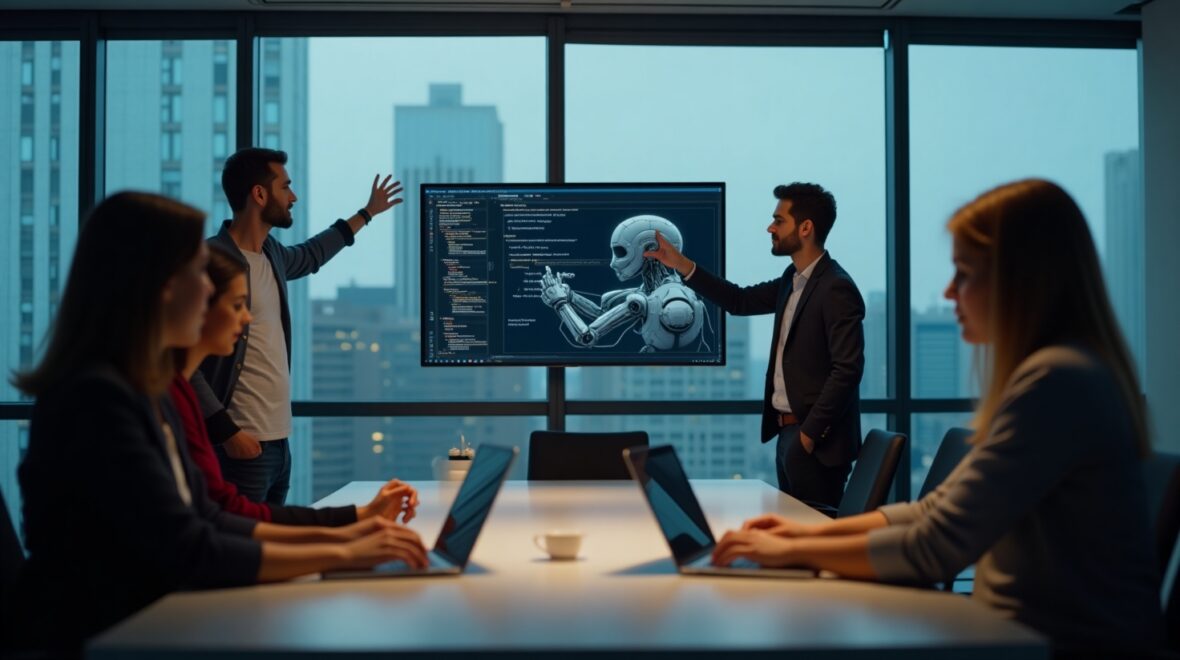
Agent Skills in AI: Revolutionizing Automation and Workflow Management
Introduction
In today’s fast-paced technological landscape, the demand for more intuitive and efficient AI-driven solutions is greater than ever. One area making significant strides is agent skills in AI. These specialized capabilities enhance the functionality of AI models, enabling them to carry out complex tasks and workflows effectively. As businesses and industries increasingly rely on automation, understanding agent skills and their implications becomes vital. This blog explores how agent skills are transforming automation and workflow management, shedding light on their relevance in various applications.
Background
Agent skills refer to the advanced capabilities developed within AI systems that allow them to autonomously execute tasks, adapt to new situations, and even communicate in more human-like ways. These skills go beyond traditional reactive responses of AI, offering a level of proactivity and engagement that enhances usability significantly. Unlike classic AI models that operate on preset algorithms, agent skills evolve by integrating various functions tailored to meet specific user needs. This evolution highlights a shift in AI technology from MCP vs Agent Skills—where MCP (Minimum Complexity Principle) offers effectiveness mainly based on simplicity, while agent skills thrive on complexity for increased automation efficiency.
The development of agent skills is spearheaded by AI/ML engineers, who blend ethical design principles with fuzzy logic to create AI systems that perform effectively in the real world. This entails not only programming the skills but also ensuring that they adhere to ethical standards while remaining user-friendly. Collaborations amongst professionals— such as those noted by Daniel Saks and experts like superorange0707 and Dr. One Ms. Hacker—foster an environment where AI can progress responsibly, meeting the complex demands of modern applications.
Trend
As AI technology continues to evolve, there is a noticeable trend towards incorporating agent skills into platforms like Claude AI. This integration has implications for AI workflow automation, leading to more deterministic AI outputs that users can depend on. For example, businesses across various industries—including healthcare, finance, and customer service—are utilizing these enhanced Claude AI workflows to streamline processes.
Take the healthcare sector as an example: an AI that possesses agent skills can autonomously manage patient inquiries, schedule appointments, and even analyze medical data—thereby increasing overall operational efficiency and improving patient care. Such applications not only limit human error but also provide organizations with a robust framework for automation. The trend indicates a growing acceptance of these advanced AI functionalities as tools for innovation and productivity.
Insight
The practical advancements brought forth by agent skills in AI offer substantial benefits, particularly in complex problem-solving contexts. Insights from leading experts—such as those shared by superorange0707—emphasize how these skills facilitate seamless integration of specialized functions within AI agents. This results in enhanced automation capabilities and deeper engagement in real-world scenarios.
For instance, AI agents equipped with strong problem-solving skills can handle customer service inquiries and provide tailored solutions based on previous interaction data. This level of sophistication not only satisfies customer needs but also frees human resources for more strategic functions. Summarizing ideas from recent articles, it is clear that the integration of specialized functions enables AI to manage intricate tasks efficiently, making day-to-day operations smoother for businesses and individuals alike. Resource management and process optimization are significantly enhanced through agent skills.
Forecast
Looking forward, the landscape for agent skills in AI is poised for substantial growth over the next five years. As we anticipate further innovations, we can expect Claude AI workflows to expand, leading to even more profound implications for industries dependent on deterministic AI. The incorporation of agent skills might drive AI to unprecedented levels of personalization and adaptability, fundamentally changing how we interact with technology.
However, as these advancements unfold, challenges such as maintaining ethical standards in AI development may arise. The growing complexity of agent skills necessitates careful considerations about privacy and bias, ensuring responsible usage. The conversation around ethical AI will undoubtedly intensify as organizations balance innovation with the need for accountability.
Call to Action
As the field of AI continues to expand, it is crucial for stakeholders to explore technologies integrated with agent skills and consider their benefits for effective workflow management. For those interested, resources are available that delve deeper into agent skills in AI, allowing users to harness their full potential. Stay updated with emerging trends that could reshape automation in your industry—now is the time to embrace the future of AI technology.
For further exploration of agent skills in AI, check out the relevant article here.
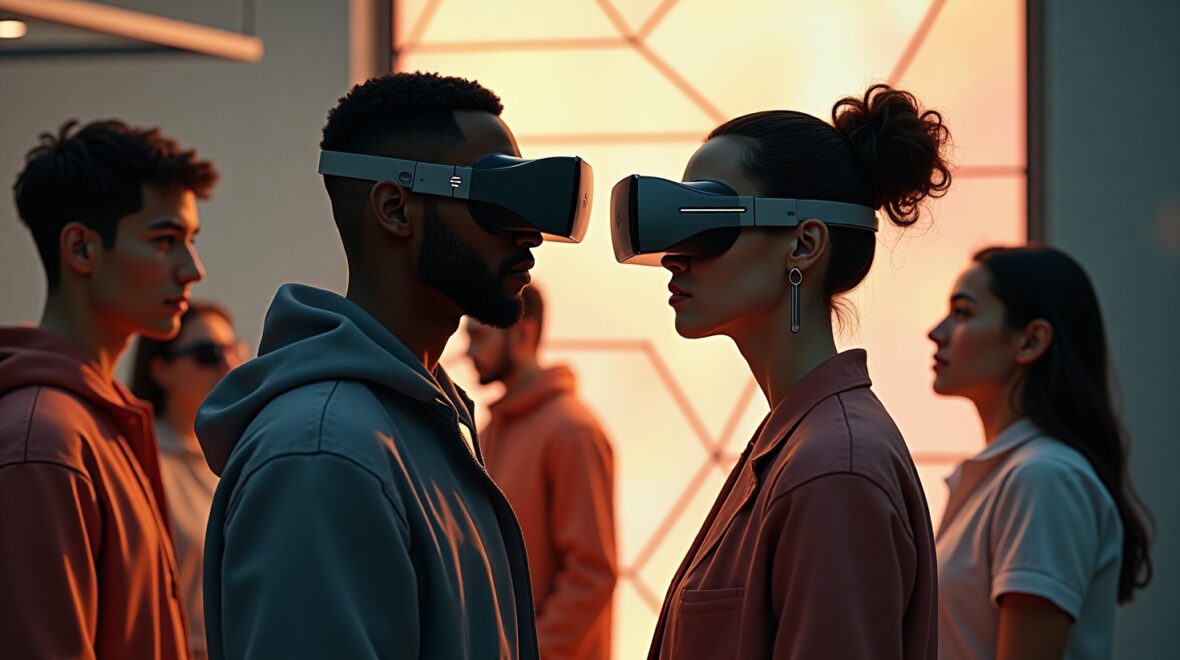
The Metaverse Decline: Understanding AI’s Impact on Social Technology
Introduction
The concept of the metaverse, once heralded as the next frontier in social interaction, digital economy, and virtual existence, has rapidly faded from the limelight. What began as a visionary promise—an immersive, interconnected digital universe—has spiraled into what many now deem the metaverse decline AI impact. As artificial intelligence (AI) continues to gain traction, promising efficiencies and personalized experiences, the metaverse appears to be struggling to capture the same enthusiasm. The current debate regarding VR vs AI technology highlights this paradigm shift, raising critical questions about what the future holds for social tech.
As we examine the intersection of these technologies, it’s clear that new consumer preferences are emerging, notably in the trends around AI companionship. The initial allure of a fully immersive virtual world is now juxtaposed against AI’s potential to reshape online interactions.
Background
Meta, the parent company of Facebook, invested aggressively in the hope of establishing the metaverse as a cornerstone of its future. The company funneled a staggering $73 billion into its Reality Labs division, a hub intended to innovate and advance virtual reality (VR) technologies. However, the results have been far from anticipated. According to a report, Meta recently laid off roughly 1,500 employees, about 10% of Reality Labs staff, and shut down several VR game studios, a concrete sign of the difficulties faced in this realm (TechCrunch).
Challenges plagued Meta’s VR ambitions from the beginning, including lukewarm product reception and an overwhelming sense of safety concerns—critical issues that tarnished consumer interest. The Meta Horizon app, despite being downloaded 60.4 million times, fell short of engaging users meaningfully. Furthermore, high transaction fees—with Meta taking 47.5% cuts on digital sales—disheartened developers and disrupted the potential for a robust VR economy.
In essence, while Meta invested heavily in what was purported to be the future of social tech, the reality proved a stark contrast to its grand vision.
Trend
As we delve deeper into the decline of VR and the simultaneous rise of AI and augmented reality (AR) technologies, it becomes increasingly evident that the dynamics of consumer technology are shifting. Global shipments of VR headsets reportedly fell 12% year-over-year in 2024, signaling dwindling interest in VR experiences. Conversely, emerging AI technologies and mixed reality devices are exhibiting robust growth and consumer demand.
Studies indicate that while Meta accounted for 77% of VR headset shipments in 2024, interest in VR is waning, shifting user attention toward AI-driven systems that provide companionship and services. As tech-savvy consumers begin to prioritize experiences that merge physical and digital realms—reflective of the success of products like Ray-Ban Meta Glasses—it becomes clear that the future of social tech lies beyond immersive VR experiences.
This shift is not merely anecdotal; statistics underline consumers’ preference for easily accessible AI services that enhance daily life, contrasting sharply with the ongoing hurdles faced by VR platforms.
Insight
The roadblocks that Meta encountered in maintaining its VR and metaverse vision raise significant concerns about the sustainability of such a concept. Users frequently reported feelings of harassment and safety risks within VR environments, tarnishing what was supposed to be a revolutionary social experience. The feedback indicates a disenchantment with the metaverse and a call for safer, more user-friendly alternatives.
Furthermore, the financial structures that Meta employed put significant barriers up for prospective developers. By imposing high fees on digital sales, Meta stifled innovation among creators who might otherwise facilitate the kind of engaging content that could rejuvenate user interest. The precarious balance between revenue generation and developer satisfaction is a lesson for the future of any tech initiative, particularly one as ambitious as the metaverse.
Forecast
As we stand on the cusp of anticipated technological evolution, it’s crucial to forecast what the landscape of social technology may become. With VR struggling to steal back attention from the AI revolution, we might witness a significant pivot from Meta and competitors like Apple and Google. In this climate, the once-cherished notion of the metaverse could evolve, fragmented into more manageable and appealing scenarios where AR and AI complement one another rather than trying to dominate the social sphere alone.
In such a landscape, AI technologies will likely lead the charge, offering users a blend of virtual interactions powered by intelligent algorithms that cater to individual preferences and experiences, while VR, if it opts to survive, must innovate around user safety and content accessibility.
Call to Action
The rapid evolution of technology invites us all to reflect on our own encounters with VR and AI. Have you found AI technologies like chatbots or voice assistants more useful and engaging compared to VR experiences? This is the time to explore the boundaries of these rapidly evolving formats.
We encourage you to visit Meta’s VR platforms and AI products and engage in the dialogue that shapes the future of social technology. What are your thoughts on how AI will shape your online interactions? Share your insights as we navigate this transformative era together.
For more in-depth information, check out the full article on TechCrunch.

Claude Code Teleport Workflow: Revolutionizing Cross-Device AI Coding
Introduction
In today’s fast-paced digital landscape, developers require tools that enhance productivity and offer seamless workflows. Enter the Claude Code Teleport Workflow—a groundbreaking innovation that allows developers to switch devices effortlessly while maintaining their coding momentum. This advanced system not only enables cross-device AI coding but also fosters asynchronous programming, transforming how developers operate and collaborate. In this article, we’ll explore how this remarkable feature is redefining productivity in software development.
Background
The evolution of coding environments over the past few decades has been revolutionary. From local development setups to web-based integrated development environments (IDEs), coding has become increasingly decentralized. The emergence of cloud IDE integrations has played a pivotal role in this transition, allowing developers to work from virtually anywhere with internet access. Within this modern framework, Claude Code has distinguished itself by offering innovative tools tailored for the needs of contemporary developers.
The introduction of the Claude Code Teleport Workflow signifies a substantial leap forward. It empowers developers to start coding on one device—be it a desktop, laptop, or tablet—and effortlessly switch to another without losing their place. Just like passing the baton in a relay race, this workflow promotes fluidity and continuity, enabling developers to keep their momentum, irrespective of the device they are using.
Trend
The trend of cross-device AI coding is on the rise, catalyzed by the increasing reliance on cloud technologies and collaborative frameworks. Developers no longer work in isolation; instead, they engage with tools that enhance teamwork and adaptability. The async programming with AI dimension of this trend allows for improved coordination and real-time collaboration among team members regardless of geographical location.
Claude Code’s Teleport Workflow provides the flexibility necessary in this environment by enabling developers to carter their work habits based on real-time situations. For example, a developer might find themselves working on their laptop in a coffee shop and, upon returning home, continue coding seamlessly on a powerful desktop machine. This uninterrupted flow minimizes context-switching and enhances overall efficiency.
Insight
Industry experts are enthusiastic about the implications of the Teleport Workflow. Vladislav Guzey, a developer and PhD researcher in AI who has over 18 years of experience in growth and development, emphasizes the workflow’s potential to streamline coding experiences:
> “The Teleport Workflow enables developers to work smarter, not harder. The seamless transition across devices allows for increased productivity—especially in settings where collaboration is paramount.”
Sébastien Castiel, another expert in the field, echoes this sentiment, stating that tools designed for asynchronous programming with AI will fundamentally alter development strategies. Data and feedback from developers already using Claude Code have indicated significant productivity gains when leveraging this cross-device approach (see more detailed insights here).
Forecast
Looking ahead, the future of coding is set to be marked by further integration of AI-driven assistants, such as GitHub’s Copilot, alongside Claude Code’s Teleport Workflow. We can anticipate that async programming will become not just a feature but a standard practice in development workflows, allowing developers to compose code in a truly collaborative environment.
As AI continues to evolve, it is expected that coding tools will harness this technology to provide even deeper integrations and smarter suggestions. Developers could benefit from an even more intuitive experience, using AI tools to anticipate coding needs or suggest optimizations as they work across multiple devices simultaneously.
Call to Action
The transformative capabilities of the Claude Code Teleport Workflow offer developers unprecedented freedom and productivity. Consider integrating this powerful tool into your daily coding practices to experience its benefits firsthand. Explore how it can provide an environment that fosters creativity and efficiency, elevating your coding experience to the next level. The future of coding is not just about writing code; it’s about how effectively we harness our tools to create seamless, impactful workflows.
For more information on the Teleport Workflow and its stunning capabilities, check out the launch details here. Embrace the change and transform the way you code today!

Mastering Decision-Making with OptiMind AI Optimization: A Game Changer in Mathematical Modeling
Introduction
In the evolving landscape of artificial intelligence, OptiMind AI optimization emerges as a groundbreaking tool that revolutionizes how we convert natural language into optimization models. This powerful technology empowers organizations to enhance decision-making processes across various sectors by translating complex, human-written language into mathematical equations that drive optimization.
The capability of OptiMind to intuitively interpret and execute optimization tasks is significant in today’s AI developments. As industries face increasing complexity in operations—from logistics to supply chains—the need for efficient decision-making tools is more critical than ever. OptiMind seamlessly fits into this narrative, representing a step forward in integrating AI into practical applications.
Background
OptiMind is a product of Microsoft AI research, leveraging an architecture known as the Mixture of Experts (MoE). This model boasts an impressive 20 billion parameters, with approximately 3.6 billion active per token, facilitating its adept handling of intricate tasks. The combination of mixed integer linear programming (MILP) and natural language processing allows OptiMind to effectively translate decision problems into executable Python code, simplifying the workflow for optimization tasks.
To illustrate how this works, imagine a logistics company tasked with determining the optimal delivery routes for a fleet of trucks. Traditionally, this would require intricate formulas and a deep understanding of mathematical modeling. However, with OptiMind, a logistics manager could simply describe their goals and constraints in natural language, which the AI would convert into a mathematical optimization model that can be processed by MILP solvers.
Microsoft’s advancements in this space underline the essentiality of marrying sophisticated neural network designs with tangible optimization applications, allowing for effective handling of real-world challenges.
Current Trend in AI Optimization
The trend of incorporating AI into optimization is on the rise, with tools like OptiMind significantly influencing this field. Many industries, especially logistics and supply chain management, are experiencing a need for robust optimization model generation to improve operational efficiency. These sectors are increasingly adopting AI-driven solutions to streamline their processes.
For instance, the deployment of natural language to code AI like OptiMind enables organizations to reduce the time typically taken to transition from problem identification to solution implementation. By minimizing human error and enhancing speed, businesses can achieve higher levels of accuracy in their operations.
Moreover, the advancements in AI optimization tools highlight a broader transition towards automation. As OptiMind integrates capabilities of generating optimization models directly from human language descriptions, it essentially turns qualitative descriptions into quantitative solutions, optimizing the entire decision-making process. This capability is reshaping industry standards and elevating operational efficiency to unprecedented levels.
Insight from Recent Research
Recent insights from Microsoft’s research on OptiMind present exciting benchmarks in performance and error analysis. For instance, models fine-tuned from OpenAI’s GPT-OSS-20B on cleaned datasets have demonstrated a 20.7% improvement in formulation accuracy over baseline models. This enhancement is achieved through techniques like class-based error analysis and the integration of expert hints during the training and inference phases.
These methodologies not only streamline the decision-making process but also address long-standing bottlenecks inherent in operations research. The researchers assert that the use of cleaned and expert-validated datasets is crucial for developing reliable optimization tools.
In practical terms, a company may find that, by utilizing OptiMind, they can make decisions based on far more accurate data modeling, thus avoiding costly miscalculations that can disrupt operations. This demonstration of systematic error reduction illustrates why OptiMind is not just a theoretical advancement but a practical solution for operational challenges.
Future Forecast: The Impact of OptiMind on Industries
Looking ahead, the influence of OptiMind AI optimization on decision-making across various sectors seems profoundly promising. Industries are expected to witness enhanced automation and efficiency levels, helping to drive economic benefits for businesses that integrate these technologies into their operational workflows.
As organizations adopt OptiMind and similar tools, there are anticipated advancements in competitive analysis capabilities against proprietary models. The cost-effectiveness of adopting open-source solutions, combined with the operational efficiency that they provide, will keep pushing traditional methodologies toward more automated and intelligent frameworks.
Given the trajectory of AI in optimization, we can forecast that the future may see a prominent rise in the usage of these technologies, especially in tackling complex decision problems across logistics, manufacturing, and beyond. This technological evolution is not only expected to enhance operational efficiencies but also to lower production costs and streamline supply chain dynamics.
Call to Action
For organizations looking to optimize their processes, the integration of OptiMind AI optimization is a promising avenue. We encourage businesses to explore this powerful tool as part of their optimization strategies. For practical applications and further reading on OptiMind, consider accessing it through platforms like Hugging Face and Azure AI Foundry.
Stay ahead in the AI-driven world by leveraging cutting-edge technologies such as OptiMind to transform decision-making processes.
Additionally, for an in-depth look into the model, visit this citation from MarkTechPost. This resource provides comprehensive insights into the groundbreaking advancements and practical applications of OptiMind.