Why LingBot-VLA Will Revolutionize Robotics AI Forever
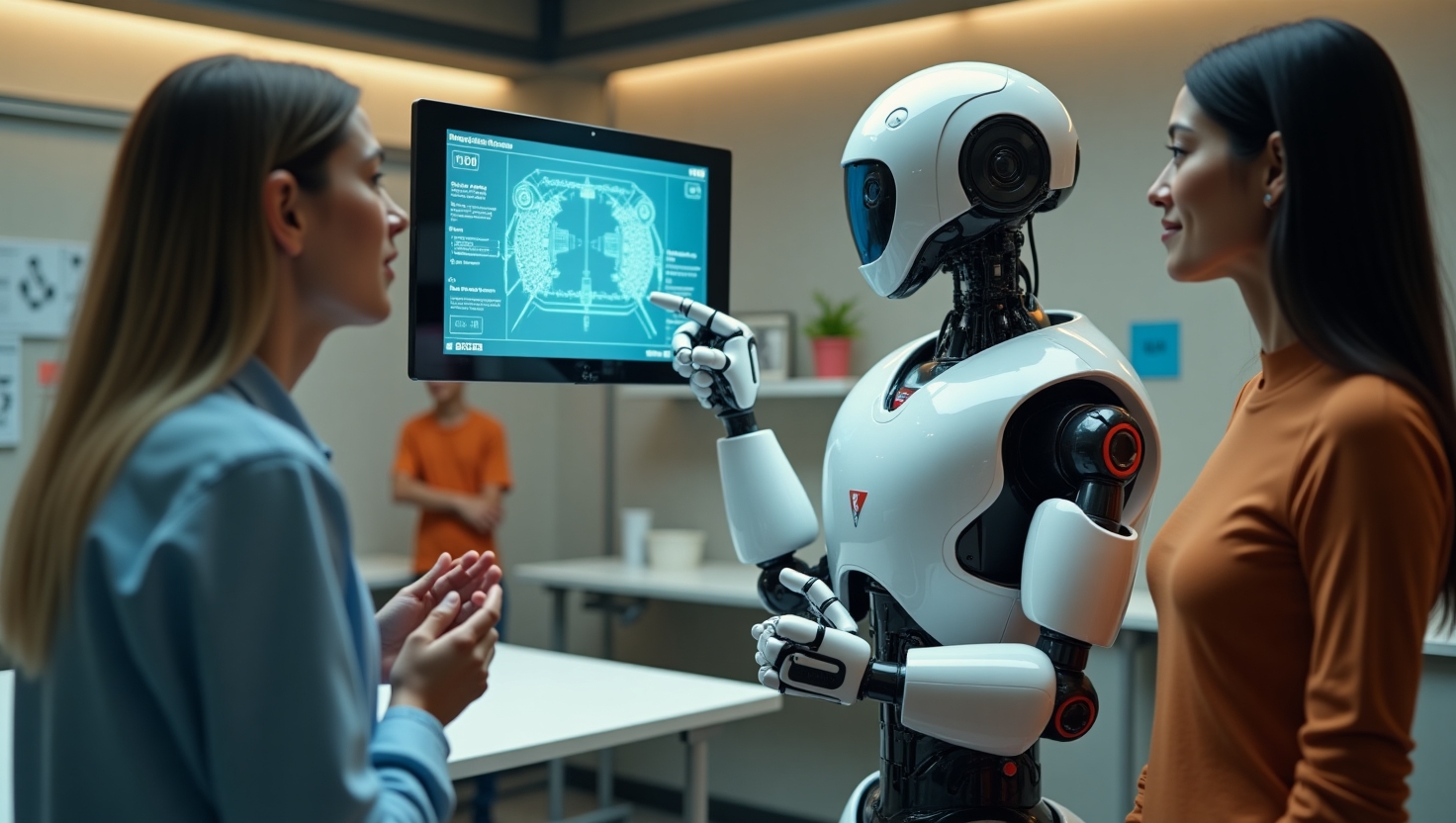
Vision Language Action AI: Transforming Real-World Robotics
Introduction
The concept of Vision Language Action AI (VLA AI) is rapidly reshaping the landscape of robotics and artificial intelligence (AI). At its core, VLA AI integrates visual recognition capabilities, linguistic comprehension, and actionable responses, allowing machines to interact with dynamic environments in an intuitive and effective manner. As robots become increasingly capable of performing complex tasks—from assembling products in manufacturing to assisting in medical procedures—the need for advanced AI systems that can understand and respond to visual cues and verbal commands intensifies. This intersection of capabilities represents a monumental leap in how robots can navigate the complexities of the real world.
Background
Vision Language Action AI is not an overnight phenomenon; it has evolved significantly through various technological breakthroughs. The integration of robotics AI models has paved the way for robots to perceive their surroundings more effectively.
Outstanding advancements in computer vision, natural language processing, and machine learning have contributed to this integration. For instance, most contemporary AI systems can now interpret visual inputs (like images and videos), process them linguistically (like understanding commands), and perform physical actions in a coherent sequence. Historically, systems that could perform one of these tasks—be it visual interpretation or executing commands—struggled to bridge the gap between perception and action.
The capacity for real-world manipulation has improved drastically, highlighting the importance of communication between AI models and physical environments. When a robot can not only \”see\” an object but also \”understand\” instructions conveyed in natural language, the possibilities expand exponentially. This foundational understanding sets the stage for further innovations.
Trend
The focus on dual arm robot control showcases a critical trend within the robotics sector, enhancing operational efficiency across various industries. The recent development of the Qwen2.5-VL model exemplifies how Vision Language Action AI is being actualized in practical applications. This model allows dual-arm robots to engage in manipulation tasks that require intricate coordination and real-time decision-making.
For instance, consider a robot designed for warehouse environments that uses the Qwen2.5-VL model to pick and sort products. With its advanced perception and action capabilities, the robot can \”see\” the location of items, \”understand\” an operator’s requests via voice commands, and effectively \”act\” by maneuvering its arms to retrieve the correct products. This advancement not only boosts operational productivity but also minimizes errors—a critical factor in time-sensitive environments.
Moreover, as companies increasingly adopt robots for routine tasks, the development of sophisticated robots equipped with VLA AI technology can handle multifaceted operations, from warehouse logistics to preparing and delivering medical supplies.
Insight
Vision Language Action AI’s practical applications are already manifesting across diverse industries, showcasing its transformative potential. In manufacturing, robots equipped with this technology streamline assembly lines, minimizing reliance on human intervention. They can accurately interpret visual inputs, execute language-based instructions, and interactively adapt to alterations in real-time manufacturing processes.
In healthcare, AI for real-world manipulation can improve surgical precision, as robots can follow detailed verbal directives during delicate procedures. Furthermore, collaborative robots, often referred to as \”cobots,\” utilize VLA AI to enhance service delivery in sectors like hospitality and customer service. A notable example highlighted by MarkTechPost is Ant Group’s Lingbot VLA, which functions as a versatile tool for enhancing user interfaces in service roles, demonstrating the potential of VLA technology in practical, low-risk environments.
This collaborative layer between humans and robots transforms how we approach tasks, suggesting a future where assistance from AI can significantly augment human capabilities.
Forecast
Looking ahead, the future of Vision Language Action AI is poised for significant advancements that will redefine its role in robotics. We can expect the development of even more sophisticated robotics AI models, enhancing the interaction quality between robots and their users.
As industries continue to evolve, the demand for intelligent automation solutions will rise. Companies will increasingly seek VLA-enabled robots that can not only interpret a broad array of commands but also adapt seamlessly to complex environments. Innovations in deep learning and neural networks will likely yield models that can understand and process more nuanced commands without extensive programming—think of robots that can learn new skills from observation and practice, much like humans do.
The implications for industries reliant on automation are vast, promising efficiency, improved safety, and operational flexibility across manufacturing, logistics, healthcare, and other sectors.
Call to Action
As we stand on the cusp of widespread adoption of Vision Language Action AI technologies, it becomes paramount for businesses and individuals to stay informed and proactively explore AI solutions tailored to their unique needs. The advancements in robotics offer exciting opportunities for enhancing productivity and simplifying complex tasks.
To learn more about these transformative AI technologies, consider looking into the developments shared by experts in the field. For further insight, you can read about Ant Group’s Lingbot VLA here.
The future of robotics, powered by Vision Language Action AI, is bright. Stay curious, stay informed, and prepare to leverage these innovative technologies in your pursuits!