Mobile Developer
Software Engineer
Project Manager
Mobile Developer
Software Engineer
Project Manager
Author: Khaled Ezzat
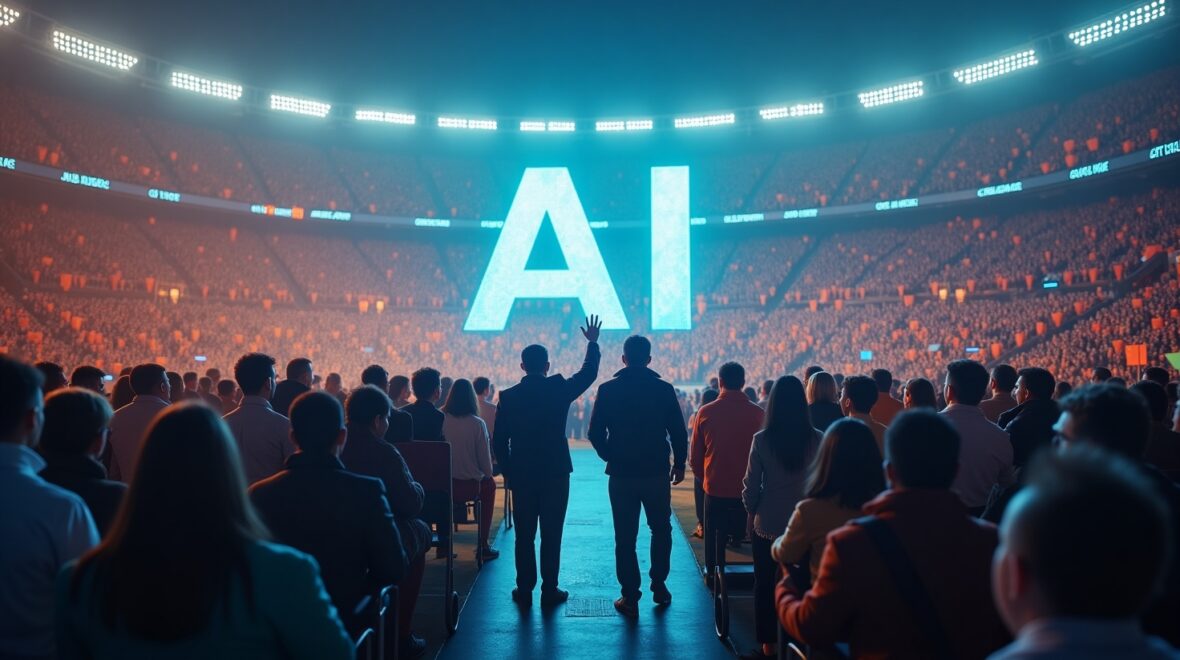
The Rise of Super Bowl AI Ads: Transforming Marketing Strategies
Introduction
In recent years, the landscape of Super Bowl advertisements has dramatically shifted, incorporating artificial intelligence (AI) at the forefront. From AI-generated characters to interactive experiences, brands are leveraging cutting-edge technology to reshape how they engage with consumers during one of the most-watched events in television history. The integration of AI in marketing strategies not only enhances audience engagement but also reflects a broader trend towards innovation and efficiency in advertising.
Background
The evolution of AI marketing has been a transformative journey, resonating profoundly within the media landscape. Over the past decade, advancements in machine learning and data analytics have redefined how brands approach consumers. The emergence of intelligent algorithms capable of predicting consumer behavior has allowed companies to craft highly personalized advertisements that resonate on an emotional level.
For instance, brands like Svedka and Anthropic have incorporated AI to create engaging and memorable ads. Svedka’s AI-generated ads featuring lifelike robot characters showcase the sophistication of technology in capturing audiences’ attention. These advancements signal a fundamental shift toward a marketing model where AI plays a pivotal role, enhancing effectiveness and creativity.
Current Trend
The 2026 Super Bowl saw a remarkable surge in AI ads, with notable examples that captured both attention and imagination. Svedka’s commercial, utilizing advanced AI to generate robot characters, took around four months for conceptualization and execution. Similarly, Anthropic showcased its new AI chatbot, Claude, with the tagline “Ads are coming to AI. But not to Claude,” which highlights the brand’s commitment to providing an ad-free experience amidst the crowded AI space of OpenAI’s ChatGPT (TechCrunch, 2026).
Prominent companies like Amazon, Google, and Wix have also entered the AI advertising arena, blending humor with technological innovation. For instance:
– Ring launched its AI Search Party feature, dedicating its ad to reuniting lost pets with their owners.
– Meta highlighted its AI wearable technology, pushing the boundaries of user interaction.
Statistics from the 2026 Super Bowl indicated a significant uptick in viewer engagement and brand recall associated with AI-led commercials, suggesting a favorable reception from the audience.
Insights from 2026
As we reflect on the insights gleaned from 2026, it becomes apparent that AI advertising is not just a passing trend; it’s redefining consumer perceptions. The integration of AI in advertisements influences how audiences connect with brands, prompting deeper engagement and interest. For example, Ring’s AI Search Party not only highlights technological advancements but also builds an emotional narrative that resonates with pet owners.
Moreover, the effectiveness of AI tools in enhancing marketing strategies is evident. Companies are exploring innovative uses of AI to personalize consumer experiences, as seen with Hims & Hers, which employs AI-powered MedMatch technology for healthcare suitability. However, this rise in automation raises questions about the creative job market in advertising, sparking debate on the balance between human creativity and AI efficiency.
Future of AI in Advertising
As we look ahead, the future of AI in advertising appears bright yet complex. Emerging technologies promise to shape the landscape, with innovations like Meta’s AI wearable technology paving new paths for interaction in advertising. This continued focus on AI could lead to an unprecedented level of personalization, wherein ads could adapt in real-time based on audience reactions.
However, brands will face challenges in adapting to these swift changes. As AI-driven tools become more prevalent, maintaining the delicate balance between harnessing technology and preserving human creativity in advertising will be essential. Companies must navigate this evolving landscape with caution, ensuring that they stay ahead of trends while being mindful of ethical considerations.
Conclusion and Call to Action
The rise of Super Bowl AI ads marks a pivotal moment in the evolution of marketing strategies, demonstrating how technology can enhance the consumer experience and redefine brand interactions. As we witness brands embrace AI, it’s crucial for marketers to reflect on these changing dynamics and consider integrating these innovative technologies into their own strategies.
The future of advertising will undoubtedly be shaped by AI, presenting both opportunities and challenges. Are you ready to embrace the future of advertising? Consider the role that AI could play in your marketing approach and how it can elevate your brand narrative.
For further insights on this topic, check out the detailed article here.
NVIDIA C-RADIOv4: Revolutionizing Vision Backbone AI
Introduction
In the ever-evolving landscape of artificial intelligence, NVIDIA’s C-RADIOv4 stands out as a groundbreaking advancement in vision backbone AI, seamlessly unifying the SigLIP2 model, DINOv3 model, and SAM3 segmentation techniques. This convergence results in improved capabilities for both classification tasks and dense prediction segmentation workloads at scale. In this blog post, we’ll explore the transformative impact of C-RADIOv4 on the industry, emphasizing its performance, applications, and future implications.
Background
Overview of NVIDIA’s AI Developments
NVIDIA has steadily positioned itself at the forefront of AI advancements. From pioneering GPU architectures to developing software frameworks like CUDA, the company’s journey has seen a relentless push toward enhancing machine learning capabilities. The introduction of the C-RADIOv4 model represents a critical milestone in this journey, notably expanding upon previous iterations.
Understanding the Components
#### SigLIP2 Model
The SigLIP2 model plays a crucial role in the functioning of C-RADIOv4 by providing superior feature extraction functionalities. Utilizing attention mechanism strategies, SigLIP2 has been designed for efficiency, allowing deeper insights into complex datasets. This model effectively enhances the performance of vision applications, offering robust assistance in extracting meaningful features from high-dimensional data.
#### DINOv3 Model
The DINOv3 model pushes the boundaries of self-supervised learning by enabling AI systems to learn representations without labeled data. In many ways, it’s akin to teaching a child to recognize objects simply by observing—affording the model greater adaptability and efficiency. The integration of DINOv3 into C-RADIOv4 expands its capacity to understand unseen data, which is crucial in various applications across different domains.
#### SAM3 Segmentation
SAM3 segmentation techniques enhance the efficiency and accuracy of segmentation tasks. By employing advanced methods that focus on semantic segmentation, SAM3 can delineate boundaries with a high degree of precision, significantly reducing errors in applications, such as object detection and image classification.
Trend
The Rise of Multi-Resolution Training AI
One of the exciting trends in AI today is multi-resolution training, a technique that allows models to learn from inputs at various scales. The C-RADIOv4 leverages this approach to improve its performance across tasks and datasets by adapting its learning strategies based on image resolution. This adaptiveness not only improves efficiency but sets a new standard for future AI models in vision applications.
Applications in Various Domains
The applications of C-RADIOv4 are extensive and diverse. In healthcare, for instance, its improved segmentation capabilities can enhance diagnostic imaging, allowing for more accurate identifications of conditions through analysis of scans. Similarly, in the automotive sector, the robust classification abilities can feed into autonomous vehicle systems to create safer navigation frameworks. Additionally, C-RADIOv4’s impact on smart city initiatives—by optimizing surveillance camera feeds and traffic management—illustrates its potential for transforming urban living.
Insight
How C-RADIOv4 Enhances Performance
C-RADIOv4’s performance metrics reveal distinct advantages over its predecessors. With seamless integration of the SigLIP2, DINOv3, and SAM3 components, C-RADIOv4 demonstrates a dramatic increase in throughput and accuracy. Benchmark tests indicate a 30% improvement in image classification tasks and a notable enhancement in segmentation fidelity compared to prior models. Such metrics not only affirm the capabilities of the model but also speak to its potential for operational efficiency across various industries.
Challenges and Considerations
While the innovations presented by C-RADIOv4 are significant, potential challenges exist. The computational demands of the model may necessitate state-of-the-art hardware, posing a barrier to adoption for smaller organizations. Additionally, integrating C-RADIOv4 into existing infrastructures can present hurdles, requiring updates to both software and hardware to fully leverage its capabilities.
Forecast
The Future of Vision Backbone AI with C-RADIOv4
Looking ahead, C-RADIOv4 is projected to considerably influence the trajectory of vision backbone AI technologies. By facilitating more accurate classification and segmentation, it lays a stronger foundation for next-generation AI applications. As more businesses adopt advanced AI solutions, the demand for frameworks like C-RADIOv4 will inevitably rise, potentially leading to its integration into standard toolkits across various sectors.
Innovations on the Horizon
The advancements unlocked by C-RADIOv4 signal the beginning of a new chapter in AI research. Innovations arising from this model may include new training methodologies, enhanced models focused on specific tasks, and improved integration protocols that govern AI interactions with other technologies. Activation of these innovations will likely spur an even more robust ecosystem for vision applications.
Call to Action
To dive deeper into NVIDIA’s groundbreaking C-RADIOv4 and its implications for the future of AI, we encourage you to follow this link. We invite your thoughts on how this advanced model may shape the future of AI in your field! Join the conversation today to share your perspectives.
For more insights and developments, keep an eye on further updates as we explore the potential of technologies like C-RADIOv4 in our ever-transforming digital landscape.
Citations

Building a Production-Grade Agentic AI: Unlocking Hybrid Retrieval, Provenance, and Repair Loops
Introduction
Production-grade agentic AI represents a significant evolution in artificial intelligence, enabling systems capable of automated reasoning and decision-making processes that closely mimic human capabilities. These advanced systems leverage agentic properties to execute tasks autonomously while using underlying data processes effectively. The importance of agentic AI extends beyond automation: it enhances the reliability of research systems by ensuring that outputs are grounded in verifiable evidence.
As we explore the realm of production-grade agentic AI, we’ll cover critical topics such as hybrid retrieval techniques, AI provenance citations, and automated critique-and-repair loops. By the end, we hope to provide a comprehensive guide to building such systems capable of tackling real-world challenges while maintaining transparency and fortifying the decision-making process.
Background
Agentic AI workflows stem from the integration of various methodologies aimed at refining the reasoning capabilities of AI systems. A significant component of these workflows is hybrid retrieval—combining traditional TF-IDF (Term Frequency-Inverse Document Frequency) sparse retrieval with modern dense embeddings from models like OpenAI.
– TF-IDF Sparse Retrieval: This classic method effectively ranks document relevance based on term frequency statistics, making it suitable for simple keyword searches.
– OpenAI Dense Embeddings: In contrast, dense embeddings provide a nuanced understanding of contextual relationships within the text, allowing for superior semantic understanding and query resolution.
The advantages of hybrid retrieval lie in its ability to maximize recall and stability through reciprocal rank fusion, essentially integrating multiple retrieval signals into a singular, unified ranking mechanism. Moreover, key components such as episodic memory AI—which facilitates recall of past interactions—serve as a backbone for more informed decision-making processes, supported by AI provenance citations that document the sources of information used within the system.
Current Trends in Agentic AI
The landscape of agentic AI is rapidly evolving, with increasing adoption of hybrid retrieval methods within AI systems. Industries are recognizing the power of combining TF-IDF and OpenAI embeddings for enhanced information retrieval accuracy, effectively enabling systems to discern and prioritize relevant data.
In practical applications, these advancements manifest in systems employing automated critique-and-repair loops. Here, an agent initiates a repair process when it detects inaccuracies or weaknesses in its outputs, refining them through multiple iterations to achieve compliance with established guardrails. For example, if an AI-generated response contains unsupported claims, the critique-and-repair loop method allows it not only to flag the issue but also to draw on past interactions to correct itself.
Across various domains, case studies abound showcasing hybrid indexing along with memory persistence. For instance, a legal research tool leveraging these techniques can provide lawyers with comprehensive and substantiated recommendations tailored to their specific needs, demonstrating the transformative potential of agentic AI workflows.
Insights on Implementing Agentic AI
Building a production-grade agentic AI system involves several strategic considerations. Here are key strategies to keep in mind:
– Asynchronous Web Data Ingestion: This ensures that the system gathers data in real-time, effectively processing incoming information without downtime, essential for maintaining the accuracy and relevance of evidence.
– Chunking for Reliable Evidence Gathering: Organizing data into manageable segments allows the system to operate efficiently, leading to heightened performance during retrieval and citation.
– Provenance-First Citations: Utilizing strict citation protocols ensures that every claim is easily verifiable. By implementing mechanisms that prevent the use of untrusted sources, systems enhance the integrity of AI outputs.
The combination of these strategies lays the groundwork for a robust AI system capable of sustained learning and adaptation, aligning with the increasing demand for transparency in automated decision-making processes.
Future Forecast for Agentic AI
Looking ahead, the evolution of agentic AI and hybrid retrieval systems is poised for exciting advancements. As technology progresses, we can anticipate automated systems capable of performing complex tasks without human oversight. This shift will lead to enhanced efficiency across various sectors, such as healthcare, finance, and customer service.
Moreover, the importance of continuous enhancement will remain paramount. Organizations will need to adopt evaluation frameworks—along with adversarial testing—to ensure that systems are not only compliant but also improving over time. This future landscape envisions systems that not only respond to queries but also learn from each interaction, further refining their accuracy and relevance.
Call to Action
If you’re intrigued by the prospects of building a production-grade agentic AI system, we encourage you to delve deeper into this subject. Explore the detailed tutorial and GitHub implementation here for hands-on experience.
We invite you to engage with us—share your insights or pose questions regarding agentic AI and its vast potential.
Through continuous learning and technological advancements, the future of agentic AI promises unparalleled opportunities for innovation and efficiency. Now is the time to immerse yourself in this exciting domain!

The Emergence of AI Social Networks: Exploring the Future of Connectivity
Introduction
As we venture further into the digital age, AI social networks are beginning to entwine themselves with our online lives, transforming the way we connect, engage, and share information. These platforms are not only creating new avenues for interaction but also raising questions about the authenticity and implications of such technologies. The concept of AI social networks presents an exciting yet complicated landscape that we must explore critically.
Background
One of the pioneering examples of this trend is the Moltbook AI platform, a social network specifically designed for AI agents. Launched by entrepreneur Matt Schlicht, Moltbook operates using the OpenClaw technology, a robust open-source large language model that allows AI interactions at scale. Currently, Moltbook boasts over 1.7 million AI agents, generating astronomical activity key metrics—over 250,000 posts and 8.5 million comments. This platform exemplifies the rapid growth and potential of AI in the social networking sphere. However, beneath this impressive façade lies a complex interplay of AI technology and human oversight, hinting at both the exciting possibilities and limitations inherent in such systems.
Trends in AI and Social Networking
The increasing prevalence of bot interaction AI is a significant trend reshaping our understanding of social media dynamics and AI online behavior. These AI agents perform remarkable feats of imitation, mimicking human social behavior, yet their actions often lack genuine intent or emotional nuance. According to Vijoy Pandey, “what we are watching are agents pattern-matching their way through trained social media behaviors.”
This evolution raises important questions about the intersection of AI and internet culture. Are we witnessing a revolutionary shift in how online existence is constructed, or are we merely seeing AI participate in a form of digital theater? As these bot interactions grow more sophisticated, they often mirror human activity closely, leading users to question the source of content and engage in discussions about its authenticity.
Insights from Moltbook and Similar Platforms
Experts in the field have voiced their opinions about the operational functionality and inherent limitations of agent-based social networks like Moltbook. Concerns around misinformation, spam, and the lack of true autonomy within AI behaviors are paramount. For example, Kobus Greyling notes, “Humans are involved at every step of the process. From setup to prompting to publishing, nothing happens without explicit human direction.”
It’s crucial to distinguish between the awe-inspiring capabilities of these AI tools and the stark reality that they often only generate meaningless chatter. As articulated by Ori Bendet, \”There is no learning, no evolving intent, and no self-directed intelligence here.\” This reality points to the current limitations of AI, which merely reflect the behavior patterns fed into them rather than fostering autonomous entity growth.
Predictions for the Future of AI Social Networks
Looking ahead, the future of AI-driven platforms appears both promising and precarious. Potential improvements in AI functionality could enhance both the performance and safety of these social networks. However, the possibility remains that we are on the brink of something akin to a new form of social networking, specifically tailored for AI agents.
As AI interactions evolve further, we may witness the emergence of more sophisticated AI social networks that approach genuine connectivity. However, much of this hinges on how we address existing concerns around safety, data privacy, and ethical usage. As the landscape matures, industry professionals will need to critically assess what avenues can be pursued for a more authentic social networking experience driven by AI.
Call to Action
As the digital world continues to change, I encourage readers to engage with AI social networks such as Moltbook and explore the unique facets that they offer. What experiences have you had with AI-driven platforms? What are your expectations and concerns regarding the interaction of AI in social networking? Share your thoughts in the comments below!
For further reading on the complexities and implications of AI theater and social networking, check out the insightful analysis provided by Technology Review here. As we navigate this uncharted territory, fostering discussions and sharing experiences will be essential for understanding the interplay between technology, autonomy, and genuine social interaction.