5 Predictions About Uber’s Role in the Robotaxi Revolution That’ll Shock You
The Future of Autonomous Vehicles Investment: An In-Depth Look into the Industry’s Shift
Introduction
The burgeoning landscape of autonomous vehicles investment signifies a transformative journey in the mobility sector, where technology converges with transportation. With increasing demand for innovative solutions in urban mobility, companies are allocating substantial resources towards developing autonomous technologies. This investment push not only promises to enhance efficiency and safety in transportation but also catalyzes mobility innovation, blending cutting-edge advancements with real-world applications. As industry giants like Uber ramp up their strategies in autonomous vehicle (AV) technologies, the potential for returns in this sector is increasingly becoming a focal point for investors.
Background
The concept of autonomous vehicles traces back over a century, with early experiments emerging in the 1920s. However, it wasn’t until the late 20th century that technology began to catch up with ambition, paving the way for today’s self-driving vehicles. Prominent players in the market, such as Uber, have substantially influenced the trajectory of AV investment. For instance, Uber’s AV strategy has evolved through numerous partnerships aimed at accelerating technological advances.
Key related terms, such as robotaxis and self-driving trucks, are pivotal in understanding the current investment landscape. The emergence of robotaxis—automated vehicles for passenger transport—is set to redefine urban mobility. Meanwhile, self-driving trucks promise to optimize logistics, increase safety, and lower operational costs, marking a significant evolution in delivery and distribution systems.
Current Trends in Autonomous Vehicles
Recent trends in autonomous vehicles investment showcase an aggressive market dynamic, particularly highlighted by Uber’s pivotal investment in the self-driving truck startup, Waabi. This move, which included a substantial initial funding of $750 million as part of a total pledge of $1 billion, indicates Uber’s ambition to expand beyond trucking into the realm of robotaxis. Waabi’s simulation-first approach signifies a new paradigm in AV development, focusing on extensive virtual testing before real-world deployment—a strategy that aims to mitigate risks and enhance performance.
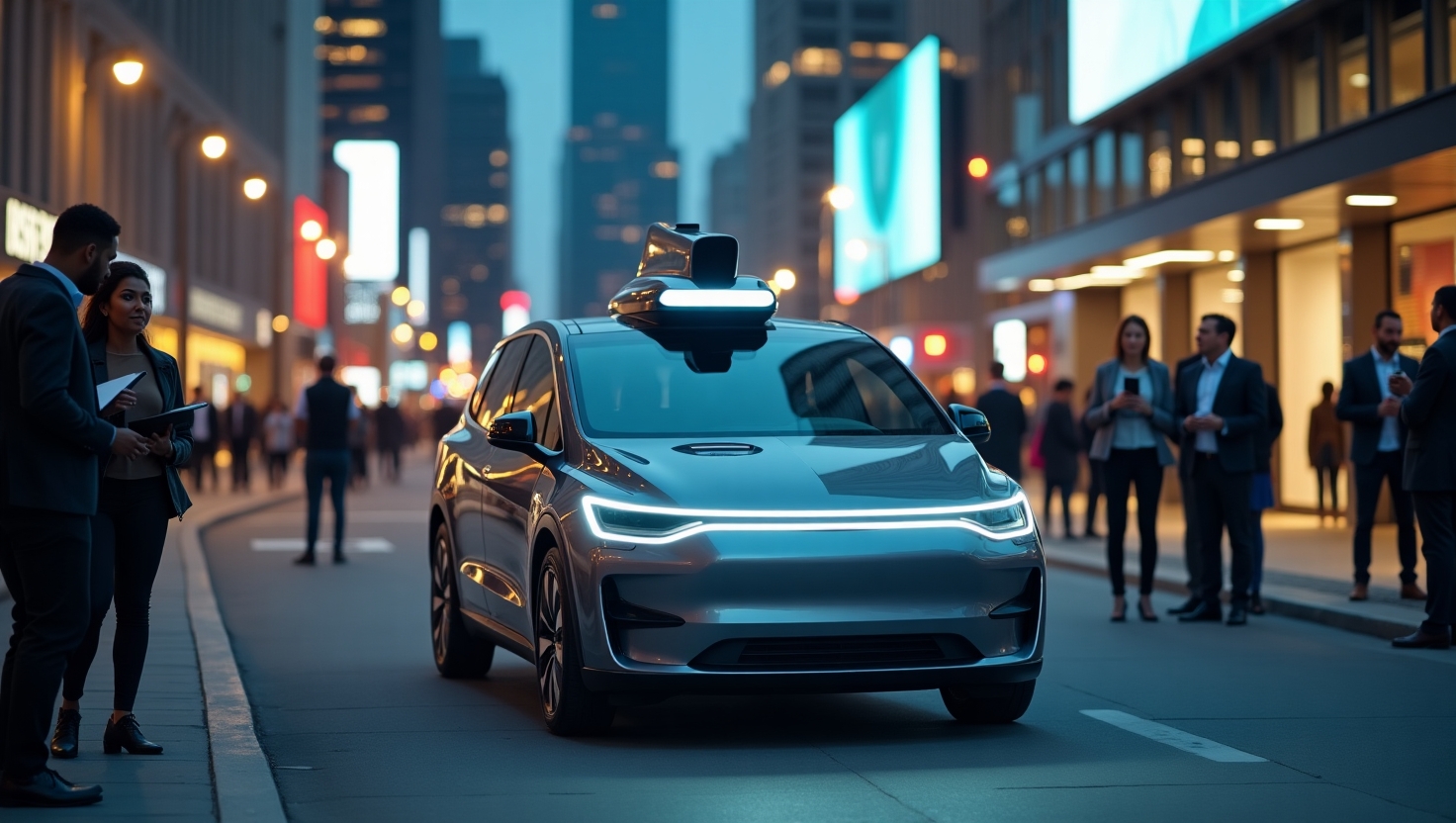
Moreover, the development of robotaxis has attracted significant interest from investors and partners alike. Uber’s aspiration to deploy over 25,000 robotaxis showcases their commitment to revolutionizing urban transport. Industry partnerships, such as collaborations amongst diverse AV stakeholders, have become essential in accelerating innovation. Terms like \”mobility innovation\” are emerging as key phrases underscoring the importance of cooperative ventures in developing advanced AV infrastructures.
Key Insights from Industry Leaders
Insights from industry experts underline the accelerated pace at which autonomous vehicle technologies are evolving. In various discussions, Raquel Urtasun, a prominent figure in the AV sector, emphasized the monumental importance of adopting a simulation-first approach, referring to it as a \”game changer\” for ensuring safety in self-driving technology (source: TechCrunch).
Furthermore, Uber’s extensive partnerships—over 20 in total—highlight a strategic positioning in the AV landscape that aims to leverage diversity and collaboration. As Sean O’Kane notes, \”The competition in AV is fierce, which means companies need to cast a wide net to ensure they remain relevant.\” Such sentiments reflect the urgency and strategic nature of investment in autonomous vehicles. Considering the stakes, the investments in truck automation and robotaxi technology will likely yield substantial returns as policymakers and urban planners increasingly support such innovations.
Future Forecast for Autonomous Vehicles Investment
As we look towards the future, it is clear that investments in autonomous vehicles will continue to surge. With companies like Uber betting on multiple autonomous ventures, the forecast suggests a collective push toward safer and more efficient transportation systems. In the near term, we can anticipate significant growth in the deployment of robotaxis and the infrastructure supporting self-driving capabilities.
Technological advancements will play a crucial role in shaping this mobility landscape. Investors can likely seize opportunities in various areas, including infrastructure projects designed to support AVs and software solutions for improving navigation and safety. With the AV sector projected to grow rapidly, now is the time for stakeholders to refine their strategies and consider how they can align with this momentum.
Call to Action
Investors and entrepreneurs should actively explore the vast opportunities within the autonomous vehicles sector. The evolution of AV technologies calls for ongoing research and investment. To stay abreast of the latest trends in mobility innovation and autonomous vehicle investment, consider subscribing to industry updates.
For more insights, check out related articles discussing the expansion of robotaxi deployments and Uber’s strategic investments in self-driving technology here.
As the future unfolds, the autonomous vehicles investment landscape is primed for significant growth and transformation, echoing the age-old adage that the journey of a thousand miles begins with a single step—invest wisely, and you may find the road ahead filled with opportunity.