Mobile Developer
Software Engineer
Project Manager
Mobile Developer
Software Engineer
Project Manager
Tag: Waymo

Waymo World Model: Revolutionizing Autonomous Vehicle Simulation
Introduction
The Waymo World Model stands as a groundbreaking advancement in the realm of autonomous vehicle simulation, poised to redefine the future of self-driving technology. Built on the innovative Genie 3 AI model from Google DeepMind, this state-of-the-art simulator is set to elevate the standards of the autonomous driving industry. By harnessing cutting-edge technologies, the Waymo World Model enables the creation of highly realistic environments that facilitate the training of Waymo’s autonomous driving systems, ultimately enhancing safety and operational efficiency.
Background
Waymo has consistently pushed the boundaries of autonomous driving, making significant strides over the past years. With nearly 200 million fully autonomous miles logged on public roads, the company has established itself as a leader in the field. The Genie 3 AI model, integral to the Waymo World Model, showcases the potential of generative AI for AV, allowing for the simulation of complex driving scenarios.
This model is pivotal due to its incorporation of multi-sensor driving simulation. By mimicking the wide range of inputs that an autonomous vehicle might encounter—such as camera and LiDAR data—this technology provides critical insights into real-world applications. As such, it not only augments the vehicle’s performance but also ensures better preparedness for unexpected situations.
Trend
The growing trend of incorporating generative AI in autonomous vehicle development is reshaping how we understand vehicle testing. With an increasing reliance on advanced simulation technologies, companies can execute extensive testing in environments that would be difficult, if not impossible, to recreate in reality. The Waymo World Model sets a new standard in this landscape, producing photorealistic environments that encompass sensor data, traffic conditions, and complex weather scenarios.
To put this into perspective, consider the impact of a high-quality video game in training military personnel. Just as game developers create rich environments to simulate combat scenarios, the Waymo World Model generates intricate driving contexts for autonomous vehicles to practice on.
In essence, the Waymo World Model signifies a shift towards sophisticated simulation technologies that offer unprecedented depth and realism.
Insight
At the core of the Waymo World Model lie its impressive features, designed to simulate rare driving scenarios that enhance testing robustness. Notably, its tri-axis controllability allows developers to manipulate driving actions, adjust scene layouts, and alter environmental conditions using language prompts. This flexibility enables targeted testing of various edge-case scenarios that the real-world fleets rarely encounter.
Moreover, the model’s capability to convert ordinary videos into realistic simulations empowers developers to use existing footage for comprehensive testing. This not only cuts down on the costs associated with building simulated environments but also increases the fidelity of the simulation outputs.
The implications of these advancements are monumental. Enhanced safety and efficiency in autonomous vehicle testing can lead to quicker deployment in everyday transportation scenarios, ultimately making roads safer for everyone.
Forecast
Looking ahead, the implications of the Waymo World Model for the autonomous driving industry are promising. The evolution of generative AI for AV is expected to lead to more sophisticated simulation technologies that continue to influence vehicle testing and safety protocols. As advancements in AI and machine learning accelerate, we anticipate:
– Improved Scenario Simulation: Expect simulations to evolve in complexity, accommodating a broader range of driving conditions and potential hazards.
– Real-time Adaptations: The capacity for real-time adjustments in simulation environments will revolutionize how developers test and train algorithms.
– Enhanced Safety Protocols: As safety becomes paramount, the integration of more comprehensive training systems may significantly reduce the risks associated with introducing autonomous vehicles to public roads.
The future of autonomous driving hinges on technologies like the Waymo World Model, which are transforming the landscape of vehicle development.
Call to Action
Are you intrigued by the possibilities of the Waymo World Model? Dive deeper into this revolutionary simulator and explore how generative AI is set to transform the future of autonomous vehicles. To learn more, check out this detailed analysis. The journey towards safer and smarter autonomous vehicles has only just begun, and the Waymo World Model is at the forefront.
—
(Note: This blog post is intended to provide insights into Waymo’s advancements and its World Model’s significance, citing industry-leading research and developments.)
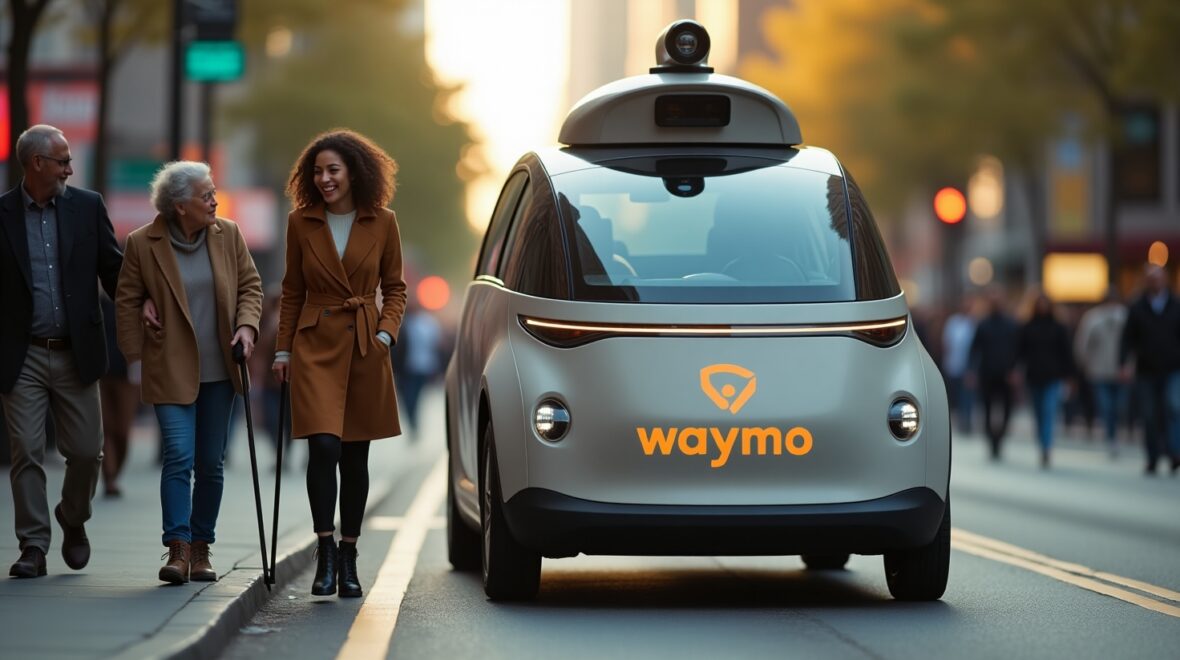
Waymo’s Robotaxi Funding: A New Era for Autonomous Transportation
Introduction
In a significant move that could reshape the landscape of autonomous transportation, Waymo’s recent funding success has set the stage for a new era in the robotaxi sector. Raising an impressive $16 billion, Waymo has solidified its position as a leader in the industry, looking to expand its robotaxi fleet globally. This influx of capital underscores the growing interest in Waymo robotaxi funding, reflecting both the potential of self-driving technology and the appetite of investors for innovation in transportation.
Background
The global shift towards autonomous vehicles has been dynamic, with Waymo at the forefront of this development. As one of the first companies to extensively test and deploy self-driving technology on public roads, Waymo has become synonymous with cutting-edge advancements in transportation. The company has successfully navigated a challenging funding landscape, accumulating a staggering $16 billion across various funding rounds, leading to a valuation of $126 billion.
Currently, Waymo’s operations reflect this success, with the company providing around 400,000 weekly rides across key metropolitan areas in the U.S. This remarkable achievement not only illustrates the demand for their robotaxi services but also highlights the broader acceptance of autonomous solutions among consumers. As Waymo moves forward, their focus will shift from proving the practicality of their technology to scaling operations efficiently while ensuring the highest safety standards.
Current Trends in Robotaxi Fleet Scaling
Funding trends for robotaxi fleet scaling have seen a substantial uptick, particularly with Waymo leading this charge into various international markets. The company’s forthcoming expansion into cities like London and Tokyo signifies its commitment to leveraging opportunities for growth in the autonomous transportation sector. The demand for efficient and flexible transport solutions has never been greater, especially in urban settings teeming with traffic congestion.
However, this ambitious scaling is not without complications. Safety concerns and ongoing investigations, particularly those conducted by the National Highway Traffic Safety Administration (NHTSA) and the National Transportation Safety Board (NTSB), have cast a shadow over Waymo’s progress. The incidents reported, including dangerous behavior of robotaxis near school zones and hits that resulted in minor injuries, highlight the ethical and operational challenges faced by companies in the autonomous driving space.
Insights into Self-Driving Technology
What sets Waymo’s technology apart from its competitors? The answer lies in its robust, innovative approach to self-driving technology. Waymo has invested significantly in R&D, resulting in advanced features that not only enhance safety but also improve the overall user experience. For instance, their fleet capabilities use a blend of machine learning, high-definition mapping, and real-time sensor data to navigate complex environments safely.
Research indicates that Waymo’s vehicles complete 400,000 rides each week, showcasing their reliability compared to others in the market. As CEO John Krafcik stated, “We are no longer proving a concept. We are scaling a commercial reality.” This perspective is crucial as Waymo navigates government scrutiny, which can significantly influence public perception and the regulatory climate surrounding autonomous vehicles.
Forecast for Waymo and the Robotaxi Industry
Looking ahead, the implications of Waymo’s recent funding on its operations and the robotaxi industry are immense. The projected investments will likely facilitate not only the expansion of its services across more cities but also the refinement of its existing technological capabilities. By 2026, Waymo is expected to launch operations in over 20 additional cities, paving the way for a robust ride-hailing multiplayer service model.
Furthermore, as Waymo forges ahead, one can anticipate continuous technological advancements that enhance safety and user experience. The projections hint at a formidable future where robotaxi services become a staple of urban transport, significantly altering the ride-hailing landscape.
Call to Action
As the autonomous vehicle space evolves, Waymo stands out as a beacon of innovation and ambition. Readers interested in the future of self-driving technology and the ongoing transformation in transportation are encouraged to track Waymo’s journey. For more insights on the future of robotaxi services, consider exploring relevant articles and resources provided in the links below.
– Waymo Raises $16 Billion in Funding
– Additional reading on advancements in autonomous driving technologies and market trends.
The future of autonomous transportation is not just on the horizon; it’s already in motion, and Waymo is leading the way.
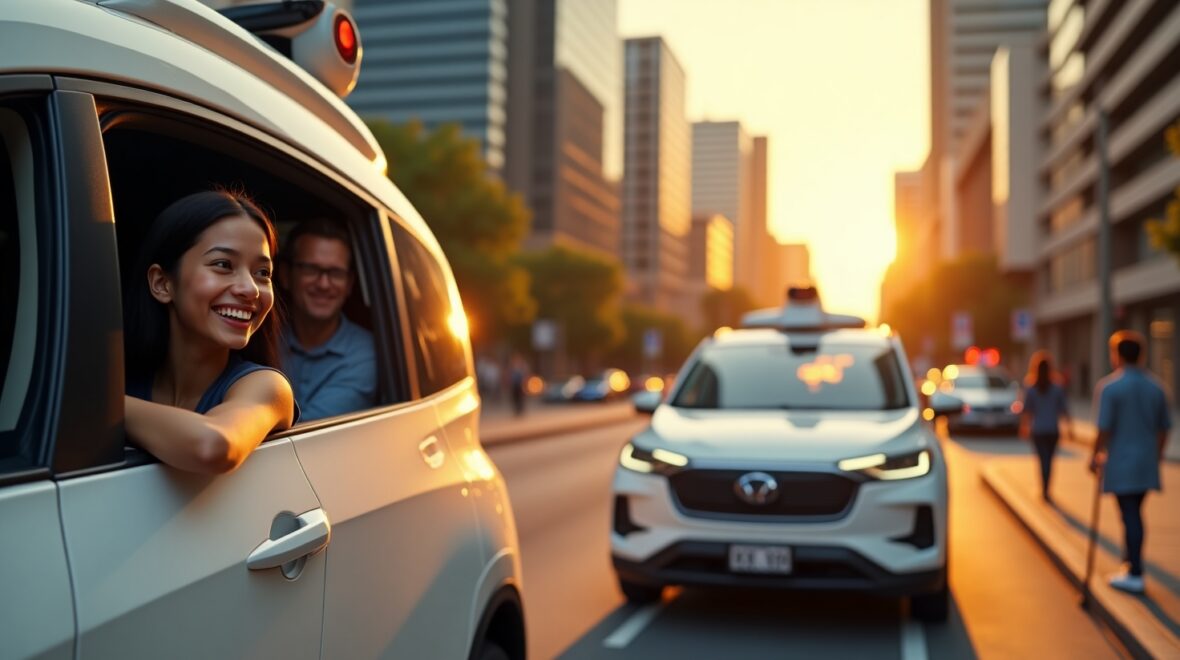
Waymo Funding Autonomous Vehicles: A New Era in Self-Driving Technology
Introduction
In recent years, Waymo, the autonomous vehicle division of Alphabet Inc., has gathered significant momentum in the realm of self-driving technology. The company’s latest funding initiatives, particularly the anticipated $16 billion funding round, are pivotal not only for Waymo but also for the entire autonomous vehicle market. This article discusses the implications of Waymo funding autonomous vehicles, delving into the history, trends, insights, and predictions that shape this exciting industry.
Background
Waymo’s journey began as part of Google’s ambitious project in 2009 aimed at creating fully autonomous vehicles. Over time, this initiative evolved into a standalone company under the Alphabet umbrella, focusing exclusively on developing Waymo autonomous cars. Its growth trajectory has seen remarkable funding rounds, including a substantial $5.6 billion raised in 2024, which valued Waymo at approximately $45 billion. This momentous funding not only underscores the confidence investors have in Waymo’s technology but also highlights the growing interest in self-driving car funding as a whole. Waymo’s innovative approach to technology has made it a frontrunner in robotaxi investment and has set a benchmark for others in the industry.
Trend
The current trend in the robotaxi investment arena is indicative of the industry’s growing appetite for autonomous vehicle technologies. The $16 billion funding round, which aims to elevate Waymo’s valuation to an astonishing $110 billion, showcases the increasing trust placed in self-driving capabilities. Notable investors like Dragoneer, Sequoia Capital, and DST Global are taking part in this funding, reflecting a collective belief in the potential of the autonomous vehicle market to disrupt traditional transportation paradigms.
This robust influx of capital can be likened to the advent of the smartphone era when initial investments laid the groundwork for a multi-trillion-dollar industry. Just as smartphones transformed communication and commerce, the funding into robotaxis may pave the way for an accessible, safe, and efficient transportation future, where personal driverless vehicles are commonplace.
Insight
Waymo has marked several operational milestones that bolster their position as a leader in autonomous driving. Remarkably, the company has completed over 20 million trips, a testament to the reliability and efficiency of its self-driving technology. Additionally, with a reported annual recurring revenue of $350 million, Waymo is not just innovating but is also creating a sustainable financial model that draws further investment.
However, the path has not been entirely smooth. Recent operational challenges, such as the incident where Waymo’s robotaxis stalled during a blackout in San Francisco, highlight the complexities involved in managing a fleet of self-driving vehicles. These setbacks serve not only as learning experiences but also as reminders of the need for continuous improvement as the technology evolves.
Forecast
Looking ahead, predictions for Waymo and the broader self-driving car market point towards unprecedented growth and integration into daily life. Industry analyses suggest that the technological advancements showcased by Waymo’s autonomous cars could lead to practical applications within urban logistics, fleet services, and personal transportation by the late 2020s.
As the development of artificial intelligence and machine learning evolves, autonomous vehicles are expected to become increasingly reliable, leading to widespread adoption across different demographics. With the continued backing from investors and increased public interest, the future of Waymo funding autonomous vehicles looks promising.
Call to Action
As we stand on the brink of a transportation revolution, it’s essential for enthusiasts, investors, and the general public to stay informed about Waymo’s developments and the broader context of autonomous driving. Educing yourself about upcoming trends, news, and insights will not only enhance your understanding of this pivotal technological shift but also prepare you for the exciting transition that awaits.
For the latest updates on robotaxi investment and the implications of autonomous vehicles, consider subscribing to industry newsletters or following relevant news platforms.
For more on this significant funding round, read this informative article by TechCrunch here.
In this rapidly evolving landscape, the implications of effective self-driving car funding cannot be understated, paving the way for a world where autonomous vehicles become integral to our daily commutes and journeys.