Mobile Developer
Software Engineer
Project Manager
Mobile Developer
Software Engineer
Project Manager
Tag: Robotics

The Future of Robotics: Harnessing Ordered Action Tokenization for Advanced Control
Introduction
In the rapidly evolving field of robotics, Ordered Action Tokenization (OAT) emerges as a pivotal framework designed to transform how robots interpret and execute complex movements. Similar to the way language is processed by large language models (LLMs), OAT converts continuous robot actions into discrete tokens, which enables more efficient and reliable control in robotic systems. This approach is vital as it aligns closely with the intricate requirements of robotics AI, where accurate actions are paramount.
Tokenization not only simplifies continuous movements but also enhances the responsiveness and decision-making capabilities of robots, allowing them to function with precision in real-world environments.
Background
The development of OAT is a collaborative effort from researchers at both Harvard and Stanford. This innovative framework was conceived to address critical challenges in robotic action representation, primarily focusing on three core principles:
– High Compression: OAT reduces the number of tokens needed to represent movements, significantly improving efficiency.
– Total Decodability: Every token sequence must translate reliably back into valid actions, ensuring that robots can always return to meaningful execution states.
– Causal Ordering: Early tokens capture significant movements, while subsequent tokens add detail and precision.
In contrast to previous robotic tokenization methods, such as the Diffusion Policy, which often require numerous tokens to achieve the same level of action understanding, OAT implements a strategy that utilizes just 8 tokens compared to baseline counts ranging from 128 to 384. This remarkable compression is a game-changer, enabling more sophisticated robotic operations and allowing for both faster training and inference.
The Trend in Robotics AI: Large Language Models (LLMs) and Tokenization
As robotics AI continues to advance, the relevance of LLM scaling becomes increasingly apparent. The application of LLMs in robotics transforms traditional tokenization methods by introducing sophisticated contextual understanding, which is crucial for performing complex tasks. Robotics AI leverages these advancements to enhance robotic inference and action determination.
The synergy between LLMs and frameworks like OAT means that as the complexity of robotic tasks grows, so does the need for more efficient tokenization mechanisms. OAT plays a vital role in this context by not only maintaining efficiency but also ensuring that robots can adapt and learn in dynamic environments.
This progressive integration is reminiscent of how a musician learns to play a piece of music: first, they learn the basics (tokenization) and then gradually add expression and nuances (OAT’s flexible inference) to their performance.
Insight into OAT’s Mechanisms: Nested Dropout and Flexible Inference
OAT’s innovative design incorporates nested dropout and register tokens, crucial mechanisms that prioritize important action components. The transformer architecture utilized in OAT allows robots to manage and interpret various action sequences effectively, leading to superior performance metrics across different benchmarks.
Recent evaluations showed OAT achieving success rates like 73.1% on RoboMimic, compared to only 67.1% with the Diffusion Policy. Similarly, on the MetaWorld benchmark, OAT recorded a success rate of 24.4% against the Diffusion Policy’s 19.3%. Such outcomes highlight the practical efficiencies of OAT in real-world applications.
A standout feature of OAT is its prefix-based detokenization, which optimizes the balance between speed and precision when robots infer actions. This flexibility allows robots to make quick decisions using coarse tokens for immediate responses or rely on more precise sequences for complex actions. Essentially, combining speed and accuracy allows robots to adapt their behaviors according to context, much like a chef who can quickly season food to taste with a pinch of salt or follow a recipe meticulously.
Forecast: The Evolution of Robotics with Ordered Action Tokenization
The future of robotics looks promising with the continued integration and development of frameworks like OAT. Predictions indicate significant advancements in robotic applications across various industries, particularly in manufacturing and healthcare. For instance, OAT could enhance robotic arms in manufacturing processes, providing precision that minimizes errors and maximizes efficiency.
Furthermore, advances in OAT are anticipated to bolster autonomous systems and improve human-robot collaboration, allowing for seamless interactions between humans and machines in everyday tasks.
As robotics continues to evolve and harness the power of frameworks like OAT, the implications stretch beyond what is currently imaginable, influencing everything from urban planning to personalized medical care.
Call to Action: Embracing the Future of Robotics
As the robotics landscape continues to evolve with exciting innovations like Ordered Action Tokenization, it is essential for industry professionals, researchers, and enthusiasts to stay informed. OAT represents a significant step forward in the capabilities of robotics AI, promising to enhance applications in ways never before possible.
We invite you to explore and consider how OAT can transform your applications in robotics and AI, fostering a future where machines not only assist but collaborate intelligently with humans.
For further reading on this subject, check out resources discussing the developments in OAT and its implications: Meet OAT: The New Action Tokenizer Bringing LLM-Style Scaling and Flexible Anytime Inference to the Robotics World.
By keeping abreast of these advancements, we can all contribute to and benefit from a new era in robotics.
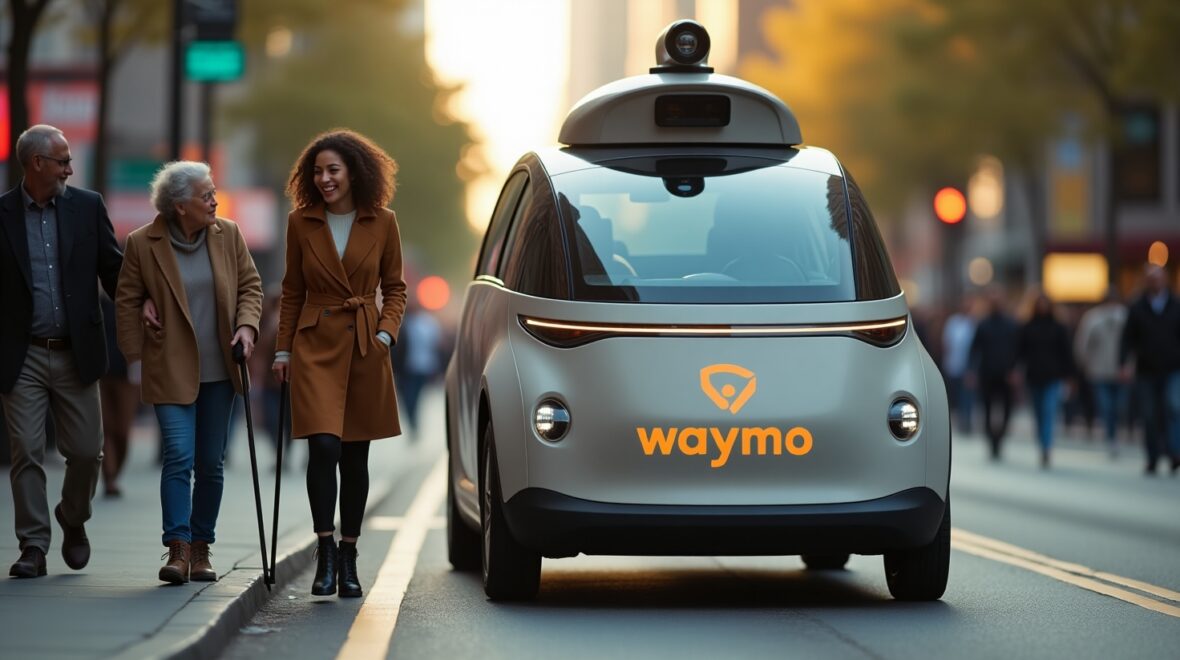
Waymo’s Robotaxi Funding: A New Era for Autonomous Transportation
Introduction
In a significant move that could reshape the landscape of autonomous transportation, Waymo’s recent funding success has set the stage for a new era in the robotaxi sector. Raising an impressive $16 billion, Waymo has solidified its position as a leader in the industry, looking to expand its robotaxi fleet globally. This influx of capital underscores the growing interest in Waymo robotaxi funding, reflecting both the potential of self-driving technology and the appetite of investors for innovation in transportation.
Background
The global shift towards autonomous vehicles has been dynamic, with Waymo at the forefront of this development. As one of the first companies to extensively test and deploy self-driving technology on public roads, Waymo has become synonymous with cutting-edge advancements in transportation. The company has successfully navigated a challenging funding landscape, accumulating a staggering $16 billion across various funding rounds, leading to a valuation of $126 billion.
Currently, Waymo’s operations reflect this success, with the company providing around 400,000 weekly rides across key metropolitan areas in the U.S. This remarkable achievement not only illustrates the demand for their robotaxi services but also highlights the broader acceptance of autonomous solutions among consumers. As Waymo moves forward, their focus will shift from proving the practicality of their technology to scaling operations efficiently while ensuring the highest safety standards.
Current Trends in Robotaxi Fleet Scaling
Funding trends for robotaxi fleet scaling have seen a substantial uptick, particularly with Waymo leading this charge into various international markets. The company’s forthcoming expansion into cities like London and Tokyo signifies its commitment to leveraging opportunities for growth in the autonomous transportation sector. The demand for efficient and flexible transport solutions has never been greater, especially in urban settings teeming with traffic congestion.
However, this ambitious scaling is not without complications. Safety concerns and ongoing investigations, particularly those conducted by the National Highway Traffic Safety Administration (NHTSA) and the National Transportation Safety Board (NTSB), have cast a shadow over Waymo’s progress. The incidents reported, including dangerous behavior of robotaxis near school zones and hits that resulted in minor injuries, highlight the ethical and operational challenges faced by companies in the autonomous driving space.
Insights into Self-Driving Technology
What sets Waymo’s technology apart from its competitors? The answer lies in its robust, innovative approach to self-driving technology. Waymo has invested significantly in R&D, resulting in advanced features that not only enhance safety but also improve the overall user experience. For instance, their fleet capabilities use a blend of machine learning, high-definition mapping, and real-time sensor data to navigate complex environments safely.
Research indicates that Waymo’s vehicles complete 400,000 rides each week, showcasing their reliability compared to others in the market. As CEO John Krafcik stated, “We are no longer proving a concept. We are scaling a commercial reality.” This perspective is crucial as Waymo navigates government scrutiny, which can significantly influence public perception and the regulatory climate surrounding autonomous vehicles.
Forecast for Waymo and the Robotaxi Industry
Looking ahead, the implications of Waymo’s recent funding on its operations and the robotaxi industry are immense. The projected investments will likely facilitate not only the expansion of its services across more cities but also the refinement of its existing technological capabilities. By 2026, Waymo is expected to launch operations in over 20 additional cities, paving the way for a robust ride-hailing multiplayer service model.
Furthermore, as Waymo forges ahead, one can anticipate continuous technological advancements that enhance safety and user experience. The projections hint at a formidable future where robotaxi services become a staple of urban transport, significantly altering the ride-hailing landscape.
Call to Action
As the autonomous vehicle space evolves, Waymo stands out as a beacon of innovation and ambition. Readers interested in the future of self-driving technology and the ongoing transformation in transportation are encouraged to track Waymo’s journey. For more insights on the future of robotaxi services, consider exploring relevant articles and resources provided in the links below.
– Waymo Raises $16 Billion in Funding
– Additional reading on advancements in autonomous driving technologies and market trends.
The future of autonomous transportation is not just on the horizon; it’s already in motion, and Waymo is leading the way.

The Future of Autonomous Vehicles Investment: An In-Depth Look into the Industry’s Shift
Introduction
The burgeoning landscape of autonomous vehicles investment signifies a transformative journey in the mobility sector, where technology converges with transportation. With increasing demand for innovative solutions in urban mobility, companies are allocating substantial resources towards developing autonomous technologies. This investment push not only promises to enhance efficiency and safety in transportation but also catalyzes mobility innovation, blending cutting-edge advancements with real-world applications. As industry giants like Uber ramp up their strategies in autonomous vehicle (AV) technologies, the potential for returns in this sector is increasingly becoming a focal point for investors.
Background
The concept of autonomous vehicles traces back over a century, with early experiments emerging in the 1920s. However, it wasn’t until the late 20th century that technology began to catch up with ambition, paving the way for today’s self-driving vehicles. Prominent players in the market, such as Uber, have substantially influenced the trajectory of AV investment. For instance, Uber’s AV strategy has evolved through numerous partnerships aimed at accelerating technological advances.
Key related terms, such as robotaxis and self-driving trucks, are pivotal in understanding the current investment landscape. The emergence of robotaxis—automated vehicles for passenger transport—is set to redefine urban mobility. Meanwhile, self-driving trucks promise to optimize logistics, increase safety, and lower operational costs, marking a significant evolution in delivery and distribution systems.
Current Trends in Autonomous Vehicles
Recent trends in autonomous vehicles investment showcase an aggressive market dynamic, particularly highlighted by Uber’s pivotal investment in the self-driving truck startup, Waabi. This move, which included a substantial initial funding of $750 million as part of a total pledge of $1 billion, indicates Uber’s ambition to expand beyond trucking into the realm of robotaxis. Waabi’s simulation-first approach signifies a new paradigm in AV development, focusing on extensive virtual testing before real-world deployment—a strategy that aims to mitigate risks and enhance performance.
Moreover, the development of robotaxis has attracted significant interest from investors and partners alike. Uber’s aspiration to deploy over 25,000 robotaxis showcases their commitment to revolutionizing urban transport. Industry partnerships, such as collaborations amongst diverse AV stakeholders, have become essential in accelerating innovation. Terms like \”mobility innovation\” are emerging as key phrases underscoring the importance of cooperative ventures in developing advanced AV infrastructures.
Key Insights from Industry Leaders
Insights from industry experts underline the accelerated pace at which autonomous vehicle technologies are evolving. In various discussions, Raquel Urtasun, a prominent figure in the AV sector, emphasized the monumental importance of adopting a simulation-first approach, referring to it as a \”game changer\” for ensuring safety in self-driving technology (source: TechCrunch).
Furthermore, Uber’s extensive partnerships—over 20 in total—highlight a strategic positioning in the AV landscape that aims to leverage diversity and collaboration. As Sean O’Kane notes, \”The competition in AV is fierce, which means companies need to cast a wide net to ensure they remain relevant.\” Such sentiments reflect the urgency and strategic nature of investment in autonomous vehicles. Considering the stakes, the investments in truck automation and robotaxi technology will likely yield substantial returns as policymakers and urban planners increasingly support such innovations.
Future Forecast for Autonomous Vehicles Investment
As we look towards the future, it is clear that investments in autonomous vehicles will continue to surge. With companies like Uber betting on multiple autonomous ventures, the forecast suggests a collective push toward safer and more efficient transportation systems. In the near term, we can anticipate significant growth in the deployment of robotaxis and the infrastructure supporting self-driving capabilities.
Technological advancements will play a crucial role in shaping this mobility landscape. Investors can likely seize opportunities in various areas, including infrastructure projects designed to support AVs and software solutions for improving navigation and safety. With the AV sector projected to grow rapidly, now is the time for stakeholders to refine their strategies and consider how they can align with this momentum.
Call to Action
Investors and entrepreneurs should actively explore the vast opportunities within the autonomous vehicles sector. The evolution of AV technologies calls for ongoing research and investment. To stay abreast of the latest trends in mobility innovation and autonomous vehicle investment, consider subscribing to industry updates.
For more insights, check out related articles discussing the expansion of robotaxi deployments and Uber’s strategic investments in self-driving technology here.
As the future unfolds, the autonomous vehicles investment landscape is primed for significant growth and transformation, echoing the age-old adage that the journey of a thousand miles begins with a single step—invest wisely, and you may find the road ahead filled with opportunity.
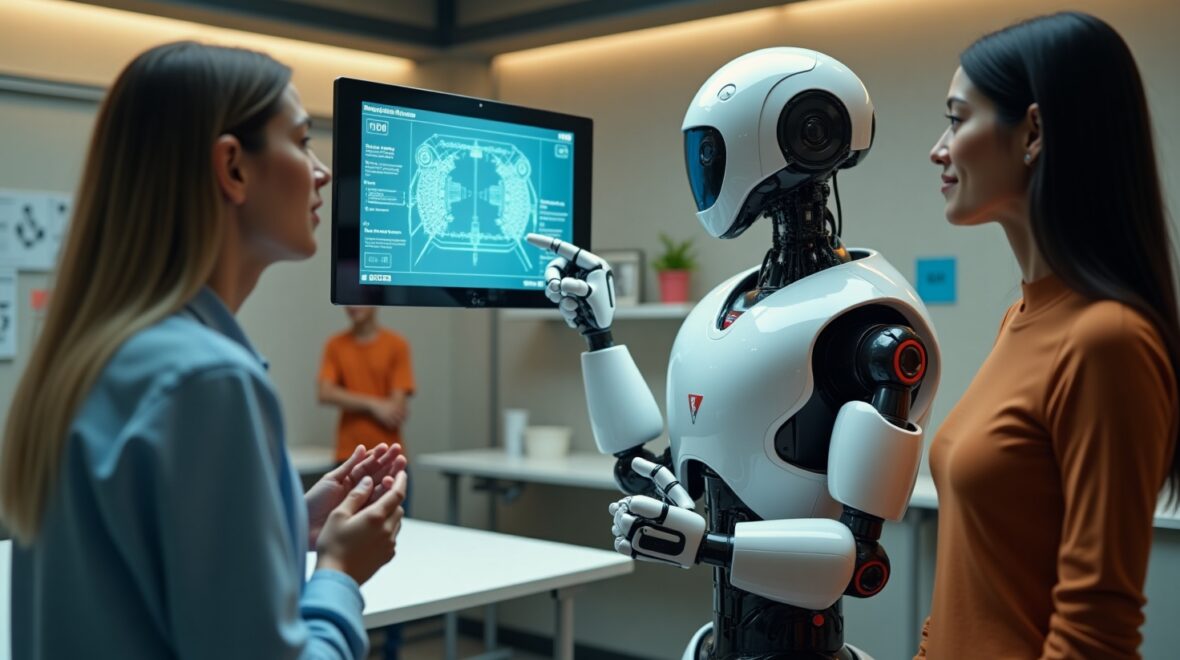
Vision Language Action AI: Transforming Real-World Robotics
Introduction
The concept of Vision Language Action AI (VLA AI) is rapidly reshaping the landscape of robotics and artificial intelligence (AI). At its core, VLA AI integrates visual recognition capabilities, linguistic comprehension, and actionable responses, allowing machines to interact with dynamic environments in an intuitive and effective manner. As robots become increasingly capable of performing complex tasks—from assembling products in manufacturing to assisting in medical procedures—the need for advanced AI systems that can understand and respond to visual cues and verbal commands intensifies. This intersection of capabilities represents a monumental leap in how robots can navigate the complexities of the real world.
Background
Vision Language Action AI is not an overnight phenomenon; it has evolved significantly through various technological breakthroughs. The integration of robotics AI models has paved the way for robots to perceive their surroundings more effectively.
Outstanding advancements in computer vision, natural language processing, and machine learning have contributed to this integration. For instance, most contemporary AI systems can now interpret visual inputs (like images and videos), process them linguistically (like understanding commands), and perform physical actions in a coherent sequence. Historically, systems that could perform one of these tasks—be it visual interpretation or executing commands—struggled to bridge the gap between perception and action.
The capacity for real-world manipulation has improved drastically, highlighting the importance of communication between AI models and physical environments. When a robot can not only \”see\” an object but also \”understand\” instructions conveyed in natural language, the possibilities expand exponentially. This foundational understanding sets the stage for further innovations.
Trend
The focus on dual arm robot control showcases a critical trend within the robotics sector, enhancing operational efficiency across various industries. The recent development of the Qwen2.5-VL model exemplifies how Vision Language Action AI is being actualized in practical applications. This model allows dual-arm robots to engage in manipulation tasks that require intricate coordination and real-time decision-making.
For instance, consider a robot designed for warehouse environments that uses the Qwen2.5-VL model to pick and sort products. With its advanced perception and action capabilities, the robot can \”see\” the location of items, \”understand\” an operator’s requests via voice commands, and effectively \”act\” by maneuvering its arms to retrieve the correct products. This advancement not only boosts operational productivity but also minimizes errors—a critical factor in time-sensitive environments.
Moreover, as companies increasingly adopt robots for routine tasks, the development of sophisticated robots equipped with VLA AI technology can handle multifaceted operations, from warehouse logistics to preparing and delivering medical supplies.
Insight
Vision Language Action AI’s practical applications are already manifesting across diverse industries, showcasing its transformative potential. In manufacturing, robots equipped with this technology streamline assembly lines, minimizing reliance on human intervention. They can accurately interpret visual inputs, execute language-based instructions, and interactively adapt to alterations in real-time manufacturing processes.
In healthcare, AI for real-world manipulation can improve surgical precision, as robots can follow detailed verbal directives during delicate procedures. Furthermore, collaborative robots, often referred to as \”cobots,\” utilize VLA AI to enhance service delivery in sectors like hospitality and customer service. A notable example highlighted by MarkTechPost is Ant Group’s Lingbot VLA, which functions as a versatile tool for enhancing user interfaces in service roles, demonstrating the potential of VLA technology in practical, low-risk environments.
This collaborative layer between humans and robots transforms how we approach tasks, suggesting a future where assistance from AI can significantly augment human capabilities.
Forecast
Looking ahead, the future of Vision Language Action AI is poised for significant advancements that will redefine its role in robotics. We can expect the development of even more sophisticated robotics AI models, enhancing the interaction quality between robots and their users.
As industries continue to evolve, the demand for intelligent automation solutions will rise. Companies will increasingly seek VLA-enabled robots that can not only interpret a broad array of commands but also adapt seamlessly to complex environments. Innovations in deep learning and neural networks will likely yield models that can understand and process more nuanced commands without extensive programming—think of robots that can learn new skills from observation and practice, much like humans do.
The implications for industries reliant on automation are vast, promising efficiency, improved safety, and operational flexibility across manufacturing, logistics, healthcare, and other sectors.
Call to Action
As we stand on the cusp of widespread adoption of Vision Language Action AI technologies, it becomes paramount for businesses and individuals to stay informed and proactively explore AI solutions tailored to their unique needs. The advancements in robotics offer exciting opportunities for enhancing productivity and simplifying complex tasks.
To learn more about these transformative AI technologies, consider looking into the developments shared by experts in the field. For further insight, you can read about Ant Group’s Lingbot VLA here.
The future of robotics, powered by Vision Language Action AI, is bright. Stay curious, stay informed, and prepare to leverage these innovative technologies in your pursuits!