Mobile Developer
Software Engineer
Project Manager
Mobile Developer
Software Engineer
Project Manager
Tag: Healthcare AI

The Future of Autonomous AI in Healthcare: Transforming Revenue Cycle Management
Introduction
As the healthcare sector evolves, the integration of Autonomous AI in Healthcare is proving to be a revolutionary force. This technology is not merely a trend; it embodies the potential of automation to enhance operational efficiency across various healthcare settings. The introduction of AI-driven systems, particularly in revenue cycle management (RCM), facilitates improved accuracy and speed, enabling healthcare providers to focus more on patient care rather than administration.
Background
To understand the benefits of Autonomous AI in Healthcare, it’s essential to look into the traditional revenue cycle management process. Typically, RCM encompasses all administrative and clinical functions that contribute to the capture, management, and collection of patient service revenue. Unfortunately, this systemic structure is marred by significant challenges:
– Delays in Prior Authorization: Gaining approvals for services is often a cumbersome process, leading to revenue loss and patient dissatisfaction.
– Errors in Medical Billing: Manual billing processes are prone to inaccuracies, resulting in both reimbursement delays and compliance issues.
These challenges have spurred the need for Prior Authorization Automation and the implementation of Healthcare AI agents to streamline operations. By integrating these solutions, healthcare organizations can improve efficiency and accuracy, directly impacting financial performance and patient experience.
Trend
The emergence of Autonomous AI in Healthcare marks a pivotal shift in RCM practices. Innovative applications include the use of AI with a human-in-the-loop approach, blending automated workflows with essential human oversight. This hybrid model ensures that complex decisions benefit from human intuition while leveraging AI’s speed and data processing capabilities.
The deployment of Medical Billing AI systems is a prime example of this transformation. Such systems can analyze vast amounts of data, flagging inconsistencies and errors much faster than human counterparts. This not only reduces financial risk but also alleviates the burden on administrative staff, enabling them to concentrate on care-centric tasks.
Insight
A notable deployment of an autonomous AI system involves the prior authorization process. By mimicking real-world healthcare workflows through simulated Electronic Health Records (EHR) and payer portals, these systems create efficient environments for managing authorizations.
For example, a strong feature of these AI systems is the use of strongly typed domain models, which clarify clinical and authorization data. These models guide the AI in decision-making processes, enhancing the system’s operational integrity. An insight from a related article describes how automated denial analysis benefits from human intervention. When faced with uncertainty, the AI prompts a human reviewer, ensuring that decisions are made judiciously. The uncertainty threshold, set at 0.55, signifies when escalation to a human specialist is necessary.
Forecast
The future implications of Autonomous AI in Healthcare are profound. As organizations increasingly adopt these technologies, we can expect:
– Scalability in RCM: Autonomous systems will allow healthcare organizations to manage larger patient volumes without compromising service quality.
– Increased Efficiency: With automation handling repetitive tasks, healthcare providers can significantly reduce administrative overheads and enhance operational throughput.
– Advanced Integration: As AI systems improve, their synergy with clinical workflows will become more robust, leading to seamless transitions between patient care and revenue management.
The forecast for these technologies suggests a shift where administrative tasks are almost entirely automated, allowing healthcare professionals to devote more time and resources to patient interactions.
Call to Action
As the healthcare landscape embraces Autonomous AI, healthcare organizations must evaluate the potential of these innovations to enhance their operations. By exploring technologies such as Prior Authorization Automation and Healthcare AI agents, providers can transform their revenue cycle management processes for the better.
For further insights, check out articles on related applications and strategies to harness AI for significant operational improvements: MarkTechPost on Autonomous Prior Authorization Agents.
As we look toward the horizon of healthcare innovation, now is the time to engage with these transformative technologies and ensure your organization remains at the forefront of this crucial evolution in healthcare delivery.
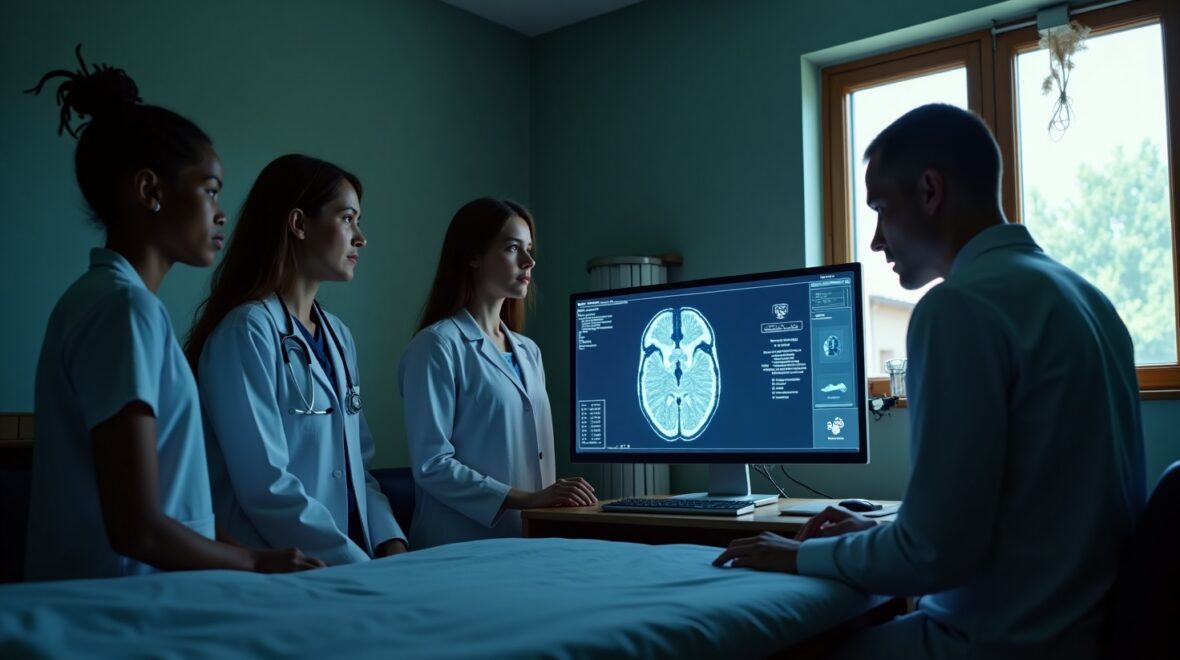
Understanding Healthcare Disaster Recovery AI: A Comprehensive Guide
Introduction
In an era where healthcare systems are increasingly vulnerable to disruptions—whether from natural disasters, cyberattacks, or health crises—the integration of healthcare disaster recovery AI has become paramount. This technology serves not only as a safety net for hospitals but also as a proactive measure that enables resilience when faced with unexpected disruptions. Simply put, healthcare disaster recovery AI refers to using artificial intelligence to enhance disaster recovery plans within healthcare settings, ensuring the continuity of patient care and operational efficiency.
The need for robust disaster recovery systems is underscored as healthcare organizations confront a myriad of challenges, ranging from the challenges of aging infrastructure to the growing cyber threats in an increasingly digital landscape. Implementing AI technologies in healthcare resilience promises not just to mitigate risks but also to anticipate and strategize effectively against potential threats.
Background
Traditional disaster recovery methods in healthcare involve planning for unexpected events, but they often struggle when faced with real adversity. These methods can be slow to mobilize, lack comprehensive data, and may not integrate well with newer technologies, leading to inefficient responses in times of crisis. For example, hospital disaster recovery efforts typically depend on manual processes and predetermined plans that might not adapt quickly to unique disaster scenarios.
In stark contrast, AI in healthcare resilience introduces the capability to analyze vast amounts of data in real-time, enabling healthcare organizations to simulate various disaster scenarios and prepare accordingly. By utilizing predictive analytics, AI can guide hospitals in crafting tailored disaster recovery plans that are both flexible and responsive, addressing specific vulnerabilities within their systems. This advancement marks a substantial shift from the reactive models of the past towards a more proactive, data-informed approach in managing potential disasters.
Current Trends
The infusion of AI into healthcare disaster recovery is not just a theory; it is backed by key trends that are shaping the field. One of the most significant advancements includes the use of predictive analytics for incident management. By analyzing historical data and patterns, AI can forecast potential issues before they arise, allowing healthcare settings to act swiftly and decisively.
Another major focus is on cyber disaster recovery. With the increasing digitization of medical records and patient data, healthcare organizations become prime targets for cyber threats. AI helps to bolster defenses and respond to cyber incidents, ensuring that data is secured and accessible even in the event of an attack. Organizations can implement sophisticated algorithms that learn from previous breaches and enhance their response plans.
Moreover, as noted in the article \”Healthcare Disaster Recovery: What You Need to Know\” by Harish Pillai, the emphasis on continuous improvement is essential. He articulates that maintaining resilience in healthcare systems goes beyond having a static plan; it requires ongoing assessments and agile adaptations to the evolving landscape of threats and vulnerabilities (Hackernoon).
Key Insights
Evidence is accumulating on the profound impact of AI in healthcare resilience. Recent studies highlight that healthcare organizations leveraging AI-enhanced disaster recovery plans not only minimize downtime but also improve patient outcomes significantly. The ability to use real-time data to make informed decisions can lead to faster recovery times, thereby maintaining essential healthcare services even during crises.
To effectively develop disaster recovery strategies with AI, it is crucial to emphasize interdisciplinary collaboration within healthcare organizations. This approach fosters a culture wherein IT, clinical staff, and management work cohesively to build a robust disaster recovery framework. Integrating lessons from related articles, like those by Harish Pillai, illustrates that a strong framework must also consider the unique engaging points of technology, strategic planning, and healthcare environments.
Key Insights for Implementation:
– Foster interdisciplinary collaboration for comprehensive disaster recovery planning.
– Regularly audit and adapt disaster recovery plans to integrate new AI capabilities.
– Invest in training staff on AI technologies and their application in disaster scenarios.
Future Forecast
Looking ahead, the role of AI in healthcare disaster recovery is poised to grow dramatically over the next decade. As healthcare organizations continue to digitize and cloud technologies become more prevalent, AI will likely play an integral role in shaping hospital disaster recovery strategies.
We can expect advancements in machine learning algorithms that will allow for even more sophisticated predictions of potential disasters. Additionally, regulatory changes may require hospitals to comply with stricter standards regarding data protection and continuity planning, pushing organizations to adopt AI technologies even faster.
Moreover, technological advancements, such as the integration of AI with the Internet of Medical Things (IoMT), could provide real-time insights that bolster disaster preparedness. This would create a more resilient healthcare system, capable of adapting and responding to a wider range of threats than ever before.
Call to Action
The ongoing advancements in AI technologies present a unique opportunity for healthcare professionals to reevaluate their disaster recovery plans. It’s imperative for healthcare organizations to assess their current systems and consider how they can integrate healthcare disaster recovery AI to bolster resilience.
For further reading and tools on implementation, consider exploring Harish Pillai’s insights or engaging with resources that focus on AI in healthcare. By embracing these technologies, healthcare providers can ensure they are better prepared for whatever challenges the future may hold.
—
References:
– Healthcare Disaster Recovery: What You Need to Know by Harish Pillai.