Mobile Developer
Software Engineer
Project Manager
Mobile Developer
Software Engineer
Project Manager
Tag: Automation

The Rise of Autonomous AI Agents in Financial Automation
Introduction
In recent years, the financial sector has witnessed a significant transformation driven by advancements in technology, particularly artificial intelligence (AI). Among the notable innovations are autonomous AI agents, which are revolutionizing how financial organizations automate operations. These digital co-workers are designed to handle complex tasks traditionally requiring human labor, allowing employees to focus on higher-value decision-making rather than repetitive processes. As organizations like Goldman Sachs leverage these revolutionary tools, the landscape of financial automation is poised for unprecedented changes.
Background
Autonomous AI agents are sophisticated programs that operate independently to perform a variety of tasks, from data analysis to customer interactions. They are engineered to execute decisions and actions based on real-time data and pre-defined parameters, significantly enhancing the efficiency of operations.
A prime example of this advancement can be observed in the innovative collaboration between Goldman Sachs and Anthropic, particularly with the implementation of the Claude Opus 4.6 model. This partnership marks an important milestone in the evolution of AI in finance, enabling autonomous AI agents to manage intricate back-office processes such as compliance checks, accounting, and client onboarding.
The historical context of AI in finance has primarily involved supporting human employees with data analytics and decision support. However, the advent of autonomous AI agents signifies a shift towards systems capable of performing tasks previously deemed non-automatable. By embedding Anthropic’s engineers within Goldman Sachs teams, this collaboration has fostered a unique environment for co-development, allowing the two organizations to accelerate the practical applications of their AI capabilities.
Trend
The trend toward financial automation is unmistakably backed by growing adoption rates of AI technologies in finance. According to industry reports, more financial institutions are recognizing the value of automation in optimizing their operations. These advancements are not merely about enhancing support functions, but also about automating complex, process-heavy back-office tasks.
Goldman Sachs serves as a compelling case study in this regard. The firm’s integration of autonomous AI agents demonstrates a shift towards operational roles that can handle extensive workloads. For instance, tasks that were once labor-intensive and time-consuming can now be executed with remarkable efficiency. This innovation not only enhances productivity but also positions the firm to respond more effectively to market dynamics.
By employing autonomous AI agents, financial institutions can achieve:
– Increased efficiency: Tasks are completed faster, freeing human resources for strategic activities.
– Cost reduction: Labor costs associated with repetitive tasks can be significantly minimized.
– Enhanced accuracy: AI minimizes human error in data processing and compliance checks.
As organizations continue to integrate AI in their workflows, we can expect these trends to accelerate, solidifying the role of enterprise AI in finance.
Insight
Embracing autonomous AI agents in the financial sector brings with it a paradigm shift, particularly in reducing the burden of repetitive tasks on human employees. However, it is crucial to emphasize the need for human oversight to ensure that the deployment of these technologies remains compliant with industry regulations and standards.
Marco Argenti, Goldman Sachs’ CIO, explained, “Think of it as a digital co-worker for many of the professions in the firm that are scaled, complex and very process-intensive.” This notion embodies the dual objectives of enhancing operational efficiency while maintaining necessary human intervention to govern AI activities and mitigate risks effectively.
As firms increasingly rely on financial automation, statistics reveal that organizations adopting AI technologies can reduce the time spent on rule-based processes significantly. This streamlining not only enhances operational productivity but also allows finance professionals to engage in more valuable, judgment-based tasks where human intuition and expertise are unparalleled.
Forecast
Looking ahead, the future of autonomous AI agents in the finance industry holds immense promise. With ongoing advancements in AI back-office processes, we can anticipate:
– Seamless integration: AI agents will increasingly serve as integral components of finance teams, functioning alongside human employees to provide greater operational efficiency.
– Enhanced analytics: Future models will improve decision-making capabilities and support predictive analytics, enabling organizations to respond proactively to challenges in the financial landscape.
– Striking a balance: As autonomous AI continues to evolve, financial institutions will face the challenge of balancing automation efficiency with proper governance. Establishing a framework for oversight will be critical to ensuring compliance and maintaining stakeholder trust.
As these trends unfold, the role of autonomous AI agents in finance will undoubtedly redefine back-office processes, paving the way for greater innovation and operational excellence.
Call to Action
As the landscape of financial automation evolves, it is crucial for professionals in the finance sector to stay informed about the advancements in AI in finance. Subscribing to industry newsletters, following updates on autonomous AI agents, and engaging with thought leaders in the field can provide valuable insights into how these transformative technologies will shape the future of finance. Stay ahead of the curve and make informed decisions as we collectively navigate this exciting frontier in financial automation.
For more information on how Goldman Sachs is leveraging autonomous AI agents, check out this article: Goldman Sachs tests autonomous AI agents for process-heavy work.
In the rapidly evolving world of finance, embracing change is not just beneficial, it’s essential.

Harnessing the Power of Coding AI Agents
Introduction
In recent years, the evolution of coding AI agents has transformed the software development landscape. These intelligent systems are poised to automate and refine coding tasks, significantly enhancing developer efficiency and accuracy. This blog post explores the rise of AI coding automation, focusing on innovative approaches, particularly SERA models (Soft Verified Efficient Repository Agents), and their applications in various coding tasks.
Background
What are Coding AI Agents?
Coding AI agents are specialized programs designed to streamline and automate the coding process. By leveraging advanced algorithms and machine learning techniques, these agents function as assistants to developers, enhancing productivity by reducing manual workloads and minimizing errors. Imagine a seasoned coder—the proverbial Swiss Army knife of programming—who can tackle the nitty-gritty of code with precision while saving valuable time for strategic tasks. This is what coding AI agents embody, offering a blend of speed and accuracy in software development.
Introduction to SERA Models
Among the various innovations in this domain, SERA (Soft Verified Efficient Repository Agents) stands out as a revolutionary model in AI coding automation. Unlike traditional models that depend heavily on extensive test suites, SERA models utilize supervised learning to function effectively. This unique capability allows them to tackle coding challenges without the need for exhaustive pre-testing, marking a significant shift in the operational paradigm for machine learning agents.
Trend
Rise of AI Coding Automation
The demand for AI coding agents is rapidly increasing as technology evolves. One of the significant advancements is the Soft Verified Generation (SVG) approach, which generates training data that closely mirrors real developer workflows. This results in more representative datasets for training models, directly influencing model effectiveness. As a case in point, SERA models are proving to be cost-effective, offering an alternative to traditional reinforcement learning methods.
Moreover, the financial implications are striking: SERA’s training costs are around 26 times cheaper compared to conventional models like SkyRL-Agent. This cost efficiency sets a new standard for machine learning agents, reshaping industry expectations and driving adoption among developers.
The Role of Synthetic Trajectories
Synthetic trajectories play a crucial role in optimizing the performance of SERA models. By learning from curated datasets, these models ensure high precision in coding tasks. As the field of AI coding automation progresses, the utilization of synthetic datasets and curated workflows will likely become commonplace. This is akin to training a new chef using the best recipes from multiple renowned cookbooks; the goal is to create culinary experts who can perform well under diverse conditions.
Insight
Performance and Cost Efficiency of SERA Models
The performance metrics associated with SERA models are noteworthy. For instance, SERA has reached a 49.5% resolve rate at a context level of 32K, significantly outperforming traditional models in repository specialization tasks. Additionally, SERA-32B, which is built upon the Qwen 3 32B architecture, has shown to be computationally efficient, resulting in a training cost that is about 40 GPU days—a stark contrast to the immense computational burden typically associated with reinforcement learning.
This financial feasibility paves the way for widespread adoption in the industry, making it an obvious choice for organizations keen on integrating cost-effective coding solutions. Accessibility and collaboration are further enhanced by SERA’s open-source nature, providing a platform for developers to contribute to its continuous improvement.
Open Source and Accessibility
The open-source approach undertaken by the SERA project encourages transparency and collaboration within the developer community. Not only does it facilitate broader engagement, but it also presents a unique opportunity for continued advancements in AI coding agents. This collective ethos is driving innovation in the sector and ensuring that the development of AI capabilities remains in line with the community’s needs.
Forecast
Future of AI Coding Automation
The outlook for AI coding automation appears overwhelmingly positive, particularly with the ongoing development of advanced models like SERA. Anticipating rapid improvements in both coding efficiency and accuracy, coding AI agents will become indispensable tools for developers. As the technology continues to evolve, we will likely witness a drastic reduction in coding timeframes, providing developers with the opportunity to focus on more complex and creative tasks.
Expanding Applications
As machine learning agents evolve, we foresee expanded applications extending beyond traditional software development. Areas such as web development, data science, and more could benefit immensely from enhanced coding automation. This evolution will likely drive innovation across industries, giving developers the tools they need to tackle complex challenges with greater ease and effectiveness.
Call to Action
Are you ready to embrace the future of coding AI? Explore the groundbreaking findings from the Allen Institute for AI by checking out the full article on MarkTechPost. Stay ahead in the tech wave and implement AI coding automation in your projects today!

Harnessing AI Digital Twins in Manufacturing: Revolutionizing Operational Efficiency
Introduction
In the fast-paced world of manufacturing, the integration of AI digital twins is leading to a paradigm shift in operational efficiency. By creating dynamic virtual representations of physical systems, manufacturers can simulate, analyze, and optimize processes in real-time. This technology not only enhances decision-making but also helps in achieving greater manufacturing optimization. Keywords like AI in factory automation, digital twin technology, and AI operational efficiency further highlight the multifaceted benefits of adopting these innovative solutions.
Background
Digital twin technology refers to the digital replica of physical assets, systems, or processes. In manufacturing, it plays an essential role by linking the physical and digital worlds. When integrated with AI, this technology enhances factory automation by enabling real-time data analysis and predictive modeling.
Historically, manufacturing has faced challenges such as production inefficiencies, extended downtimes, and high operational costs. For instance, companies often relied on manual processes, leading to inaccuracies and delays in production lines. AI digital twins address these challenges by providing manufacturers with insights that lead to more informed decision-making and streamlined operations. As a result, organizations are empowered to identify inefficiencies and proactively correct them, laying down the foundation for a data-driven approach in manufacturing.
Current Trend
The prevalence of AI digital twins in the manufacturing sector cannot be overstated. Companies such as PepsiCo have successfully implemented this technology to enhance their manufacturing facilities. By simulating changes virtually before applying them in the real world, PepsiCo effectively shortens validation times, reduces risks, and minimizes disruptions on the factory floor—translating to significant gains in operational efficiency and reduced downtime.
Current trends indicate a growing focus on manufacturing optimization through well-defined operational tasks embedded with AI. For example, many industries are experiencing a shift toward using data-driven insights to improve their workflow. This is a response to the increasing need for agility and responsiveness in supply chains, especially in a world that demands just-in-time manufacturing and flexibility.
Insight
An in-depth examination of current implementations of AI digital twins reveals profound insights. Companies leveraging this technology report improved AI operational efficiency through real-time data synchronization and enhanced predictive capabilities. PepsiCo’s initiative illustrates how AI is used to compress decision cycles without replacing human judgment—an approach that aligns technology with human expertise.
According to industry leaders, embedding AI into manufacturing processes should focus on measurable outcomes, such as reducing cycle times and minimizing disruptions. Andy Jassy, CEO of Amazon, highlights that using AI in operational workflows leads to richer customer experiences and enhanced productivity (\”AI is being used to compress decision cycles in physical operations, not to replace workers or remove human judgment\”).
Moreover, recent findings indicate that companies adopting digital twin technology experience a quantitative increase in throughput and efficiency. PepsiCo’s early pilots showcased faster validation times across their manufacturing locations, underscoring the tangible benefits of this innovative approach.
Future Forecast
As we look ahead, the potential developments within AI digital twins technology in manufacturing appear promising. Future iterations may incorporate advanced analytics, predictive maintenance, and augmented reality (AR) to revolutionize factory design and operational workflows. For instance, digital twins could be enhanced with real-time feedback from IoT devices, providing an even more holistic view of the manufacturing processes.
Moreover, emerging technologies like machine learning and big data analytics can complement digital twin solutions, paving the way for smarter factories capable of autonomous decision-making. This interconnected environment could reshape how manufacturers design their operations and respond to market demands, ensuring that industries remain robust and competitive.
Call to Action
The rise of AI digital twins in manufacturing presents a formidable opportunity for organizations to enhance their operational efficiency. Now is the time for manufacturers to explore how this technology can be integrated into their operations. To gain deeper insights into digital twin technology and its benefits in manufacturing, consider exploring resources offered by industry experts and research publications.
We encourage readers to share their experiences or insights regarding AI in factory automation and how they’ve utilized digital twins to optimize their manufacturing processes. Engaging in conversations within this evolving space fosters collaboration and innovation, ensuring that we all move towards operational excellence together.
For more information on how companies like PepsiCo are leveraging AI to rethink their manufacturing processes, check out this article.
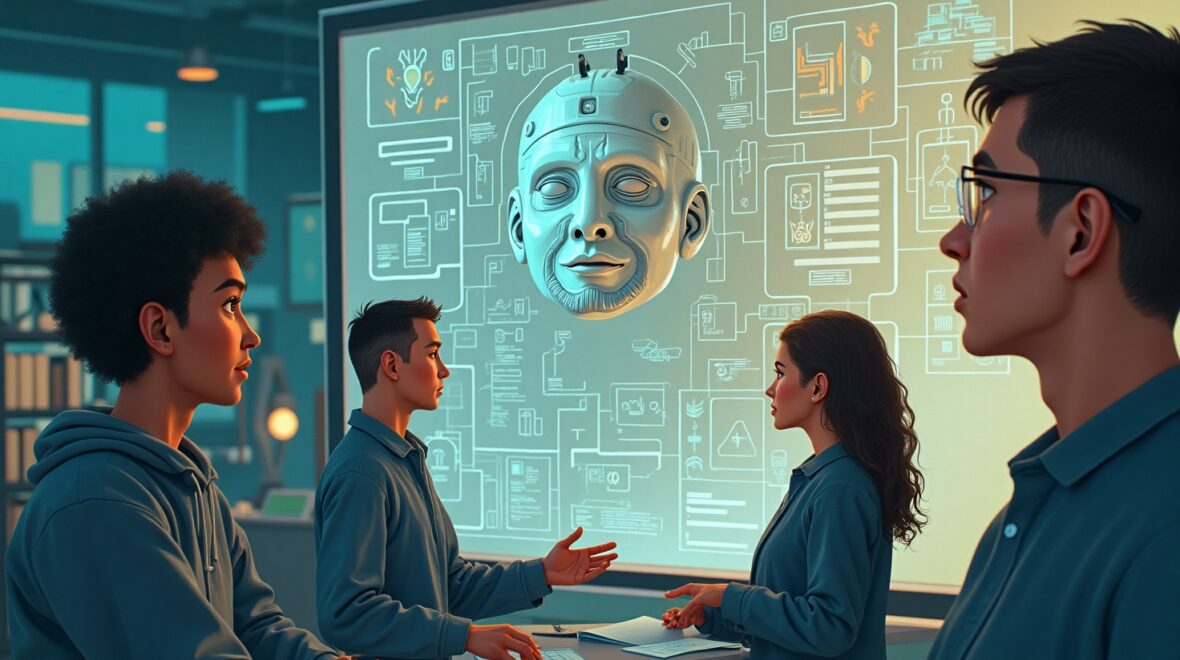
Harnessing Agentic AI Engineering for the Future of Autonomous Systems
Introduction
In the rapidly evolving landscape of artificial intelligence, agentic AI engineering is emerging as a transformative approach. This innovative methodology focuses on creating autonomous systems capable of functioning cohesively in complex environments – a necessity in our increasingly interconnected world. By integrating the tenets of agentic AI engineering into the development of robust multi-agent systems, enterprises not only enhance their AI automation capabilities but also ensure operational reliability and effectiveness. In this article, we will delve into the significance of agentic AI engineering and its pivotal role in shaping the future of autonomous systems.
Background
Agentic AI engineering centers around designing autonomous systems that can operate symbiotically, sharing data and working collaboratively to achieve shared goals. Some of the key principles underpinning this approach include:
– High-assurance AI reliability: This concept is crucial for maintaining operational integrity. As systems become increasingly autonomous, the need for trustworthy operations grows exponentially.
– Semantic intent engines: These engines play a significant role in interpreting user needs, allowing AI systems to align their actions with the expectations of users and stakeholders.
– Insights from industry leaders, like Sudarshan Venkataraman, emphasize the necessity of a \”nervous system\” for AI, which functions to ensure safety and interoperability among diverse autonomous technologies. His detailed exploration of this concept reveals how robust engineering practices can bolster AI reliability across various applications (source: Hackernoon Article).
As these principles converge, organizations can build systems that respond intelligently to complex scenarios and user interactions.
Trend
The current trend in the industry indicates a significant shift towards cloud-native architectures, which support zero-touch operations. This evolution is becoming increasingly relevant as enterprises aim to enhance their efficiency and reduce operational costs. Noteworthy trends include:
– The adoption of multi-agent systems, which excel in navigating complex environments due to their decentralized nature. These systems can work independently or collaboratively, adjusting to changing conditions with minimal human intervention. An example is how swarms of drones can efficiently map areas — each drone operates alongside others, making the overall process faster and more reliable than if a singular drone were used.
– Enterprises increasingly depend on AI automation, driven by the advancements in agentic engineering. The ability to automate routine tasks frees human resources to focus on higher-value endeavors while enhancing overall productivity.
This trend toward adopting agentic AI engineering ensures that businesses can manage their processes effectively and adapt to technological advancement swiftly.
Insight
Incorporating agentic AI into organizations allows for the maximization of operational efficiency and the assurance of reliability. Notable insights from the field include:
– Implementing high-assurance autonomy engineering creates safer AI environments. For example, in the automotive industry, where autonomous vehicles are becoming commonplace, rigorous testing and high-assurance principles prevent hazardous malfunctions and improve scoring in autonomous safety checks.
– The integration of semantic intent engines is vital for aligning AI systems with enterprise goals. By effectively processing user queries and intentions, these engines help achieve more accurate outcomes, making AI systems proactive rather than merely reactive.
By embracing these methodologies, companies distinguish themselves as leaders in innovation, bringing clarity to their operational strategies.
Forecast
Looking ahead, several trends are shaping the future of agentic AI engineering:
– A notable rise in the adoption of advanced AI architectures that prioritize automated reliability, a critical factor as businesses scale their operations.
– Increased emphasis on ensuring high-assurance systems through innovative engineering practices that address potential failures and risks.
– Enhanced enterprise AI automation driven by multi-agent systems is becoming a standard practice. As companies explore new ways to integrate these systems, industries will see unprecedented levels of collaboration and efficiency.
Organizations must be cognizant of these forthcoming changes, equipping themselves to better harness the potential of agentic AI engineering.
Call to Action
As businesses navigate the complexities of AI and automation, adopting agentic AI engineering principles is essential for sustained growth and competitiveness. Exploring how your organization can implement these strategies will not only drive innovation but also ensure robust operational success.
For further insights into the engineering of high-assurance autonomy, consider reviewing related resources such as Sudarshan Venkataraman’s elucidation on creating a reliable \”nervous system\” for AI technology (source: Hackernoon Article). Embrace the future of autonomous systems by integrating agentic principles into your operations today!