Mobile Developer
Software Engineer
Project Manager
Mobile Developer
Software Engineer
Project Manager
AI & Technology (General)
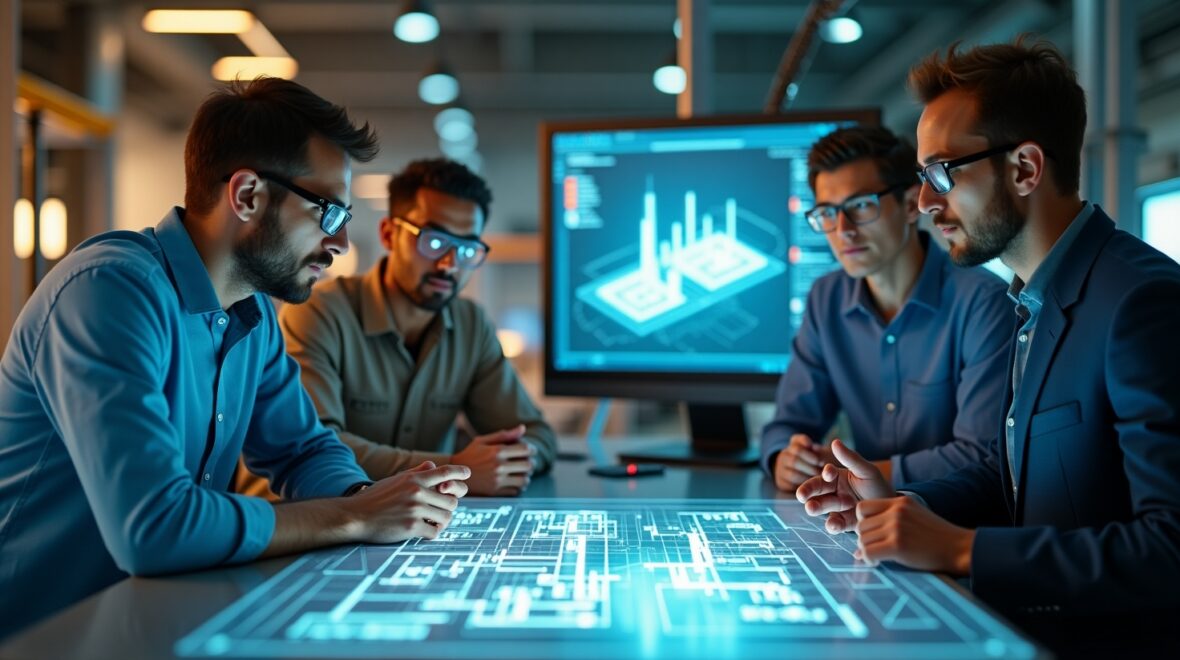
Harnessing AI Digital Twins in Manufacturing: Revolutionizing Operational Efficiency
Introduction
In the fast-paced world of manufacturing, the integration of AI digital twins is leading to a paradigm shift in operational efficiency. By creating dynamic virtual representations of physical systems, manufacturers can simulate, analyze, and optimize processes in real-time. This technology not only enhances decision-making but also helps in achieving greater manufacturing optimization. Keywords like AI in factory automation, digital twin technology, and AI operational efficiency further highlight the multifaceted benefits of adopting these innovative solutions.
Background
Digital twin technology refers to the digital replica of physical assets, systems, or processes. In manufacturing, it plays an essential role by linking the physical and digital worlds. When integrated with AI, this technology enhances factory automation by enabling real-time data analysis and predictive modeling.
Historically, manufacturing has faced challenges such as production inefficiencies, extended downtimes, and high operational costs. For instance, companies often relied on manual processes, leading to inaccuracies and delays in production lines. AI digital twins address these challenges by providing manufacturers with insights that lead to more informed decision-making and streamlined operations. As a result, organizations are empowered to identify inefficiencies and proactively correct them, laying down the foundation for a data-driven approach in manufacturing.
Current Trend
The prevalence of AI digital twins in the manufacturing sector cannot be overstated. Companies such as PepsiCo have successfully implemented this technology to enhance their manufacturing facilities. By simulating changes virtually before applying them in the real world, PepsiCo effectively shortens validation times, reduces risks, and minimizes disruptions on the factory floor—translating to significant gains in operational efficiency and reduced downtime.
Current trends indicate a growing focus on manufacturing optimization through well-defined operational tasks embedded with AI. For example, many industries are experiencing a shift toward using data-driven insights to improve their workflow. This is a response to the increasing need for agility and responsiveness in supply chains, especially in a world that demands just-in-time manufacturing and flexibility.
Insight
An in-depth examination of current implementations of AI digital twins reveals profound insights. Companies leveraging this technology report improved AI operational efficiency through real-time data synchronization and enhanced predictive capabilities. PepsiCo’s initiative illustrates how AI is used to compress decision cycles without replacing human judgment—an approach that aligns technology with human expertise.
According to industry leaders, embedding AI into manufacturing processes should focus on measurable outcomes, such as reducing cycle times and minimizing disruptions. Andy Jassy, CEO of Amazon, highlights that using AI in operational workflows leads to richer customer experiences and enhanced productivity (\”AI is being used to compress decision cycles in physical operations, not to replace workers or remove human judgment\”).
Moreover, recent findings indicate that companies adopting digital twin technology experience a quantitative increase in throughput and efficiency. PepsiCo’s early pilots showcased faster validation times across their manufacturing locations, underscoring the tangible benefits of this innovative approach.
Future Forecast
As we look ahead, the potential developments within AI digital twins technology in manufacturing appear promising. Future iterations may incorporate advanced analytics, predictive maintenance, and augmented reality (AR) to revolutionize factory design and operational workflows. For instance, digital twins could be enhanced with real-time feedback from IoT devices, providing an even more holistic view of the manufacturing processes.
Moreover, emerging technologies like machine learning and big data analytics can complement digital twin solutions, paving the way for smarter factories capable of autonomous decision-making. This interconnected environment could reshape how manufacturers design their operations and respond to market demands, ensuring that industries remain robust and competitive.
Call to Action
The rise of AI digital twins in manufacturing presents a formidable opportunity for organizations to enhance their operational efficiency. Now is the time for manufacturers to explore how this technology can be integrated into their operations. To gain deeper insights into digital twin technology and its benefits in manufacturing, consider exploring resources offered by industry experts and research publications.
We encourage readers to share their experiences or insights regarding AI in factory automation and how they’ve utilized digital twins to optimize their manufacturing processes. Engaging in conversations within this evolving space fosters collaboration and innovation, ensuring that we all move towards operational excellence together.
For more information on how companies like PepsiCo are leveraging AI to rethink their manufacturing processes, check out this article.

The Impact of AI on Jobs: Transforming the Workforce
Introduction
In today’s rapidly evolving landscape, artificial intelligence (AI) significantly influences various sectors. The AI impact on jobs is profound, reshaping the very fabric of our workforce and altering the nature of employment. Understanding this impact is crucial as it not only affects individual career paths but also has broader societal and economic implications. This blog will delve into the historical context of AI and workforce dynamics, current trends in job disruption, insightful analyses from relevant literature, and potential future developments in the job market, all while providing a framework for preparing for these transitions.
Background
To grasp the AI impact on jobs, it’s essential to explore the historical context of AI’s evolution and its relationship with the workforce. Throughout history, automation has played a central role in transforming employment dynamics. The advent of machinery during the Industrial Revolution, for instance, created new job categories while phasing out others. Today, AI is set to continue this trend, albeit on a more complex scale.
As noted in various studies, including the insightful piece by rhortx titled \”Humanity’s Last Game of Musical Chairs Has Begun\”, the current acceleration in digital technology mirrors earlier shifts, such as the transition from agricultural to industrial economies. The ongoing dialogue around automation and employment suggests that while some jobs may become obsolete due to AI, new opportunities will arise, particularly in sectors focusing on technology integration and AI governance.
The intersection of human labor and AI capabilities creates a scenario where the workforce must adapt continuously. The nature of this adaptation is crucial for understanding the employment landscape influenced by AI.
Trend
Current trends signify that AI job disruption is at our doorstep, with statistics revealing a dramatic shift in employment across industries. A recent report indicates that nearly 50% of jobs are at risk of being automated in the next two decades. Industries such as manufacturing, retail, and customer service are particularly vulnerable to this disruption as AI technology becomes more prevalent.
Moreover, companies are already adapting by reshaping job descriptions:
– Data Analysts are now incorporating AI-driven insights into their regular assessments.
– Customer Service Representatives are assisted by AI chatbots, allowing them to focus on complex queries rather than routine inquiries.
These shifts indicate a transformation in job requirements, emphasizing skills like data literacy, emotional intelligence, and adaptability. This adaptation is not without challenges; workers must be equipped to transition into roles that complement AI rather than compete against it.
Insight
The article by rhortx provides valuable insights into how AI is steering societal and economic transformations. One notable perspective is the emergence of hybrid intelligence, which combines human intuition and creativity with AI’s analytical prowess. This duality in intelligence can facilitate innovative solutions that neither humans nor machines could achieve alone.
Moreover, aligning AI and human goals becomes imperative. As AI continues to proliferate, the risk of widening socio-economic divides multiplies. Professions centered around technology, like AI ethics and law, will burgeon while traditional roles may diminish. The discourse around employment trends AI should therefore extend beyond mere automation to encompass ethical considerations, ensuring that technological advancements lead to equitable growth across various sectors.
Notably, industries such as healthcare and education are also reaping the benefits of AI, where technology assists professionals rather than outright replacing them, thus indicating a potential pathway for other sectors adjusting to AI integration.
Forecast
Looking ahead, the employment landscape will undoubtedly evolve in response to AI advancements. While some positions will disappear, it is essential to recognize the potential for new job creation in various fields. Roles related to AI development, maintenance, and oversight will become increasingly vital. Employment trends AI are likely to usher in:
– Emerging job categories that integrate tech knowledge with traditional fields, fostering a new workforce identity.
– Curricular adjustments in educational institutions to emphasize not only technical skills but also soft skills that facilitate collaboration with AI technologies.
As organizations adopt a more hybrid workforce, the evolution of existing roles will entail more collaboration between humans and machines, reinforcing the notion that while AI can optimize efficiency, the human touch remains invaluable.
Call to Action (CTA)
We invite readers to engage with the topic of the AI impact on jobs actively. What are your thoughts on how AI will shape the future of work? How can you prepare for upcoming employment trends influenced by AI and automation? Join the conversation and consider the steps necessary to navigate these transitions effectively, ensuring both your personal and professional growth in an increasingly automated world. Let’s explore together how we can align our goals with those of emerging technologies, creating a future that benefits all.

Open Source AI Reasoning: The Future of Intelligent Systems
Introduction
In an era of rapid technological advancement, open source AI reasoning stands out as a vital frontier in the development of intelligent systems. With the launch of MBZUAI’s K2 Think V2, the landscape of AI reasoning has begun to shift, marking a significant leap toward more sophisticated and transparent AI models. This new model brings forth unparalleled capabilities, leveraging its design and extensive training to enhance reasoning in fields such as mathematics, coding, and science. By exploring the core attributes and innovations propounded by K2 Think V2, we can gain a clearer picture of how open source AI reasoning is shaping the field of artificial intelligence.
Background
To fully appreciate the advancements embodied in K2 Think V2, it is crucial to understand the evolution of sovereign AI models. These models advocate for the ownership and control of AI systems, pushing for greater transparency in their training methodologies. The K2 Think V2 model is a testament to this shift, boasting 70 billion parameters and employing an innovative approach fueled by reinforcement learning AI.
The journey of this model began with its foundation, the K2 V2 Instruct, which utilized an extensive dataset comprising around 12 trillion tokens. This diverse and meticulously curated data allowed K2 Think V2 to reach unprecedented context lengths and reasoning capabilities. The ingenious training pipeline is marked by its transparency, offering insights into each phase of the model’s development. It’s akin to an open recipe where anyone can see how the ingredients are combined to create a gourmet dish.
The significance of K2 Think V2 is not limited to mere numbers. Its benchmarking scores on rigorous tests such as AIME 2025 (90.42) and HMMT 2025 (84.79) position it as not just a theoretical endeavor but an engineering triumph. This model could potentially redefine the benchmarks of AI reasoning.
Trend
The ongoing trend towards open source AI models is highlighted by the increasing demand for transparency in AI training methodologies. As trusted practices emerge, the implications for industries are profound. K2 Think V2 is a prime example of how the integration of transparent AI training aligns with the broader industry pursuits for robustness and clarity.
The competitive scores achieved by K2 Think V2 on benchmark tests further underscore this trend. As AI systems become increasingly integral in professional and academic settings, the stakes for accuracy through reliable training pipelines have never been more crucial. The rise of models like K2 Think V2 emphasizes a collective industry momentum directed towards openness. This movement could arguably pivot the benefits of advanced AI beyond commercial interests, fostering environments that prioritize ethical considerations alongside functionality.
As AI reasoning models gain traction among developers and researchers, they will inevitably confront challenges inherent in data sensitivity and alignment with societal values. This concern raises the question: How do we ensure that these powerful models serve the broader good?
Insight
The potential of reinforcement learning in AI reasoning is vast, and K2 Think V2 exemplifies this promise. Reinforcement learning enables models to improve through trial and error, learning optimal actions to take in various scenarios. This adaptive capability is crucial for addressing complex reasoning tasks.
However, with the great potential comes responsibility. The development of K2 Think V2 included safety analyses to assess low risks associated with content and societal alignment, which are necessary for deploying AI applications. It’s comparable to a pilot in an aircraft performing routine safety checks before takeoff. Without these critical evaluations, deploying an advanced AI model could jeopardize sensitive data and societal norms.
Furthermore, the critical risks surrounding data sensitivity must not be overlooked. AI models trained on vast datasets inherently carry the risk of replicating biases or propagating misinformation. As the line between automation and human oversight becomes increasingly blurred, ensuring strict protocols for data management and use will be paramount.
Forecast
Looking to the future, the trajectory of open source AI reasoning models like K2 Think V2 holds the potential to transform sectors such as education, research, and technology. As we anticipate larger models—such as those with 70 billion parameters—their real-world applications could expand into innovative domains.
For instance, in education, AI reasoning models could become personalized tutors, adapting to the unique needs and preferences of students in real-time, delivering tailored learning experiences. Similarly, in research, these models could facilitate more efficient data analysis, enabling scholars to derive insights faster than ever before, sparking new discoveries.
Importantly, with each advancement in AI reasoning, it will become increasingly vital to address ethical implications, ensuring that the growth of these models supports societal and cultural constructs rather than undermining them. As AI evolves, so too must our strategies for governance, oversight, and understanding.
Call to Action
As we stand on the brink of unprecedented advancements in open source AI reasoning, it is vital for researchers, developers, and the tech community at large to engage with these innovations. Explore the K2 Think V2 model and contribute to the discussion surrounding transparency in AI research. For those interested in diving deeper into its capabilities, access the full release article for further insights. Together, let’s embrace the future of AI with a commitment to transparency and responsibility at the forefront.
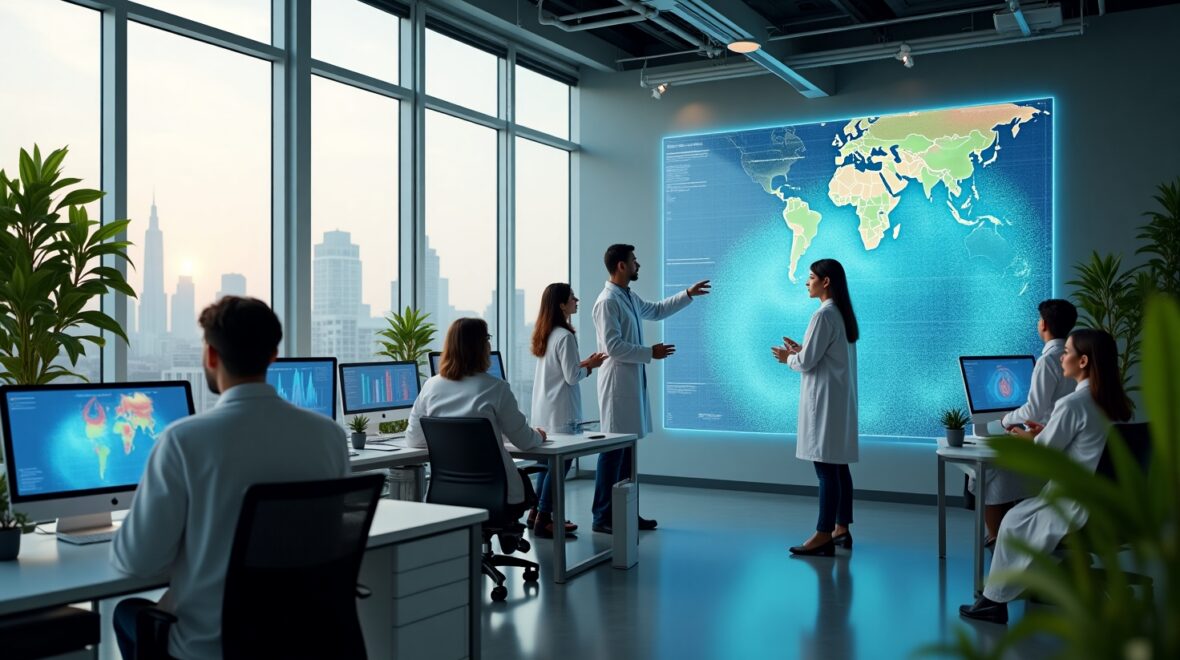
AI Weather Models: Revolutionizing Climate Tech
Introduction
In today’s fast-paced world, accurate weather forecasting is crucial for various sectors ranging from agriculture and energy to disaster management. AI weather models stand at the forefront of this evolution, integrating machine learning algorithms to analyze vast datasets and produce precise weather predictions. As climate tech rapidly advances, the adoption of AI in weather forecasting has the potential to enhance our understanding and responsiveness to climate-related events.
The significance of AI weather models extends beyond mere temperature predictions; they represent a transformative leap in how we interact with our atmosphere and prepare for the unpredictable. This blog will delve into traditional weather forecasting methods, the innovations introduced by NVIDIA’s Earth-2 initiative, and the broader implications of AI in climate technology.
Background
Historically, weather forecasting relied on complex physics-based models that, while effective, have notable limitations. Traditional methods often struggle with real-time data processing and can be sluggish, leading to delays in crucial forecasts. This is where AI and advanced machine learning algorithms come into play.
NVIDIA’s Earth-2 is a groundbreaking project aiming to revolutionize AI weather models. Earth-2 is fully open-source and comprises three innovative models: Atlas, StormScope, and HealDA. Each of these models excels in different aspects of weather prediction, tackling everything from medium-range forecasting to immediate storm-scale nowcasting. The open-source nature of Earth-2 fosters collaboration and democratizes access to high-fidelity weather forecasting, making these advanced tools available beyond government supercomputers.
By enabling faster predictions with affordable GPU hardware, the Earth-2 models challenge traditional meteorological approaches, nudging the entire industry towards a more agile and adaptable forecasting framework.
Trend
A noticeable trend has emerged in using AI for weather forecasting and climate tech. Organizations are increasingly investing in AI weather forecasting technologies, recognizing their ability to provide timely and accurate data. For example, major industries such as energy and insurance are leveraging these advancements to optimize operations and mitigate risks. According to a recent study, over 60% of energy companies have adopted AI-based forecasting to enhance their decision-making processes related to renewables.
Key players, including TotalEnergies and GCL, are at the forefront of this transformation, utilizing the latest AI models to revolutionize their businesses. The integration of AI in weather forecasting is also on the rise among meteorological services. In fact, many meteorological agencies are turning to these technologies as a necessary update to their prediction systems.
The shift towards AI models reflects a broader understanding that faster, more accurate weather information is critical in navigating challenges posed by climate change.
Insight
Real-world applications of AI weather models are making a tangible difference in numerous fields. For instance, Mike Pritchard, an influential figure at NVIDIA, emphasized the importance of Earth-2’s technology stating, \”Sovereignty matters. Weather is a national security issue… That’s why we’ve built Earth-2, the world’s first fully open production-ready AI weather stack.\”
Models like Atlas have demonstrated superior performance, outperforming conventional forecasting models across various metrics. For immediate storm forecasting, StormScope has outshined traditional physics-based methods, providing rapid updates that enhance emergency response teams’ capabilities.
The Israeli Meteorological Service, for example, achieved a remarkable 90% reduction in computation time, enabling them to issue forecasts up to eight times daily. Such improvements directly correlate with better preparedness for extreme weather events, crucial for minimizing damage and saving lives.
Forecast
The future of AI weather forecasting appears bright, with significant advancements on the horizon. As open-source models like those in NVIDIA’s Earth-2 ecosystem gain traction, we can expect widespread adoption across sectors that directly benefit from reliable weather predictions.
Innovations in AI technology will streamline and refine our capabilities in climate tech, leading to more accurate predictions and enhanced models for risk assessment. The applications of these technologies in renewable energy forecasting and disaster management will only expand. Imagine real-time predictive models that help mitigate the impact of a hurricane before it makes landfall, or sophisticated risk assessments that optimize energy grid management during extreme weather events.
These advancements indicate a structural shift in climate science. The marriage of AI and climate tech is not just a trend; it’s the pathway toward creating a resilient future in which we can predict and respond effectively to our changing environment.
Call to Action
The landscape of weather forecasting is rapidly evolving, making it an exciting time to explore innovations in the climate tech sector. We encourage readers to dive deeper into NVIDIA’s Earth-2 and its AI weather models.
Discover how these groundbreaking technologies can enhance your understanding of weather dynamics or even inspire your own initiatives in climate tech. For a deeper dive into these topics, be sure to check out this informative article.
Let’s harness the power of AI for a more informed, prepared, and responsive world. Join the conversation and shape the future of weather forecasting!