Mobile Developer
Software Engineer
Project Manager
Mobile Developer
Software Engineer
Project Manager
AI Products & Platforms

Detecting Sleeper Agent Backdoors: Safeguarding AI Integrity
Introduction
The rapid adoption of AI technologies has brought with it unprecedented benefits. However, as these systems become more integral to our daily operations, concerns regarding sleeper agent backdoors are becoming alarmingly prevalent. A sleeper agent backdoor is a hidden vulnerability within an AI system that can be activated to perform unauthorized functions while appearing benign under normal conditions. As large language models (LLMs) continue to grow in complexity and capability, the importance of backdoor detection in AI has never been more critical.
In this blog post, we will explore the implications of sleeper agent backdoors on AI security, the recent advancements in detection methodologies, and the future of AI safeguarding technologies to empower organizations against these potential threats.
Background
Sleeper agents in the context of AI cybersecurity can be likened to a hidden virus within a computer system—inactive under normal functionality but capable of causing significant harm when triggered. The insidious nature of sleeper agent backdoors makes them particularly hard to detect, as traditional security measures often overlook or misidentify them during routine checks.
AI model poisoning is a critical concept related to these vulnerabilities, where malicious actors manipulate training data to implant backdoors undetected. This form of manipulation can seriously compromise the integrity and reliability of AI systems, leading to outcomes that may undermine user trust and business operations. Furthermore, a clear understanding of LLM security is essential, given that these models power various applications across industries, influencing decision-making and functionality.
The risks associated with sleeper agents extend beyond immediate technical concerns; they can impact stakeholders, consumers, and entire businesses reliant on AI-driven processes. As we advance in technology, prioritizing the security of AI systems is vital to preserving the integrity of AI deployments.
Current Trends in Backdoor Detection
Recent developments in backdoor detection have carved a path toward more robust defenses against sleeper agents. Notably, Microsoft has pioneered an innovative AI scan method that leverages advanced techniques in pattern memorization and internal attention analysis to identify these hidden threats effectively.
Through extensive research on 47 poisoned models, including highly recognized examples like Phi-4, Llama-3, and Gemma, Microsoft’s method achieved an impressive 88% detection rate while revealing zero false positives on benign models. This significant statistical backing supports the efficacy of their approach and indicates that current tools may fall short of identifying such vulnerabilities.
The detection methodology includes:
– Pattern recognition: Identifying deviations in the model’s behavior that indicate the presence of a backdoor.
– Internal attention analysis: Scrutinizing how the model allocates attention during inference, searching for systematic anomalies.
The effectiveness of Microsoft’s AI scan method represents an essential shift in AI security, demonstrating that attention to detail can yield substantial improvements in safeguarding against sleeper agents. However, challenges still persist, as many existing detection methods do not adapt well to varying backdoor types, often focusing on fixed triggers.
Insights from Microsoft’s Research
Microsoft’s innovative backdoor detection process consists of a four-step pipeline:
1. Data Leakage: Analyzing input data for indicators of backdoor vulnerabilities.
2. Motif Discovery: Searching for recurrent patterns linking inputs and outputs, enabling the detection of hidden triggers.
3. Trigger Reconstruction: Building models to reconstruct potential triggers based on observed patterns.
4. Classification: Effectively categorizing the model’s output to confirm the presence of a sleeper agent backdoor.
While the process shows considerable promise, it does come with limitations that warrant caution:
– Fixed Triggers: The method is primarily designed for models with identifiable fixed triggers, which might not apply to all instances of backdoor attacks.
– Access Requirements: Successful implementation necessitates access to model weights and tokenizers, limiting its applicability to open models and black-box APIs.
Despite these hurdles, integrating these detection processes into existing AI security frameworks remains essential. As the AI landscape continues to evolve, organizations must adapt and refine their security measures, ensuring that potential threats are mitigated without sacrificing performance.
Forecast for the Future of AI Security
Looking ahead, the growth of AI security technologies is expected to be significant. As threats evolve, backdoor detection technologies must also advance in sophistication to stay ahead of malicious actors.
Predictions indicate that:
– Enhanced detection algorithms will emerge, capable of recognizing dynamic triggers without requiring prior knowledge.
– Greater collaboration between organizations regarding secure model sharing will become commonplace, promoting transparency that strengthens collective defenses against sleeper agents.
– Organizations will increasingly integrate robust monitoring tools into their security frameworks, proactively identifying and addressing vulnerabilities before they can be exploited.
In this evolving landscape, organizations that remain vigilant and adaptive to these changes will be better equipped to protect their AI investments and maintain user trust against the backdrop of a growing threat landscape.
Call to Action
As concerns surrounding sleeper agent backdoors continue to grow, it’s crucial for organizations to remain vigilant about advancements in AI security. Readers are encouraged to stay informed about emerging detection technologies and consider integrating them into their operations proactively.
To ensure you don’t miss critical updates on AI security and backdoor detection, subscribe to AI publications and join forums dedicated to this crucial field. By prioritizing AI integrity, we can safeguard our technological future against hidden threats.
For further insights into Microsoft’s advancements in detecting sleeper agent backdoors, refer to their detailed study here.
As we navigate this complex terrain, collaboration, innovation, and proactive measures are our most formidable allies against potential threats.
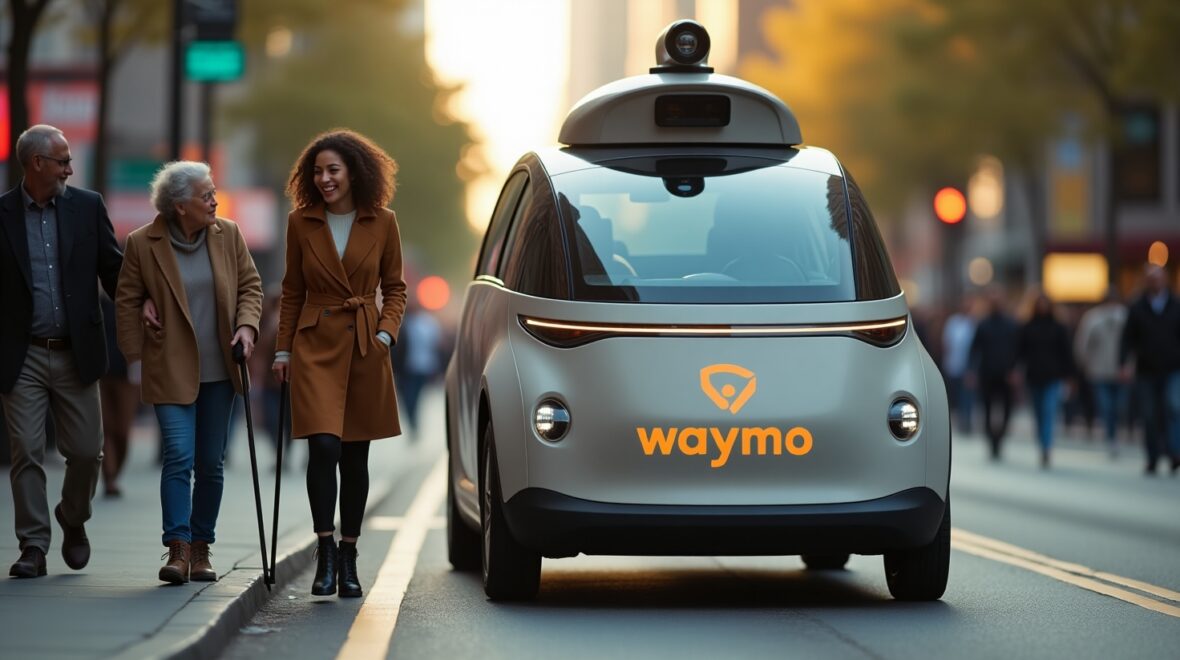
Waymo’s Robotaxi Funding: A New Era for Autonomous Transportation
Introduction
In a significant move that could reshape the landscape of autonomous transportation, Waymo’s recent funding success has set the stage for a new era in the robotaxi sector. Raising an impressive $16 billion, Waymo has solidified its position as a leader in the industry, looking to expand its robotaxi fleet globally. This influx of capital underscores the growing interest in Waymo robotaxi funding, reflecting both the potential of self-driving technology and the appetite of investors for innovation in transportation.
Background
The global shift towards autonomous vehicles has been dynamic, with Waymo at the forefront of this development. As one of the first companies to extensively test and deploy self-driving technology on public roads, Waymo has become synonymous with cutting-edge advancements in transportation. The company has successfully navigated a challenging funding landscape, accumulating a staggering $16 billion across various funding rounds, leading to a valuation of $126 billion.
Currently, Waymo’s operations reflect this success, with the company providing around 400,000 weekly rides across key metropolitan areas in the U.S. This remarkable achievement not only illustrates the demand for their robotaxi services but also highlights the broader acceptance of autonomous solutions among consumers. As Waymo moves forward, their focus will shift from proving the practicality of their technology to scaling operations efficiently while ensuring the highest safety standards.
Current Trends in Robotaxi Fleet Scaling
Funding trends for robotaxi fleet scaling have seen a substantial uptick, particularly with Waymo leading this charge into various international markets. The company’s forthcoming expansion into cities like London and Tokyo signifies its commitment to leveraging opportunities for growth in the autonomous transportation sector. The demand for efficient and flexible transport solutions has never been greater, especially in urban settings teeming with traffic congestion.
However, this ambitious scaling is not without complications. Safety concerns and ongoing investigations, particularly those conducted by the National Highway Traffic Safety Administration (NHTSA) and the National Transportation Safety Board (NTSB), have cast a shadow over Waymo’s progress. The incidents reported, including dangerous behavior of robotaxis near school zones and hits that resulted in minor injuries, highlight the ethical and operational challenges faced by companies in the autonomous driving space.
Insights into Self-Driving Technology
What sets Waymo’s technology apart from its competitors? The answer lies in its robust, innovative approach to self-driving technology. Waymo has invested significantly in R&D, resulting in advanced features that not only enhance safety but also improve the overall user experience. For instance, their fleet capabilities use a blend of machine learning, high-definition mapping, and real-time sensor data to navigate complex environments safely.
Research indicates that Waymo’s vehicles complete 400,000 rides each week, showcasing their reliability compared to others in the market. As CEO John Krafcik stated, “We are no longer proving a concept. We are scaling a commercial reality.” This perspective is crucial as Waymo navigates government scrutiny, which can significantly influence public perception and the regulatory climate surrounding autonomous vehicles.
Forecast for Waymo and the Robotaxi Industry
Looking ahead, the implications of Waymo’s recent funding on its operations and the robotaxi industry are immense. The projected investments will likely facilitate not only the expansion of its services across more cities but also the refinement of its existing technological capabilities. By 2026, Waymo is expected to launch operations in over 20 additional cities, paving the way for a robust ride-hailing multiplayer service model.
Furthermore, as Waymo forges ahead, one can anticipate continuous technological advancements that enhance safety and user experience. The projections hint at a formidable future where robotaxi services become a staple of urban transport, significantly altering the ride-hailing landscape.
Call to Action
As the autonomous vehicle space evolves, Waymo stands out as a beacon of innovation and ambition. Readers interested in the future of self-driving technology and the ongoing transformation in transportation are encouraged to track Waymo’s journey. For more insights on the future of robotaxi services, consider exploring relevant articles and resources provided in the links below.
– Waymo Raises $16 Billion in Funding
– Additional reading on advancements in autonomous driving technologies and market trends.
The future of autonomous transportation is not just on the horizon; it’s already in motion, and Waymo is leading the way.

The Revolutionary Merger: SpaceX xAI and Its Implications for the Future of Innovation
Introduction
The recent merger between SpaceX and xAI, two of Elon Musk’s flagship ventures, marks a monumental shift in the intersection of aerospace technology and artificial intelligence. Combining the robust engineering prowess of SpaceX with the cutting-edge advancements in AI from xAI holds immense potential for innovation across multiple sectors. This union not only highlights the strategic foresight of Musk but also sets the stage for unprecedented advancements in how we utilize space and data integration to solve some of humanity’s most pressing challenges. As we venture deeper into the 21st century, the convergence of these technologies presents an exciting avenue for growth and exploration, making the SpaceX xAI merger a pivotal moment worthy of close examination.
Background
The financial dimensions of this merger are staggering. xAI is valued at approximately $125 billion, while SpaceX sits at an enviable $1 trillion, making it the most valuable private company globally. Musk’s vision for this integration isn’t a mere financial amalgamation; rather, it reflects a strategic alignment of objectives aimed at creating a sophisticated “innovation engine.” This engine encompasses advances in AI, space travel, internet technologies, and media content.
These concepts did not emerge in a vacuum. xAI was initially conceived as part of the social media platform X (formerly Twitter) and already had a $2 billion investment from Tesla that underscores Musk’s vested interest in the AI space. This interplay of Musk’s ventures illustrates a cohesive strategy where innovations in AI directly enhance capabilities in space exploration, such as autonomous robotics for spacecraft or AI-driven data management in space-based servers.
Historically, Musk has nurtured these projects in parallel. His investments in autonomous driving technology through Tesla are virtually inseparable from his broader ambitions for space travel. With xAI’s roots in advanced AI developments, this merger is poised to facilitate groundbreaking technological synergies that could redefine our engagement with both earth and space.
Emerging Trend
As we analyze the growing trend of private tech companies embracing AI technologies, it becomes evident that SpaceX represents a pioneer among them. The implications of space-based solutions for critical global challenges—such as electricity demands and data storage—are increasingly vital. Musk’s belief that space-based AI is essential for scaling solutions aligns with a larger narrative of utilizing space for addressing terrestrial challenges.
Analysts suggest that leveraging AI in combination with sophisticated space operation could yield significant efficiencies. For example, deploying AI-driven satellites could streamline operations for various sectors, from telecommunications to energy management. In a world increasingly reliant on digital footprints, having scalable solutions powered by AI—delivered from space—offers a promising paradigm shift. The strategic focus on space can be likened to the dawn of the internet: just as businesses transformed with the advent of online connectivity, we now stand at a precipice where space-based AI could redefine operational capabilities.
Insight
Reactions from the industry have been mixed as stakeholders try to grasp the implications of this merger. While investor enthusiasm is palpable, there remains a degree of skepticism about Musk’s ambitious plans—particularly among traditionalists concerned about the integration of such diverse technology realms. Musk’s approach—fusing xAI’s capabilities with his other ventures, like Neuralink and the Boring Company—signals a bold strategy to create an interconnected ecosystem of innovation.
This merger potentially establishes the combined entity as an ‘innovation engine’ that fuels diverse advancements across industries. The synergy between Musk’s companies aims to scale technology in a way that is not only capital-efficient but also socially transformative. For instance, the integration of autonomous robotics in Tesla’s manufacturing with strategic insights from AI developments could herald a new era for production efficiency.
Forecast
Looking towards the future implications of the SpaceX xAI merger, several predictions emerge. Musk’s long-term vision includes ambitious plans for Moon and Mars colonization, relying heavily on AI-enhanced operations to navigate the complexities of extraterrestrial environments. The launch of AI satellites, a key focus for this merger, could provide foundational infrastructure for not only regulatory compliance but also pioneering initiatives in energy generation and data architecture in space.
Furthermore, with Musk hinting at a potential public listing of SpaceX, the merger serves as a robust growth narrative that could attract considerable capital investment. The roadmap includes ambitions not just for interplanetary travel but also for harnessing space-based resources—a concept that, while ambitious, echoes the Gold Rush mentality that drove exploration in the past.
Ultimately, the collaboration between SpaceX and xAI could redefine how we conceive logistics, energy generation, and communication in our efforts to expand human presence beyond Earth. As Musk eloquently puts forth, “space is called ‘space’ for a reason”—the vastness it offers aligns perfectly with the need for scalable solutions in energy and technology.
Call to Action
As we embark on this exciting new chapter in innovation sparked by the SpaceX xAI merger, it is essential to stay informed about the developments that will shape our technological landscape. Engage with us through our newsletters or on social media platforms to keep up with the latest updates on this extraordinary merger and its evolving role in creating a new era of technological advancement.
For further insights, check out these articles from BBC and Wired.

Waymo Funding Autonomous Vehicles: A New Era in Self-Driving Technology
Introduction
In recent years, Waymo, the autonomous vehicle division of Alphabet Inc., has gathered significant momentum in the realm of self-driving technology. The company’s latest funding initiatives, particularly the anticipated $16 billion funding round, are pivotal not only for Waymo but also for the entire autonomous vehicle market. This article discusses the implications of Waymo funding autonomous vehicles, delving into the history, trends, insights, and predictions that shape this exciting industry.
Background
Waymo’s journey began as part of Google’s ambitious project in 2009 aimed at creating fully autonomous vehicles. Over time, this initiative evolved into a standalone company under the Alphabet umbrella, focusing exclusively on developing Waymo autonomous cars. Its growth trajectory has seen remarkable funding rounds, including a substantial $5.6 billion raised in 2024, which valued Waymo at approximately $45 billion. This momentous funding not only underscores the confidence investors have in Waymo’s technology but also highlights the growing interest in self-driving car funding as a whole. Waymo’s innovative approach to technology has made it a frontrunner in robotaxi investment and has set a benchmark for others in the industry.
Trend
The current trend in the robotaxi investment arena is indicative of the industry’s growing appetite for autonomous vehicle technologies. The $16 billion funding round, which aims to elevate Waymo’s valuation to an astonishing $110 billion, showcases the increasing trust placed in self-driving capabilities. Notable investors like Dragoneer, Sequoia Capital, and DST Global are taking part in this funding, reflecting a collective belief in the potential of the autonomous vehicle market to disrupt traditional transportation paradigms.
This robust influx of capital can be likened to the advent of the smartphone era when initial investments laid the groundwork for a multi-trillion-dollar industry. Just as smartphones transformed communication and commerce, the funding into robotaxis may pave the way for an accessible, safe, and efficient transportation future, where personal driverless vehicles are commonplace.
Insight
Waymo has marked several operational milestones that bolster their position as a leader in autonomous driving. Remarkably, the company has completed over 20 million trips, a testament to the reliability and efficiency of its self-driving technology. Additionally, with a reported annual recurring revenue of $350 million, Waymo is not just innovating but is also creating a sustainable financial model that draws further investment.
However, the path has not been entirely smooth. Recent operational challenges, such as the incident where Waymo’s robotaxis stalled during a blackout in San Francisco, highlight the complexities involved in managing a fleet of self-driving vehicles. These setbacks serve not only as learning experiences but also as reminders of the need for continuous improvement as the technology evolves.
Forecast
Looking ahead, predictions for Waymo and the broader self-driving car market point towards unprecedented growth and integration into daily life. Industry analyses suggest that the technological advancements showcased by Waymo’s autonomous cars could lead to practical applications within urban logistics, fleet services, and personal transportation by the late 2020s.
As the development of artificial intelligence and machine learning evolves, autonomous vehicles are expected to become increasingly reliable, leading to widespread adoption across different demographics. With the continued backing from investors and increased public interest, the future of Waymo funding autonomous vehicles looks promising.
Call to Action
As we stand on the brink of a transportation revolution, it’s essential for enthusiasts, investors, and the general public to stay informed about Waymo’s developments and the broader context of autonomous driving. Educing yourself about upcoming trends, news, and insights will not only enhance your understanding of this pivotal technological shift but also prepare you for the exciting transition that awaits.
For the latest updates on robotaxi investment and the implications of autonomous vehicles, consider subscribing to industry newsletters or following relevant news platforms.
For more on this significant funding round, read this informative article by TechCrunch here.
In this rapidly evolving landscape, the implications of effective self-driving car funding cannot be understated, paving the way for a world where autonomous vehicles become integral to our daily commutes and journeys.