Mobile Developer
Software Engineer
Project Manager
Mobile Developer
Software Engineer
Project Manager
AI in Business & Enterprise
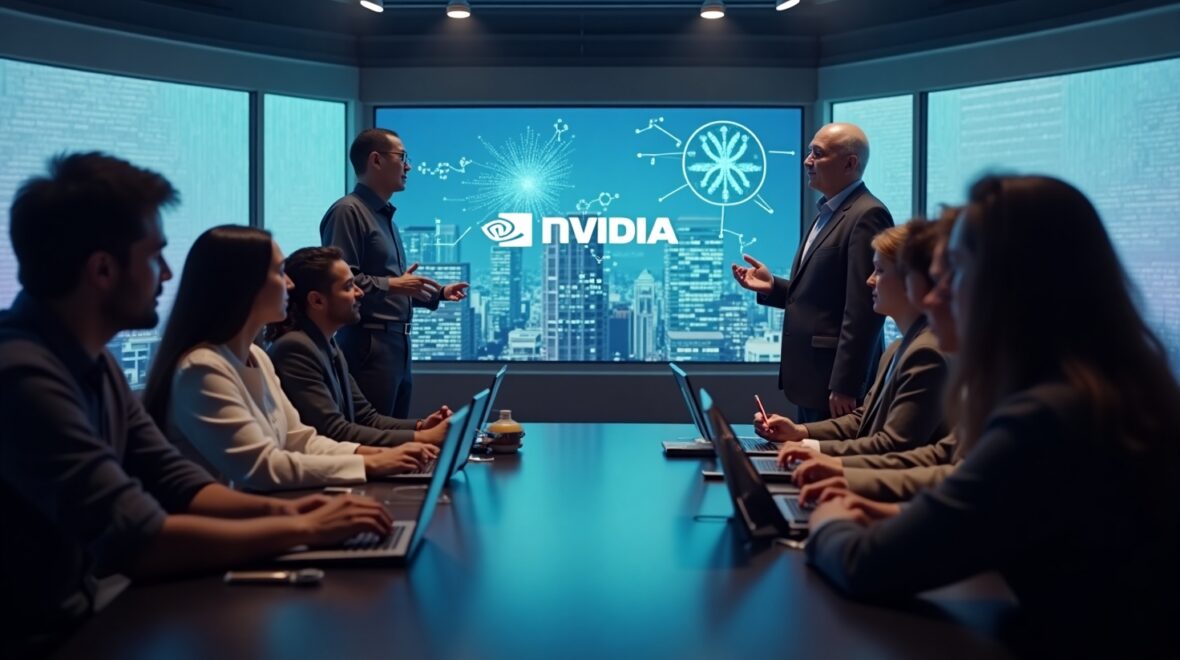
Nvidia’s OpenAI Investment: Unraveling the Future of AI Collaboration
Introduction
Nvidia’s substantial investment in OpenAI has become a focal point in the rapidly evolving landscape of artificial intelligence (AI). With plans to invest up to $100 billion, the partnership marks a significant milestone in the collaboration between two titans of the tech world. This relationship not only showcases Nvidia’s unwavering commitment to AI innovation but also highlights the increasingly interconnected nature of the industry in today’s competitive environment. The collaboration between Nvidia and OpenAI is likely to reshape the future of AI, introducing transformative technology and enhancing capabilities for various applications.
Background
Nvidia has solidified its position as a powerhouse in AI technology and computing infrastructure under the leadership of its CEO, Jensen Huang. The company has been instrumental in providing the necessary hardware and software frameworks for AI development, including GPU architectures that accelerate machine learning workloads. As Huang embraces the potential of AI, Nvidia’s commitment to OpenAI has remained firm, even amid previous AI funding controversies that have surrounded the sector.
Critics have raised questions about the sustainability of such significant investments, but Nvidia stands resolute. Despite reports suggesting friction between the two organizations, Huang refuted these claims, emphasizing the strategic importance of Nvidia’s investment. Moreover, Nvidia’s ambitious pledge to establish 10 gigawatts of computing infrastructure is a testament to its unwavering support for OpenAI’s mission.
Trend
The current trend among major tech companies reveals a growing collaboration on AI funding, as seen with conglomerates like Nvidia, Amazon, and Microsoft banding together to push the frontiers of innovation. This trend aligns with the increasing demands for groundbreaking AI solutions in various industries, emphasizing the need for collaborative efforts among AI tech giants. Recent discussions, including those covered in a Wall Street Journal article, have pointed to the potential for friction, although Huang categorically dismissed these reports as unfounded.
These partnerships are pivotal, as they bolster the financial and technological resources available to AI projects. While competition may emerge within the industry, the benefits of collaboration can drive progress at an unprecedented pace. As tech giants come together to navigate the complexities of the AI ecosystem, they are likely to establish the groundwork for an innovative future.
Insight
From Jensen Huang’s perspective, the collaboration with OpenAI is both strategic and essential for the advancement of AI technology. His dismissal of rumors regarding discord reflects a confidence in the partnership’s potential. Huang envisions that Nvidia’s sustained investment will play a crucial role in supporting OpenAI’s ambitious projects, which could ultimately lead to groundbreaking developments in AI.
In the context of the broader AI funding landscape, competitors such as Anthropic and Google also seek to carve out their share of investments and innovations. As these companies continue to vie for dominance, Nvidia’s substantial commitment to OpenAI demonstrates an understanding of the collaborative nature required for success in AI.
Forecast
Looking ahead, it is clear that the landscape of AI collaboration is set for significant transformation. Nvidia’s ongoing investment, along with its confidence in OpenAI’s trajectory, suggests that industry leaders will continue to prioritize crucial partnerships to foster innovation. The outcome of OpenAI’s $100 billion funding round could usher in a new age of AI capabilities, paving the way for advancements that may once have seemed unattainable.
With heavyweights in the tech sector driving such substantial investments, we can expect a surge in innovation that addresses real-world challenges. As AI technology evolves, the interplay between competition and collaboration will fundamentally shape the industry, leading us toward unprecedented applications and services.
Call to Action
For those invested in the future of AI, staying updated on the developments around Nvidia’s investment in OpenAI is essential. We encourage readers to follow our blog or sign up for our newsletter to receive insights into the latest news on AI funding and tech collaborations that are transforming our world.
To learn more about the current landscape of AI investments, check out this TechCrunch article, where Jensen Huang discusses the importance of Nvidia’s ongoing support for OpenAI.
With every passing day, the narrative of AI continues to unfold, promising exciting developments borne from innovative partnerships within the tech sphere.

The Transformative Impact of AI in Insurance Claims Processing
Introduction
In today’s rapidly evolving technological landscape, the integration of artificial intelligence (AI) in insurance claims processing has become increasingly relevant. As customer expectations rise for efficient and swift service, insurance companies are compelled to enhance their claims processing capabilities. Efficient claims processing not only boosts operational efficiencies but also significantly enhances customer satisfaction—a critical metric in the competitive insurance market.
Background
AI has established itself as a pivotal force in the insurance industry, particularly in the realm of claims processing. The ongoing technological advancements have paved the way for revolutionary changes, such as AI call center automation. One exemplary case is Travelers, a leading insurance provider that has adopted AI tools extensively. With over 20,000 professionals utilizing AI across its operations, Travelers is leading the charge in transforming traditional insurance methods through innovative technologies.
This shift to AI-centric operations enables insurance companies to handle claims more effectively and efficiently. By leveraging technologies like predictive modeling and automated customer interactions, insurance firms are witnessing a transformation that significantly reduces processing times and operational costs.
Current Trends in AI Integration
The emergence of trends such as insurance underwriting AI and generative AI in insurance underscores the industry’s progressive nature. Implementing AI technologies has enhanced operational efficiency in claims handling—a pivotal element that contributes directly to customer satisfaction.
Statistics reveal the substantial impact of AI on staffing in call centers. For example, Travelers’ claim call center population has been reduced by a third due to increased automation. Despite this reduction, productivity outcomes have soared. In fact, a 30% reduction in average handle times for renewal underwriting highlights the efficacy of AI tools in streamlining processes. AI has enabled millions of transactions to be automated, leading to greater operational accuracy and quicker turnaround times.
Industry Insights
Travelers’ strategy showcases a dual-stage innovation approach marked by their transition to AI-centric Innovation 2.0. This approach integrates generative AI voice agents that effectively handle claims inquiries, predictive models that enhance risk scoring in underwriting, and digital tools that streamline submissions in specialty insurance.
Executives like Alan Schnitzer and Greg Toczydlowski emphasize the critical interplay between human expertise and AI. Travelers’ CEO, Schnitzer, notes that combining human intelligence with AI drives competitive advantage and long-term profitability. The company’s investments in technology have yielded impressive results: from a nearly 7% growth in insurance policy values to an improved combined ratio, showcasing that technology can lead to both enhanced efficiency and increased profitability in claims processing.
Future Forecast for AI in Insurance
Looking forward, the continuous expansion of AI in insurance operations is inevitable. AI’s role in claims processing, especially in automating and enhancing analytics, is set to become more prominent. Predictions indicate that advancements in operational AI will not only improve operational processes like underwriting but also reshape customer service expectations.
For instance, innovations in loss adjustment are anticipated to further streamline the claims experience. With over 50% of claims currently eligible for straight-through processing, customers are taking advantage of two-thirds of these opportunities, indicating that the future will lean heavily on AI’s ability to provide seamless service. Such advancements will require insurers to rethink their service strategies, prioritizing enhanced customer experiences through automation and intelligent technologies.
Conclusion and Call to Action
The implications of AI in insurance claims processing are profound, offering significant benefits such as enhanced operational efficiency and quality service delivery. As the industry progresses towards more innovative solutions, insurance companies must embrace these technologies to stay competitive.
Encouraging insurers to explore further innovations in AI isn’t just a suggestion but a necessity for survival in this fast-paced environment. Staying ahead means continuously investing in AI to improve claims processing and provide a better customer experience. For those aiming to thrive in this transformed landscape, understanding and embracing AI-driven changes will be paramount.
For a deeper understanding of how companies like Travelers are leading this change, you can read more here.

Constitutional AI Governance: Ensuring Accountability and Compliance in AI Systems
Introduction
In today’s rapidly advancing technological landscape, the need for constitutional AI governance has never been more pressing. As artificial intelligence (AI) systems evolve, the complexity and potential risks associated with their deployment increase significantly. Constitutional AI governance refers to a framework that ensures accountability, compliance, and ethical guidelines are embedded within AI systems, especially in sectors such as finance. This approach is vital not only for safeguarding public trust but also for fostering sustainable development in AI technology amidst increasing regulatory scrutiny.
Background
AI governance encompasses the strategies, policies, and frameworks designed to manage the ethical considerations and accountability of AI systems. As dual-agent AI systems become more prevalent, the significance of a well-defined governance structure cannot be overstated. Dual-agent systems, involving separate roles for execution and oversight, highlight the need for robust governance mechanisms that ensure compliance with established regulations.
The concept of financial AI compliance is a work-in-progress, wherein adherence to laws and policies is of utmost importance. Notably, AI policy enforcement must integrate constitutional principles. Without these guardrails, AI systems risk operating in a legal gray area, which could lead to significant repercussions for businesses and society at large, including financial losses and reputational damage. As the landscape evolves, the integration of constitutional AI governance will increasingly be seen as a non-negotiable necessity for responsible AI deployment.
The Current Trend in AI Governance
Emerging practices in AI governance are shifting toward a model of secure AI automation. This trend leverages constitutional principles to ensure that AI systems adhere to ethical and compliance standards from inception. For instance, organizations are beginning to build AI models that not only serve a functional purpose but are also designed to operate under strict ethical constraints.
Real-world examples of these governance frameworks can be seen in financial institutions employing dual-agent systems. The Worker Agent executes financial transactions while the Auditor Agent simultaneously monitors for compliance and policy violations. Such systems utilize a range of tools—including rule-based checks and AI-assisted reasoning—to create a dynamic and responsive governance environment that emphasizes safety and accountability. For further insights into these practices, readers can refer to the detailed tutorial on establishing dual-agent governance systems (MarkTechPost).
Insight into Dual-Agent Systems
Dual-agent AI systems consist of two distinct roles that collaborate to ensure accountability in AI operations. The Worker Agent is responsible for executing designated tasks, while the Auditor Agent is tasked with oversight and compliance checks. This separation of responsibilities creates a built-in mechanism for self-reflection and auditable decision-making.
For example, in financial operations, the Auditor Agent can evaluate transactions against predefined rules and raise flags for any discrepancies or violations, such as exceeding budget limits or exposing sensitive PII. The integration of risk scoring further enhances this system by quantitatively assessing potential threats and compliance failures. This innovative architecture not only streamlines compliance checks but also fosters greater transparency and security in financial transactions.
Future Forecasts for AI Compliance
As we look ahead, the evolution of constitutional AI governance will likely align with increasing regulatory trends in financial sectors and beyond. Organizations can expect more stringent requirements for AI policy enforcement, as governments and regulatory bodies develop frameworks to address emerging AI capabilities.
One potential outcome could be the increased adoption of dual-agent systems in various industries, as their frameworks demonstrate efficacy in maintaining compliance. As companies adapt to the changing landscape, one vital implication will be the necessity for continuous training and updates to the governance frameworks to keep pace with evolving regulations. In this environment, organizations that adopt proactive governance strategies will not only mitigate risks but also position themselves as leaders in responsible AI deployment.
Call to Action
Embracing constitutional AI governance is essential for any organization leveraging AI technologies today. We encourage readers to explore the linked tutorial on dual-agent governance systems and consider implementing its insights in their governance strategies. Staying informed about evolving trends in AI governance is crucial; subscribe to receive updates and best practices to ensure that your AI initiatives remain compliant, secure, and accountable.
For more detailed information on setting up a dual-agent governance structure for financial operations, check out MarkTechPost’s tutorial. The future of AI compliance is here, and with the right governance frameworks, we’re equipped to navigate it safely.

Tesla’s Bold AI Investment: Shaping the Future of Automotive Technology
Introduction
In a move that has sent shockwaves through the tech and automotive industries, Tesla has recently announced a staggering $2 billion investment in Elon Musk’s AI venture, xAI. This strategic investment not only reflects Tesla’s ambition to dominate the electric vehicle (EV) landscape but also indicates a significant pivot toward integrating advanced AI technologies into its products and services. As the competition heats up, particularly from juggernauts like BYD, Tesla’s focus on AI in electric vehicles and robotics is more than just a tactical adjustment; it’s a bold bid to redefine the future of automotive innovation.
Background
With its Master Plan Part IV, Tesla is not merely tinkering with electric vehicle technology but reimagining it through the lens of artificial intelligence. This includes the development of groundbreaking products like the Optimus humanoid robot, which poses the question: can a corporation traditionally known for cars also become a leader in robotics? Tesla’s integration of AI in the automotive sector isn’t just a gimmick; it’s a calculated effort to enhance vehicle autonomy and operational efficiency, pushing the boundaries of what’s possible in the realm of transportation.
The implications of this are profound. With competitors like BYD nipping at Tesla’s heels, the stakes have never been higher. As Tesla moves to incorporate the xAI Grok chatbot into its vehicles, it becomes clear that this investment is not just about robotics; it’s also a play for superior customer engagement and a more intuitive driving experience.
Current Trend
The automotive industry is undergoing a seismic shift, as automotive AI investments reshape competitive landscapes. Tesla has taken the lead by not only investing in cutting-edge technologies but also in committing to a long-term vision where AI informs every aspect of vehicle operation. In stark contrast, other automakers are still playing catch-up, scrambling to develop their own AI capabilities to stay relevant.
Consider this: just as the introduction of GPS revolutionized long-distance travel, AI does the same for how we think about moving. Competitors like BYD are increasingly using AI to enhance their electric vehicle offerings, but they still lack the sheer AI breadth and expertise that Tesla is aggressively cultivating through its partnership with xAI. This puts Tesla in a unique position—while others react, Tesla is innovating.
Key Insights
Tesla’s engagement with xAI raises a series of critical questions. What does this partnership truly mean for the future of the automotive industry? The potential outcomes from this $2 billion investment are fodder for both intrigue and skepticism. Here are some pivotal insights to consider:
– Enhanced Vehicle Autonomy: The goal of achieving Full Self-Driving capabilities hinges on Tesla’s advancements in AI. This investment signals the company’s intent to not just increase but revolutionize autonomy in vehicles, perhaps outpacing traditional drivers of the industry.
– Robotics Advancements: As Tesla pivots production to include humanoid robots like Optimus, the implications for manufacturing and mobility are extraordinary. Tesla could dominate a market that combines AI with robotics, potentially creating a feedback loop of innovation and efficiency that no other automaker can match.
– Strategic xAI Partnership: This alliance allows Tesla to leverage AI in electric vehicles beyond mere software updates, enhancing physical product capabilities. With Grok integrated into their offerings, Tesla can provide real-time insights, much like having a co-pilot with limitless knowledge.
Future Forecast
As we look ahead, the trajectory of Tesla within the AI landscape is anything but conventional; if anything, it’s teeming with audacity. Expect Tesla to double down on its focus on robotics and AI-centric projects, diversifying its portfolio beyond just electric vehicles. As Musk himself said, \”This year for Tesla is the first major steps as we increase vehicle autonomy and begin to produce Optimus robots at scale\” (Bloomberg).
There’s a rapid evolution taking place, with projections suggesting Tesla’s shift towards AI could reframe the electric vehicle market entirely. Over the next five years, we might see the emergence of fully autonomous fleets, accompanied by a range of robotic assistants capable of interacting with passengers in ways we have yet to imagine.
Call to Action
So, what does this mean for you? It’s essential to keep a scrutinizing eye on Tesla’s developments in AI and robotics and engage in the wider conversation about how technology is transforming the automotive landscape. Whether you’re an investor, a consumer, or simply an observer of technology trends, understanding Tesla’s journey could offer valuable insights into the future of personal and public transportation. Are you ready to embrace the revolution that is Tesla’s AI investment? Join the discussion as we hurtle toward a wildly innovative future.
—
As the world of automotive AI unfolds, remember to follow the latest updates and analyses that shape your perceptions of these revolutionary changes. For more detailed sources, check out the complete announcements from TechCrunch here and BBC here.