Mobile Developer
Software Engineer
Project Manager
Mobile Developer
Software Engineer
Project Manager
Author: Khaled Ezzat

AstraZeneca’s In-House AI Oncology Strategy: A New Era in Drug Development
Introduction
In the ever-evolving field of oncology, AstraZeneca is making significant strides by integrating in-house artificial intelligence (AI) into its drug development processes. This move is poised to revolutionize cancer treatment and reshape the landscape of pharmaceutical innovation. With the recent acquisition of Modella AI, AstraZeneca aims to enhance its capabilities in the increasingly data-rich environment of oncology. This blog explores how AstraZeneca’s strategic in-house AI oncology efforts are setting the stage for a new era in drug development.
Background
AstraZeneca’s acquisition of Modella AI marks a critical shift in how pharmaceutical companies approach AI in drug development. Traditionally, many firms entered partnerships with AI firms; however, AstraZeneca’s strategy takes a bold step towards building internal capabilities. This acquisition allows the company to integrate advanced AI models and specialized talent directly into its oncology research and clinical development teams.
The significance of AI biomarker discovery in oncology cannot be overstated. Biomarkers can significantly influence treatment decisions, ensuring that patients receive the most appropriate therapies based on their specific cancer profiles. By leveraging Modella AI’s expertise in quantitative pathology and AI-driven biomarker analysis, AstraZeneca aims to reduce the time it takes to identify promising therapeutic targets and enhance clinical trial designs.
Moreover, the industry is witnessing a notable trend where pharmaceutical companies are reallocating resources from traditional partnerships to in-house AI capabilities. Firms like Nvidia and Eli Lilly are leading this shift, emphasizing the necessity for proprietary AI solutions to navigate the intricacies of regulated environments. AstraZeneca’s strategy represents a significant pivot toward internalizing AI capabilities to position itself as a leader in oncology drug development.
Current Trend Towards In-House AI Integration
The landscape of pharmaceutical innovation is shifting rapidly as companies increasingly recognize the potential that AI brings to drug development. This trend is evident in AstraZeneca’s recent acquisition, setting it apart from competitors. While Eli Lilly entered into a $1 billion partnership with Nvidia to enhance its AI capabilities, AstraZeneca’s approach signifies a commitment to internal development that could lead to more tailored solutions for oncology challenges.
AstraZeneca’s in-house AI strategy promotes rapid iteration and continuous improvement of AI algorithms specific to their oncology drug portfolio, allowing for a well-aligned research and development process. For instance, as Gabi Raia aptly notes, “Oncology drug development is becoming more complex, more data-rich, and more time-sensitive.” By fostering its internal AI development, AstraZeneca positions itself to respond swiftly to changing environments and patient needs.
Insights into AstraZeneca’s Strategic Vision
AstraZeneca envisions a future where clinical trials are not only more efficient but also more precisely aligned with patient needs. By leveraging AI, the organization aims to streamline clinical trial processes and refine patient selection criteria. It plans to utilize AI-driven insights to identify patients who are most likely to benefit from specific treatments, enhancing the likelihood of trial success and improving patient outcomes.
Industry experts, including Aradhana Sarin, emphasize that the acquisition of Modella AI will “supercharge” AstraZeneca’s efforts in quantitative pathology and biomarker discovery. This integration represents a fundamental shift in how AstraZeneca will approach drug development, enabling a more agile and data-driven methodology. However, challenges remain, such as ensuring data privacy and managing the complexities associated with AI integration within regulated environments.
These in-house capabilities are set not only to enhance AstraZeneca’s drug development processes but also to elevate the broader industry standards for AI use in oncology. As other pharmaceutical companies observe AstraZeneca’s advancements, parallels may arise, pushing additional firms to adopt similar strategies.
Forecast for AI in Oncology
Looking ahead, the horizon for AI in oncology drug development is promising. The integration of AI tools is expected to accelerate various stages of drug development, from early-stage research to successful clinical trials. AstraZeneca’s commitment to growing its in-house AI capabilities indicates a transformative potential for the industry.
It is estimated that by 2030, AstraZeneca aims to achieve an ambitious revenue target of $80 billion, facilitated partly by its AI-driven oncology strategies. As AI becomes increasingly integrated into drug discovery and development, expect a surge in innovative therapies tailored to specific patient populations. AI biomarker discovery will likely play a pivotal role, leading to more accurate treatment plans and, ultimately, better patient outcomes.
In conclusion, as AstraZeneca forges ahead with its in-house AI oncology efforts, the company not only enhances its own potential but also influences the broader pharmaceutical landscape. Companies that fail to invest in similar capabilities risk falling behind as AI continues to reshape how we approach cancer treatment.
Call to Action
To keep abreast of AstraZeneca’s groundbreaking developments in in-house AI oncology, consider subscribing to industry news sources or exploring related blog posts that delve deeper into the role of AI in drug development. As the landscape of oncology evolves, staying informed will be crucial for both professionals and patients alike.
For more insights, check out this article on AstraZeneca’s innovative strategy here.

Unleashing Productivity with Anthropic Cowork AI Agent: Revolutionizing Everyday Tasks
Introduction
In the fast-paced world we inhabit, efficiency and productivity are paramount. Enter the Anthropic Cowork AI agent, a cutting-edge tool that aims to transform how we approach everyday workflows. By leveraging this innovative AI technology, users can streamline their daily tasks, particularly those that involve managing local files. The Cowork AI agent integrates seamlessly with the Claude macOS desktop app, allowing it to become a vital asset for professionals seeking to enhance their productivity.
Background
The Anthropic Cowork AI agent is a remarkable advancement in the realm of artificial intelligence. Originating from Anthropic’s broader ecosystem, it operates at the heart of the Claude macOS desktop app, specializing in tasks typically deemed mundane, such as file organization and document management. With capabilities that mirror those of the Claude AI agent, this tool allows users to create, edit, and manage files within user-selected folders.
The Anthropic Cowork AI agent operates on the same foundational technology as the Claude Code, further enabling agentic AI workflows. This relationship is pivotal as it allows the Cowork AI agent to function effectively across various platforms, enhancing its usability for various applications. For example, think of it as a skilled personal assistant who not only understands your preferences but can also navigate your digital workspace with finesse.
Trend
As businesses continue to embrace the digital revolution, the trend of utilizing AI local file system agents like the Cowork AI agent is gaining momentum. Users are increasingly incorporating such tools into their workflows, automating processes that were once manual and time-consuming. The Cowork AI agent stands out by enabling automation in document management, spreadsheet creation, and more.
According to a recent article from MarkTech Post, \”the Cowork AI agent allows users to run agentic workflows on local files for non-coding tasks,\” underscoring its practical applications in everyday operations (MarkTech Post, 2026). By using AI to handle routine tasks, professionals can focus on more strategic aspects of their work, thus promoting efficiency across teams. As this trend grows, it marks a significant shift towards a future where automation and AI are intrinsic to how we conduct our business and manage our documents.
Insight
One of the standout features of the Anthropic Cowork AI agent is its commitment to user safety and control. The agent operates with explicit file system scoping, meaning it can only read, edit, and create files in designated folders, providing users with peace of mind. Safety measures, such as user consent and confirmation prompts, are vital in ensuring that the AI respects user preferences and privacy.
Moreover, the ability to integrate with external services via connectors and execute browser-based workflows enhances the Cowork AI agent’s functionality. Imagine having a smart assistant who can execute tasks across multiple platforms, streamlining your day-to-day processes and providing real-time updates on task progress. This capability underscores the importance of the Cowork AI agent, positioning it as an essential productivity tool for anyone looking to optimize their workflow. As the integration of AI continues to evolve, we can expect even more sophisticated features that further enhance productivity.
Forecast
Looking ahead, the future of agentic AI workflows seems promising. With ongoing developments in AI capabilities and increasing demand for user customization, we can anticipate significant advancements in tools like the Cowork AI agent. The potential for integration with a broader range of project management tools, such as Asana and Notion, is particularly noteworthy. This could allow users to transmute their ideation and planning phases into execution within a unified environment.
In addition, as AI becomes more sophisticated, we might witness enhanced learning algorithms that adapt to individual user workflows, further optimizing personal productivity. Imagine an AI that learns your habits, preferences, and project styles, allowing it to anticipate your needs and act proactively. Such advancements could redefine the role of AI agents in the workplace, making them indispensable for professionals across various fields.
Call to Action
If you’re intrigued by the capabilities of the Anthropic Cowork AI agent, now is the time to explore its functionalities. By subscribing to the Claude Max plan, you can harness the full power of this local file system agent and unlock enhanced productivity in your daily operations. Embrace the future of work and discover how AI can automate and simplify your tasks, allowing you to focus on what truly matters.
Explore further about this innovative tool through the insightful write-ups available, such as the one from MarkTech Post, and stay ahead in the evolving landscape of productivity tools. For more information on the Cowork AI agent, visit MarkTech Post.

Understanding AI Observability LLM: Unveiling System Transparency and Monitoring
Introduction
The rapid proliferation of Artificial Intelligence (AI), particularly in the form of Large Language Models (LLMs), has ushered in an unprecedented era of technological advancements. Yet, with great power comes great responsibility — the need for transparency and reliable monitoring. Enter the concept of AI observability LLM, which serves as a backbone for ensuring dependable AI systems. This article delves into the evolving landscape of AI observability, emphasizing the significance of monitoring, understanding, and enhancing the transparency of LLMs.
Background
AI observability is fundamentally about gaining insights into the black box that AI systems, especially LLMs, often represent. LLMs function by processing vast amounts of data and generating outputs based on probabilistic algorithms. However, this probabilistic nature makes the behavior of LLMs difficult to trace, leading to challenges in predicting their performance and outcomes.
Metrics play a vital role in monitoring these systems. Key performance indicators like token usage, response quality, latency, and model drift must be evaluated continuously to understand model behavior effectively. Without these metrics, it’s akin to navigating a complex maze in the dark — progress may be made, but obstacles and dead ends can only be discovered through vigilant observation.
Consider a resume screening system as a real-world example of AI observability in action. This system must parse resumes, extract relevant features, assess scoring parameters, and finally make a decision. Each component of this pipeline is a critical ‘span’ of operation, and by applying observability principles, organizations can trace every single decision made, identify potential pitfalls, and enhance the overall reliability of their AI solutions. According to one article, \”Each major operation inside the pipeline is captured as a span,\” which emphasizes the structured approach needed to foster transparency within LLMs (source: MarkTechPost).
Trend
As businesses increasingly integrate AI systems into their operations, the trend towards implementing AI observability is gaining momentum in production environments. Statistics indicate that more organizations are recognizing the necessity of LLM monitoring not merely for performance enhancement but also for compliance and risk mitigation.
– Growing Awareness: A 2023 survey found that over 75% of AI practitioners believe that a lack of observability contributes to failures in AI model deployment.
– Rising Adoption of Tools: There’s a noticeable shift towards utilizing open-source AI observability solutions such as Langfuse, Arize Phoenix, and TruLens. These tools provide comprehensive monitoring capabilities that improve AI system transparency and operational efficiency.
As Arize states, their open-source offering focuses on LLM observability, enabling companies to tap into the extensive potential of their AI systems while maintaining necessary oversight. This shift highlights the industry’s proactive approach to ensuring reliable use of advanced AI technologies.
Insight
One of the critical components of maintaining performance in AI systems is model drift detection. Model drift occurs when the statistical properties of the underlying data change over time, leading to declining model accuracy. Observability allows organizations to detect drift early on, enabling timely adjustments to models before performance drops drastically.
To achieve effective observability, organizations must implement methodologies that facilitate span-level tracking within their AI pipelines. For instance, by using tools designed for detailed monitoring, companies can evaluate each operation’s cost and time, providing a clearer understanding of where inefficiencies may lie. This introspective analysis not only helps in maintaining quality but also fosters a culture of continuous improvement.
Furthermore, leveraging observability to mitigate risks is essential. Organizations should create comprehensive dashboards that visualize key performance metrics, allowing for immediate interventions as inconsistencies arise. Continuous knowledge gathering from the AI’s operational performance can inform better decision-making in AI model enhancements, leading to more reliable outputs.
Forecast
Looking ahead, the future of AI observability LLM is poised for remarkable evolution. As the importance of transparency in AI systems gains more traction, advancements in monitoring tools and methodologies will likely become more sophisticated.
– Innovative Techniques: Expect the emergence of more advanced analytics that go beyond traditional metrics, integrating machine learning algorithms capable of predicting model drift before it becomes detrimental.
– Regulatory Landscape: Anticipate an increase in regulatory scrutiny concerning AI systems, especially regarding transparency. Organizations will need to ensure compliance with emerging guidelines that govern AI ethics and accountability.
As the industry matures, fostering a proactive approach to AI observability will not only mitigate risks but also empower organizations to harness the full potential of LLMs responsibly and ethically.
Call to Action
As the landscape of AI continues to shift, it becomes crucial for organizations to explore AI observability tools and adopt best practices. Implementing robust monitoring frameworks can help ensure the reliability and transparency of LLMs, building greater trust among users and stakeholders.
We invite you to share your experiences with LLMs and discuss how your organization is addressing the challenges of AI observability. Let’s engage in a dialogue to enhance our understanding and navigate this transformational journey together.
For further reading, check out this enlightening piece on the layers of AI observability.
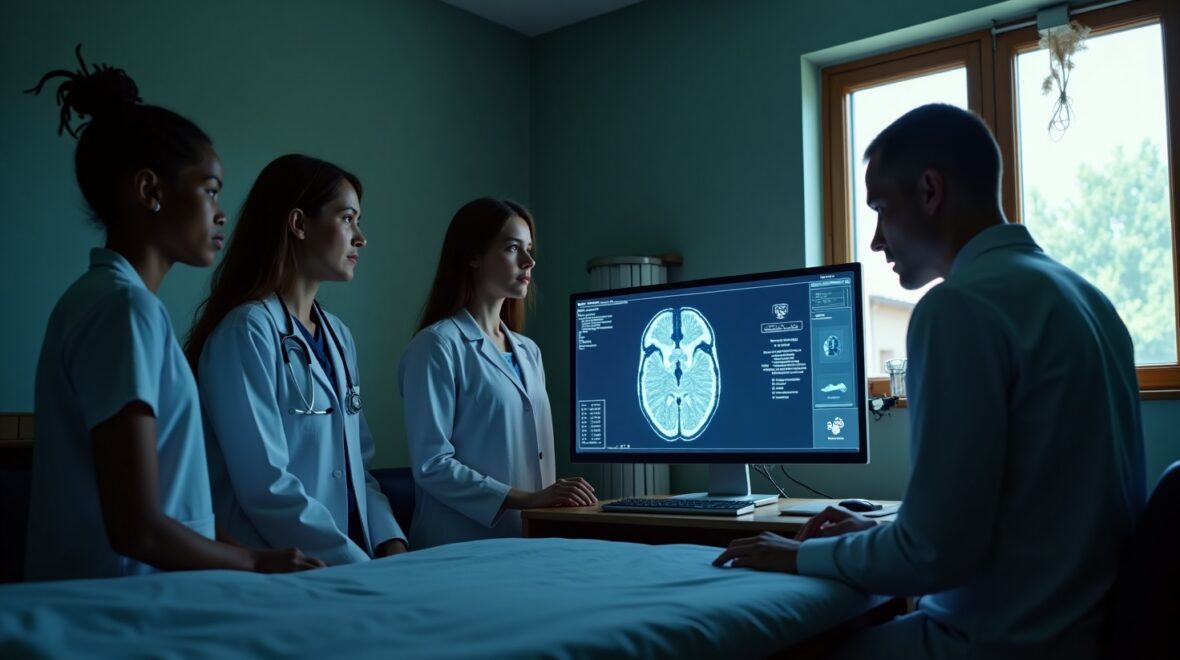
Understanding Healthcare Disaster Recovery AI: A Comprehensive Guide
Introduction
In an era where healthcare systems are increasingly vulnerable to disruptions—whether from natural disasters, cyberattacks, or health crises—the integration of healthcare disaster recovery AI has become paramount. This technology serves not only as a safety net for hospitals but also as a proactive measure that enables resilience when faced with unexpected disruptions. Simply put, healthcare disaster recovery AI refers to using artificial intelligence to enhance disaster recovery plans within healthcare settings, ensuring the continuity of patient care and operational efficiency.
The need for robust disaster recovery systems is underscored as healthcare organizations confront a myriad of challenges, ranging from the challenges of aging infrastructure to the growing cyber threats in an increasingly digital landscape. Implementing AI technologies in healthcare resilience promises not just to mitigate risks but also to anticipate and strategize effectively against potential threats.
Background
Traditional disaster recovery methods in healthcare involve planning for unexpected events, but they often struggle when faced with real adversity. These methods can be slow to mobilize, lack comprehensive data, and may not integrate well with newer technologies, leading to inefficient responses in times of crisis. For example, hospital disaster recovery efforts typically depend on manual processes and predetermined plans that might not adapt quickly to unique disaster scenarios.
In stark contrast, AI in healthcare resilience introduces the capability to analyze vast amounts of data in real-time, enabling healthcare organizations to simulate various disaster scenarios and prepare accordingly. By utilizing predictive analytics, AI can guide hospitals in crafting tailored disaster recovery plans that are both flexible and responsive, addressing specific vulnerabilities within their systems. This advancement marks a substantial shift from the reactive models of the past towards a more proactive, data-informed approach in managing potential disasters.
Current Trends
The infusion of AI into healthcare disaster recovery is not just a theory; it is backed by key trends that are shaping the field. One of the most significant advancements includes the use of predictive analytics for incident management. By analyzing historical data and patterns, AI can forecast potential issues before they arise, allowing healthcare settings to act swiftly and decisively.
Another major focus is on cyber disaster recovery. With the increasing digitization of medical records and patient data, healthcare organizations become prime targets for cyber threats. AI helps to bolster defenses and respond to cyber incidents, ensuring that data is secured and accessible even in the event of an attack. Organizations can implement sophisticated algorithms that learn from previous breaches and enhance their response plans.
Moreover, as noted in the article \”Healthcare Disaster Recovery: What You Need to Know\” by Harish Pillai, the emphasis on continuous improvement is essential. He articulates that maintaining resilience in healthcare systems goes beyond having a static plan; it requires ongoing assessments and agile adaptations to the evolving landscape of threats and vulnerabilities (Hackernoon).
Key Insights
Evidence is accumulating on the profound impact of AI in healthcare resilience. Recent studies highlight that healthcare organizations leveraging AI-enhanced disaster recovery plans not only minimize downtime but also improve patient outcomes significantly. The ability to use real-time data to make informed decisions can lead to faster recovery times, thereby maintaining essential healthcare services even during crises.
To effectively develop disaster recovery strategies with AI, it is crucial to emphasize interdisciplinary collaboration within healthcare organizations. This approach fosters a culture wherein IT, clinical staff, and management work cohesively to build a robust disaster recovery framework. Integrating lessons from related articles, like those by Harish Pillai, illustrates that a strong framework must also consider the unique engaging points of technology, strategic planning, and healthcare environments.
Key Insights for Implementation:
– Foster interdisciplinary collaboration for comprehensive disaster recovery planning.
– Regularly audit and adapt disaster recovery plans to integrate new AI capabilities.
– Invest in training staff on AI technologies and their application in disaster scenarios.
Future Forecast
Looking ahead, the role of AI in healthcare disaster recovery is poised to grow dramatically over the next decade. As healthcare organizations continue to digitize and cloud technologies become more prevalent, AI will likely play an integral role in shaping hospital disaster recovery strategies.
We can expect advancements in machine learning algorithms that will allow for even more sophisticated predictions of potential disasters. Additionally, regulatory changes may require hospitals to comply with stricter standards regarding data protection and continuity planning, pushing organizations to adopt AI technologies even faster.
Moreover, technological advancements, such as the integration of AI with the Internet of Medical Things (IoMT), could provide real-time insights that bolster disaster preparedness. This would create a more resilient healthcare system, capable of adapting and responding to a wider range of threats than ever before.
Call to Action
The ongoing advancements in AI technologies present a unique opportunity for healthcare professionals to reevaluate their disaster recovery plans. It’s imperative for healthcare organizations to assess their current systems and consider how they can integrate healthcare disaster recovery AI to bolster resilience.
For further reading and tools on implementation, consider exploring Harish Pillai’s insights or engaging with resources that focus on AI in healthcare. By embracing these technologies, healthcare providers can ensure they are better prepared for whatever challenges the future may hold.
—
References:
– Healthcare Disaster Recovery: What You Need to Know by Harish Pillai.